GREWİA – STAR TREES
The genus Grewia, which is virtually unknown in our country, comprises over 150 species distributed across tropical and subtropical Africa, the coasts of South Asia, and Australia. Belonging to the family Tiliaceae (Linden family), these plants are commonly referred to as Star Trees. Some species within the genus are evergreen, while others are deciduous, existing as shrubs or climbers.
Star Trees are generally frost-sensitive; however, they can tolerate light frost, while severe frost may cause significant damage or mortality. They perform best in semi-shade, in humus-rich, well-drained soils. Propagation is achieved through seed or cuttings.
At our center, we cultivate Grewia occidentalis, Grewia flavescens, and Grewia lasiocarpa.
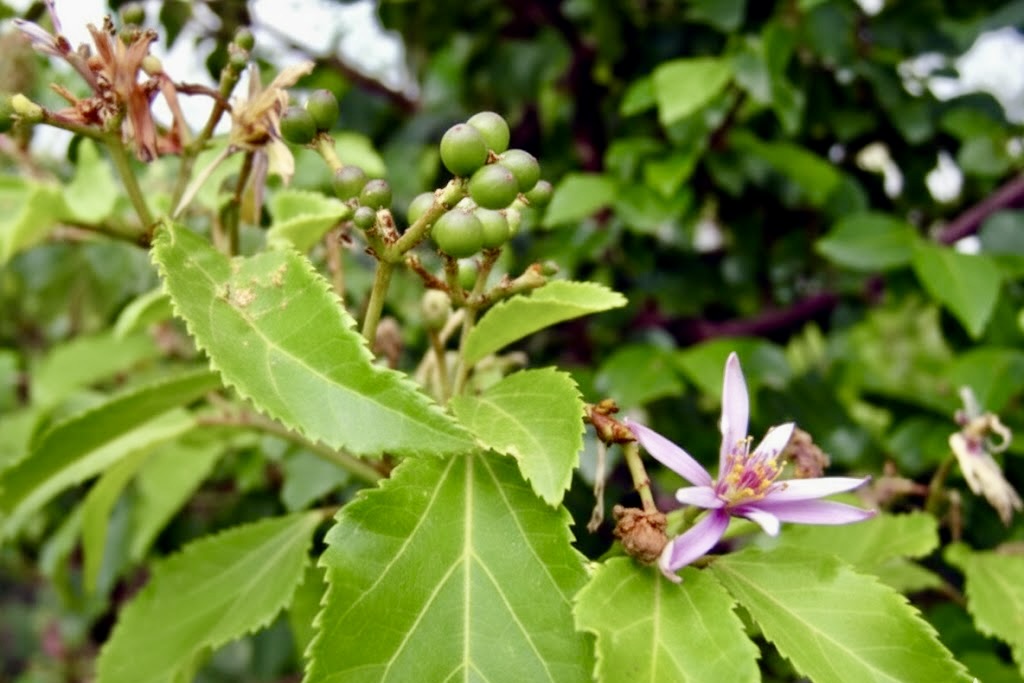
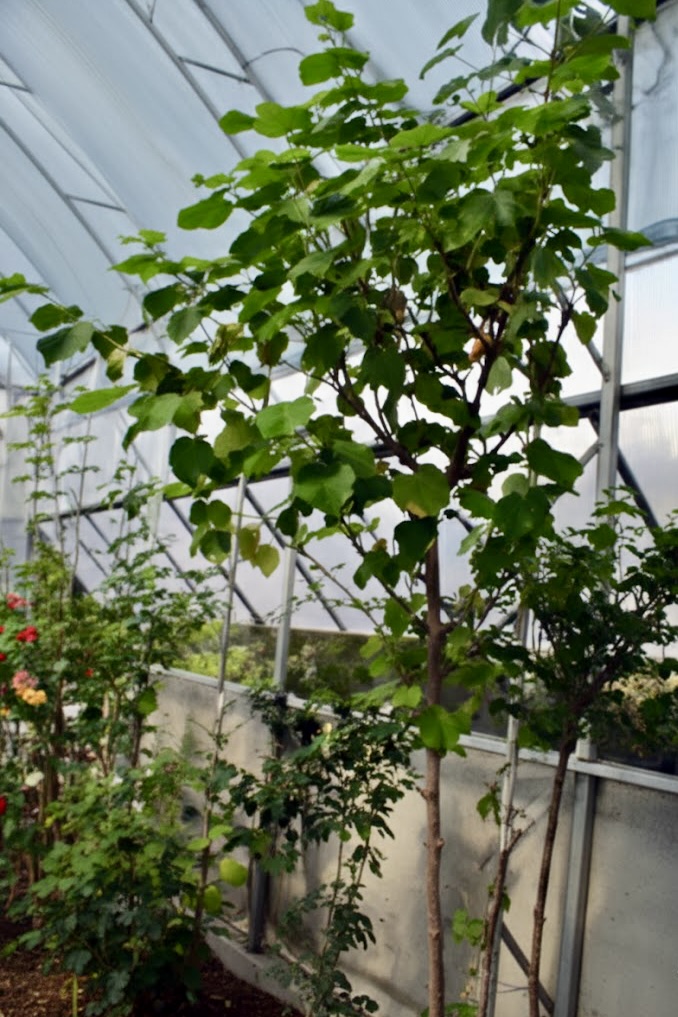
Grewia occidentalis – Purple-Flowered Star Tree: Naturally distributed in Swaziland, Lesotho, Zimbabwe, and Mozambique, this species is an evergreen large shrub or small tree. Leaves are dark green, oval, serrated, and rigid, and the plant can reach up to 3 meters in height with a broad crown. During spring and summer, it produces purple, star-shaped flowers. Following flowering, it bears small, four-lobed fruits that are highly attractive to birds. Propagation is achieved by germinating fresh seeds, and pruning can shape the plant. At our center, it is grown in both shrub and standard tree forms.
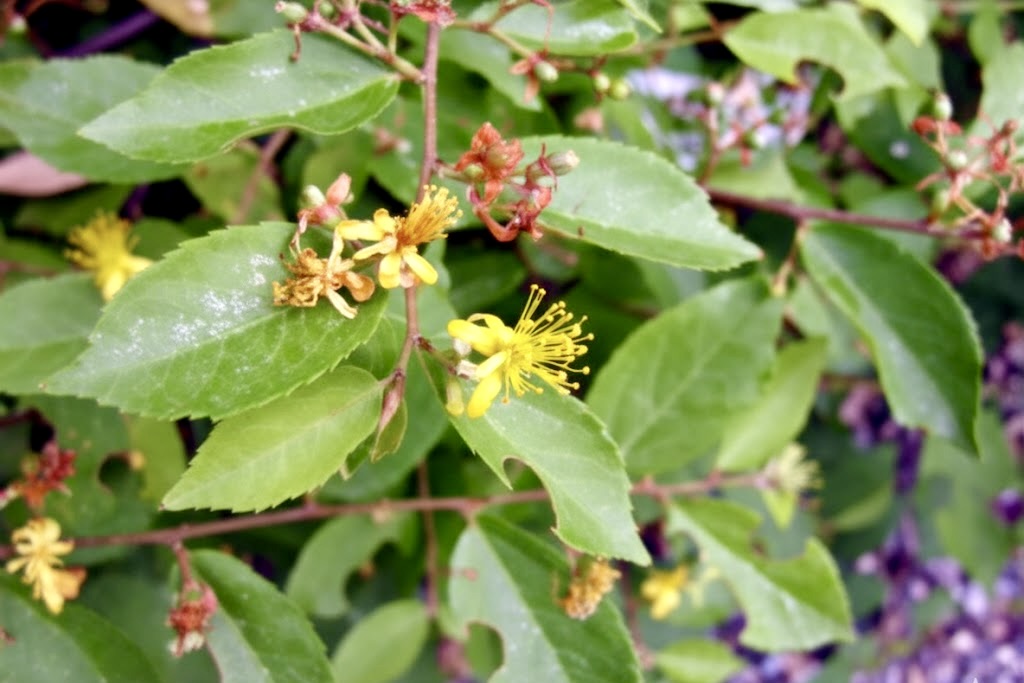
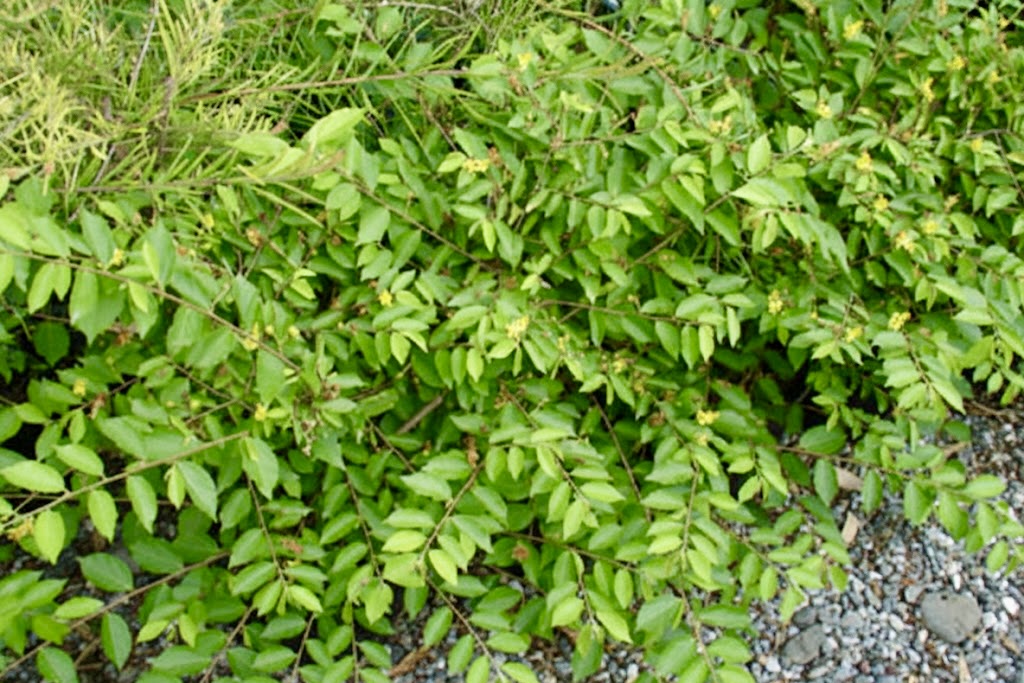
Grewia flavescens – Yellow-Flowered Star Tree: Native to South Africa, southern Botswana, and eastern Namibia, this species grows as a shrub with branches spreading irregularly outward and upward. It produces small, yellow, star-shaped flowers throughout the summer. Flowers later develop into cylindrical, yellow-brown fruits. Fruits are sweet and edible, though the fleshy part surrounding the seeds is minimal. The plant can be used as a hedge, or planted solitary or in groups.
Grewia lasiocarpa – Large Purple-Flowered Star Tree: Endemic to South Africa, this species has larger leaves and flowers compared to the above-mentioned species. Petioles are pubescent, leaves are large and elliptic, and flowers are similar in shape and color to Grewia occidentalis but larger. This species tends to develop more as a small tree than a shrub, reaching up to 10 meters in height. It thrives best in humus-rich, well-drained soils with full sun exposure.
The above three Grewia species should only be cultivated outdoors in regions where temperatures do not fall below -5°C and where frost is light. In colder areas, they are suitable for greenhouses or winter gardens.