BRUGMANSİA AND DATURAS-ANGEL’S TRUMPET AND DEVİL’S TRUMPET

In many publications, Datura and Brugmansia are grouped under the same name; however, they differ from one another in several important aspects. These plants belong to the Solanaceae family and are generally native to tropical America. To distinguish these two groups clearly and avoid confusion, the characteristics outlined below should be considered.
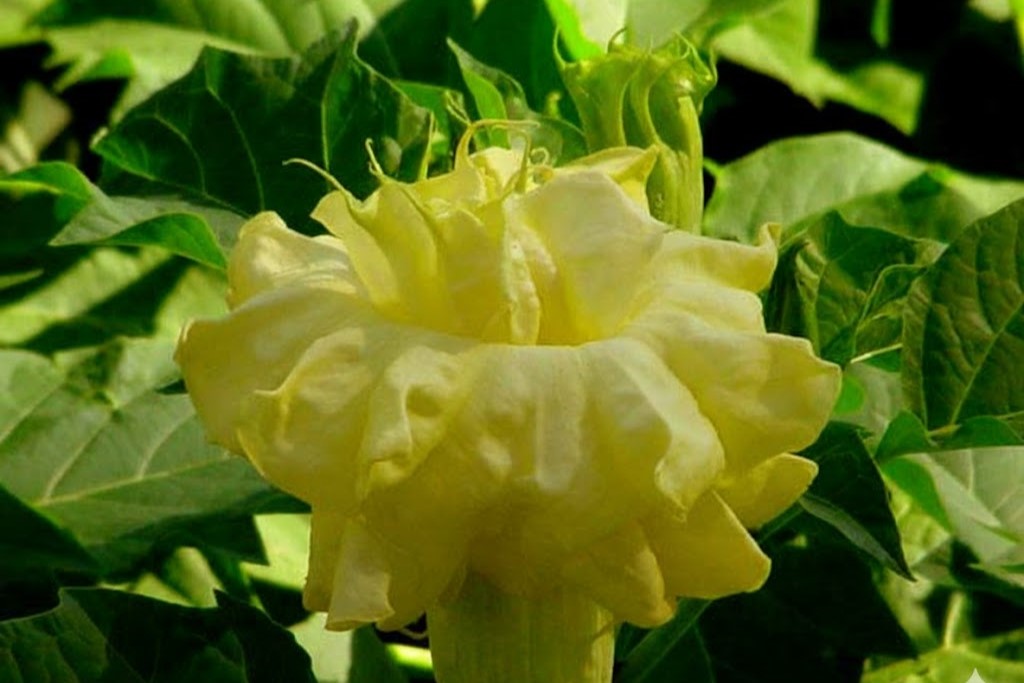
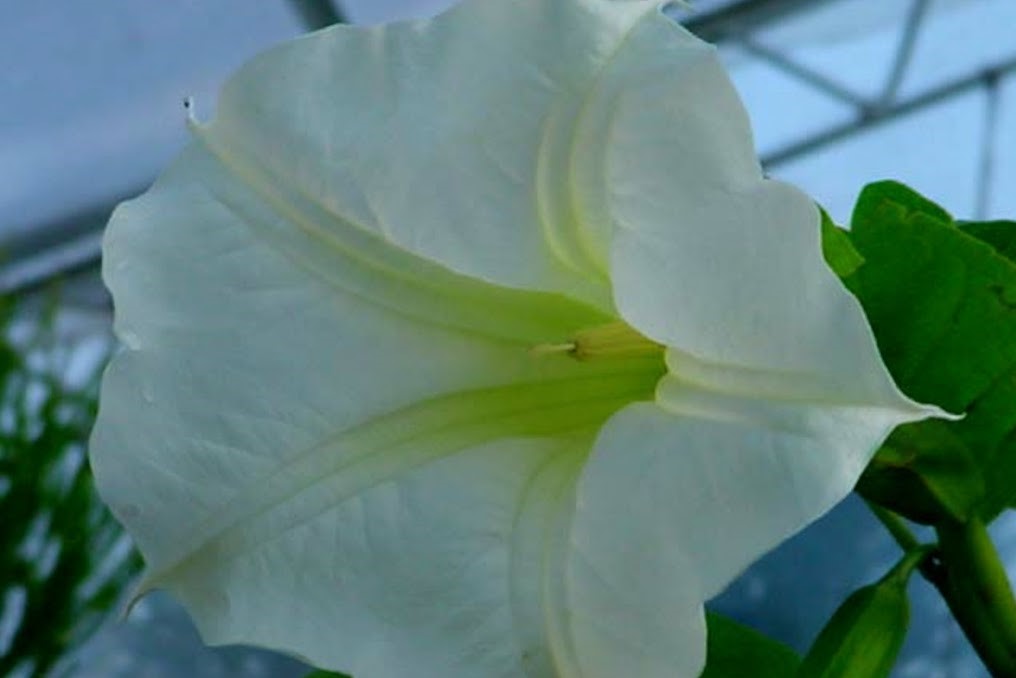
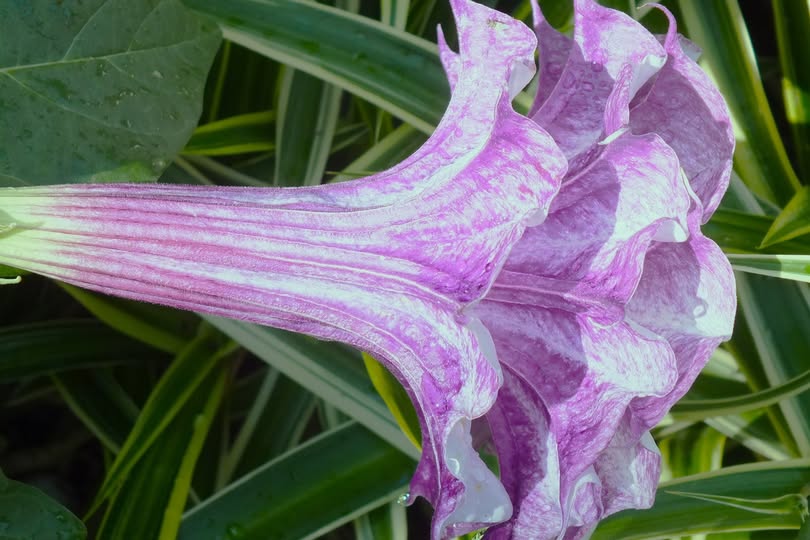
Brugmansia species are long-lived plants with woody stems that can reach heights of up to 8 meters. Their trumpet-shaped flowers are slightly downward-facing or fully pendulous. In contrast, Datura species generally do not exceed 1.5–2 meters in height; they have soft, herbaceous stems and are annuals or short-lived perennials. Their trumpet-shaped flowers face upward. In addition, Brugmansia seeds lack spines or projections, whereas Datura seeds are typically round or oval and covered with spines.
Through hybridization, numerous cultivars have been developed in both Datura and Brugmansia. These striking plants bloom during summer and autumn. As they are not frost-tolerant, they can only be grown outdoors in regions with mild Mediterranean climates in our country; elsewhere, they should be cultivated in pots or containers. Large container-grown plants are often used as specimen plants in gardens during summer, while in suitable climates they may also be planted in groups in the landscape.
Their water requirements should be well met, especially during the summer months, while they require much less water in winter. These plants are easily propagated from seed or cuttings, and some hybrids are notable for their pleasant fragrance. Their fruits contain narcotic alkaloids and have historically been used in black magic rituals. Today, they are classified among toxic plants due to their harmful effects.