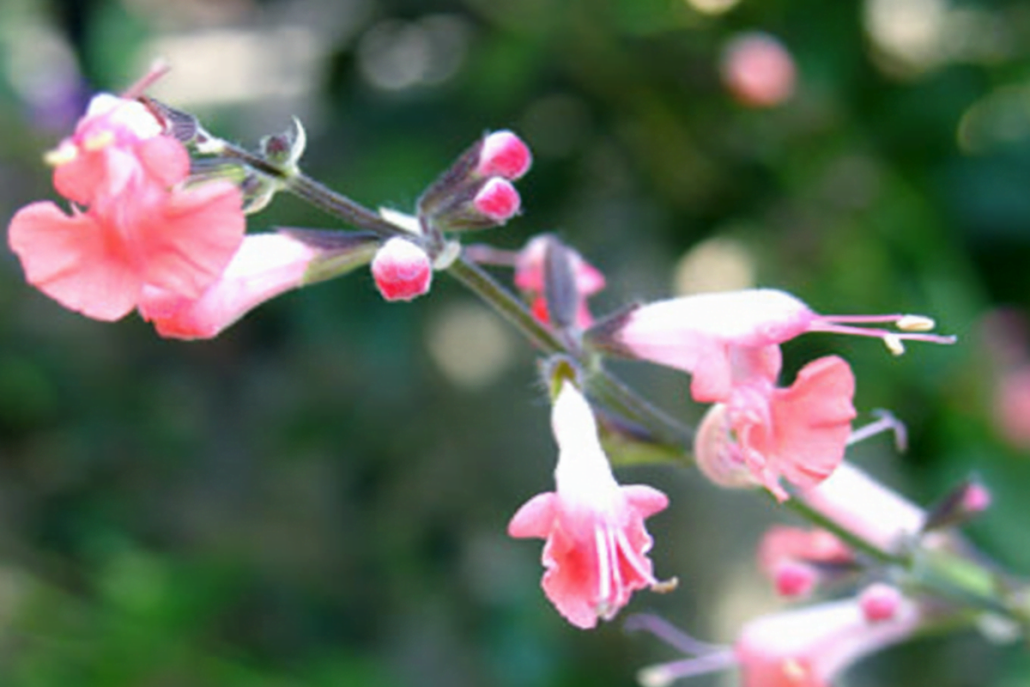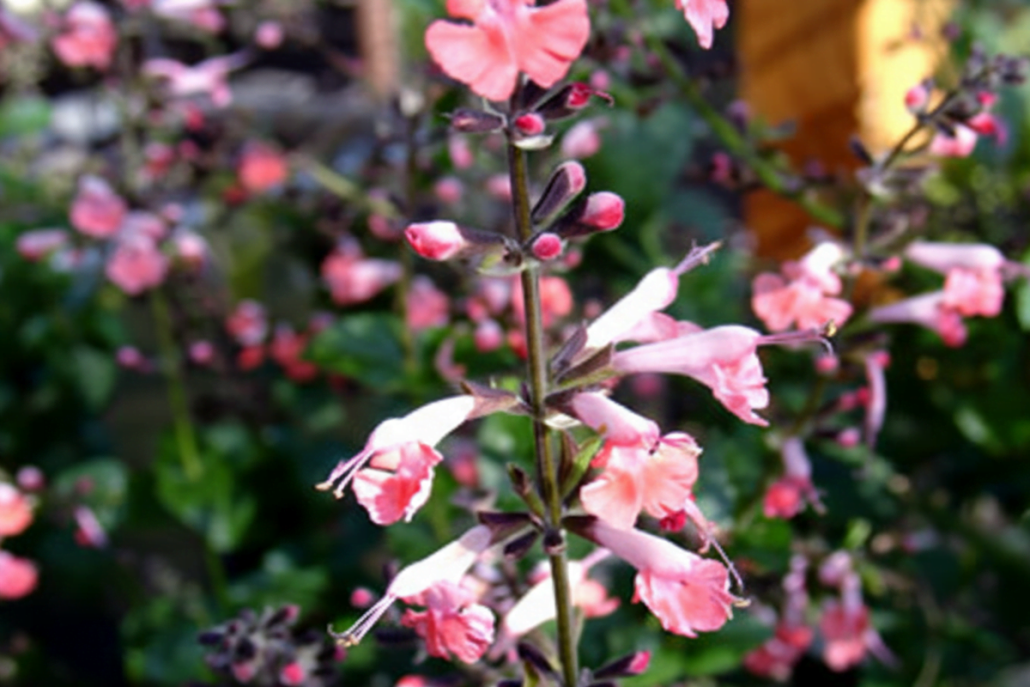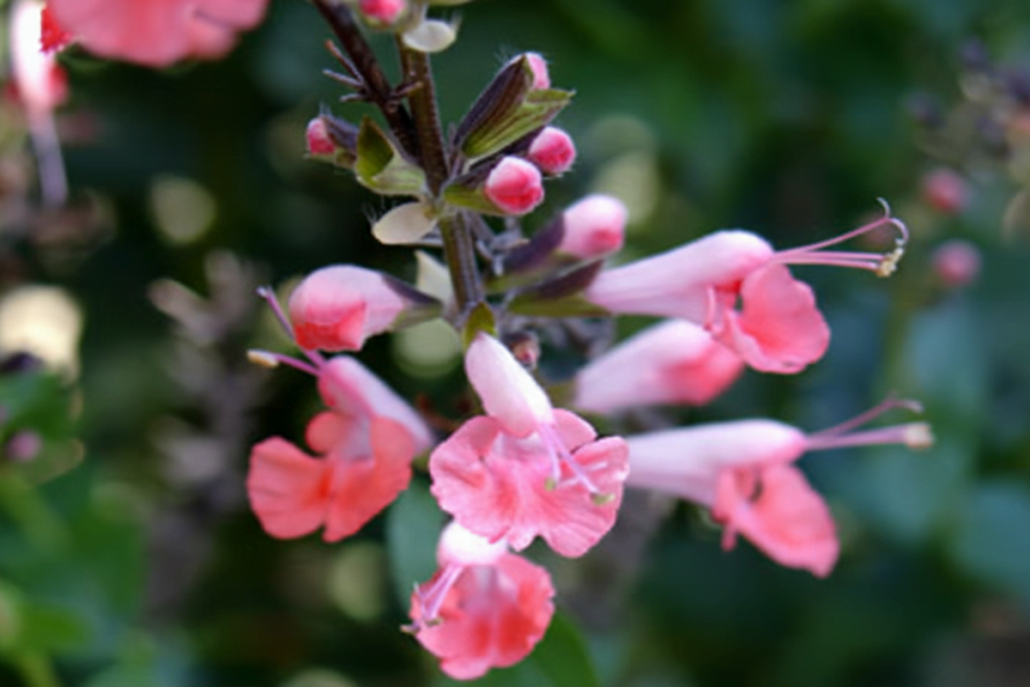
SALVIA COCCINEA ‘CORAL NYMPH’ – CORAL NYMPH SAGE
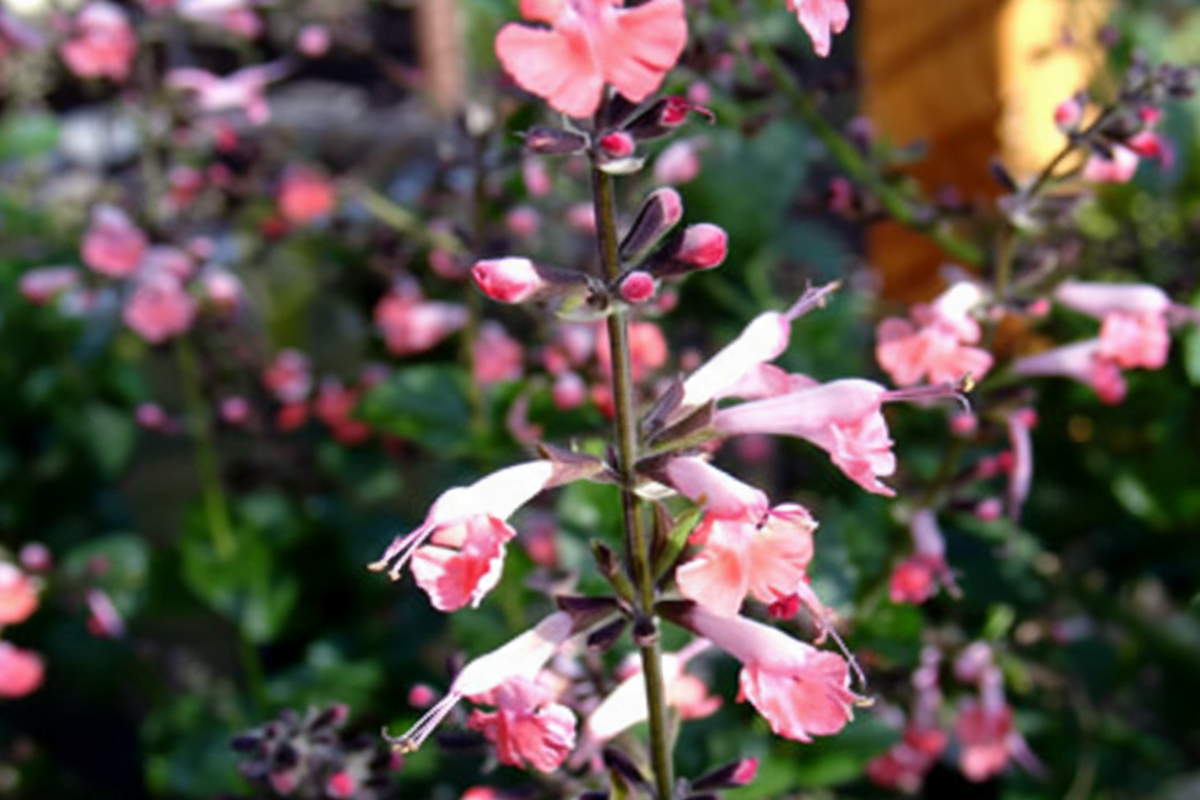
Among herbaceous and small shrub plants used in garden landscaping, we want to introduce a little-known plant in Türkiye with delicate structure and attractive, small, showy flowers. This sage is called Coral Nymph (Salvia coccinea “Coral Nymph”).
Coral Nymph can be used in rock or cottage gardens, to create visual contrast with its striking pink flowers, or as a transitional plant between ground covers, shrubs, and trees. Although it behaves as an annual in most regions of Türkiye, in warm Mediterranean areas or winter gardens it can act as a biennial or perennial. Even plants that die within one year usually regenerate from the seeds they drop.
Before introducing this plant, a brief note on its family:
Salvia (Sages)
Sages belong to the Lamiaceae (formerly Labiatae) family, also called the mint family. It is the largest genus in the family, with about 900 species worldwide, including annuals, biennials, perennials, and semi-woody shrubs. They are found in most regions except very cold areas and tropical rainforests. Typically, they grow in sunny locations such as dry grasslands, rocky slopes, scrublands, and sparsely wooded areas, as well as in moist meadows. Some species are aromatic, and leaves may be hairy, woolly, or silvery. Stems are usually square in cross-section, with opposite leaf pairs that vary from simple to densely hairy, often serrated or toothed. A distinguishing feature is their tubular, two-lipped flowers: the lower lip is flat, horizontal, and two-lobed, while the upper lip is erect and hooded. Many Salvia species are used as ornamental garden plants. Some are chosen for their fragrant leaves and medicinal properties, but most are grown for their visual impact through leaves and flowers.
Cultivation:
Shrub-form Salvias native to Mexico and Central America are mostly frost-tolerant to some degree. Some perennials are more cold-hardy. Salvias grow best in full sun in light, humus-rich, moderately fertilized, well-drained soil. They can tolerate partial shade. Short, very hairy species require full sun and excellent drainage. Cold-hardy species should be protected from excessive winter moisture and drying, cold winds.
Propagation:
Salvias are propagated by seeds in spring, cuttings in early summer, and rhizomatous species can be divided at any time of the year.