AMSONIA ELLIPTICA – BLUE STAR
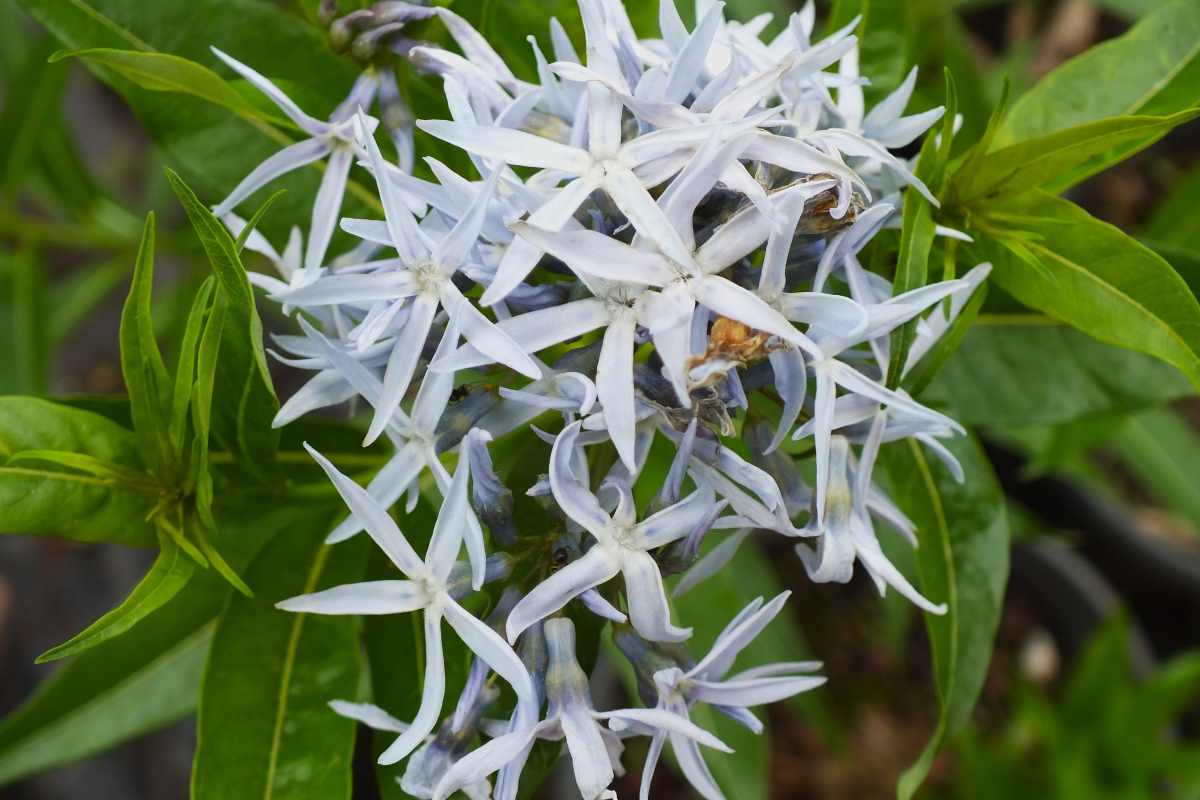
Amsonia is a genus of flowering plants in the Apocynaceae (Dogbane) Family. The genus covers about 22 species, which mainly found in North America with one species in East Asia (Korea and Chine) and another one in Turkiye and Greece. The genus name came from American physician John Amson. Members of the genus are commonly known as Blue Stars. The common name Blue Star was given for their soft blue, star-shaped flowers.
Blue Stars (Amsonia spp.) are clump-forming herbaceous perennials. They have alternate, entire leaves that range according to species from broadly ovate to linear and needle-like. Like other members of the Apocynaceae family, they have a milky sap that deters deer and other mammals from eating the plants.
Common characteristics of Amsonias: They tend to be small, tidy, shrub-like clumps. They grow in full sun or semi shade, prefer good drainage, also tolerate clay soil as well. They have multiple stems that spreading away from each other to make a lovely crown. Plants have clusters of blue, star-like flowers from April to May. Their narrow, oval shaped leaves will turn bright yellow colour in autumn.
The most widely known and commonly grown member of the species is Amsonia tabernaemontana; native to eastern North America, grows 60-90 cm tall. Another important one for us is Amsonia orientalis which endemic to Turkiye and Greece. Now we have not A. orientalis in our collection, so we wrote A. elliptica from our continent.
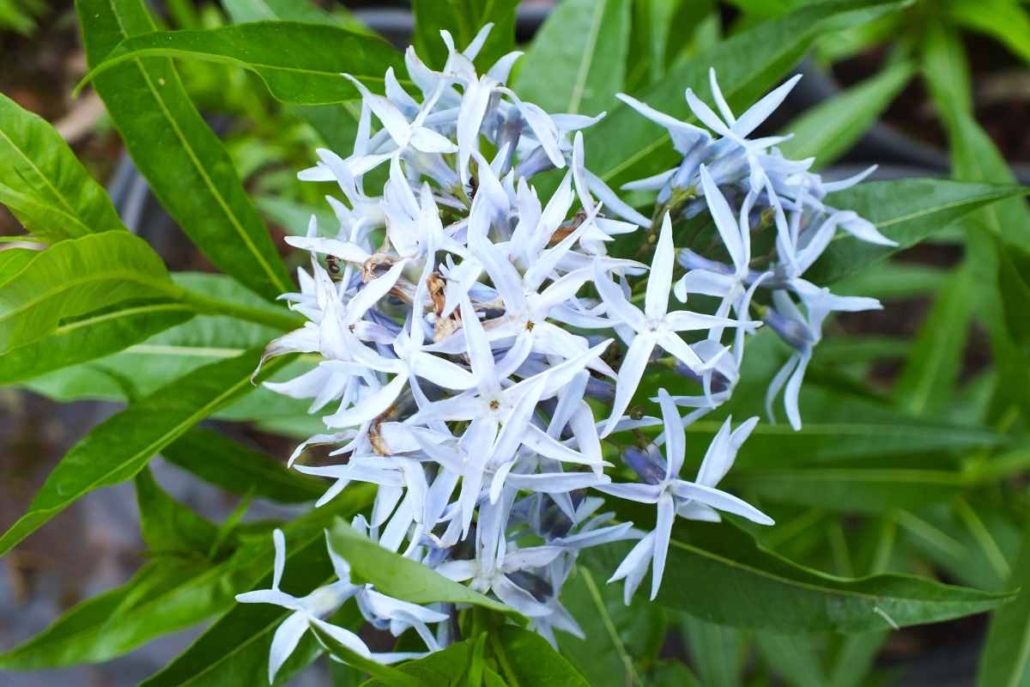
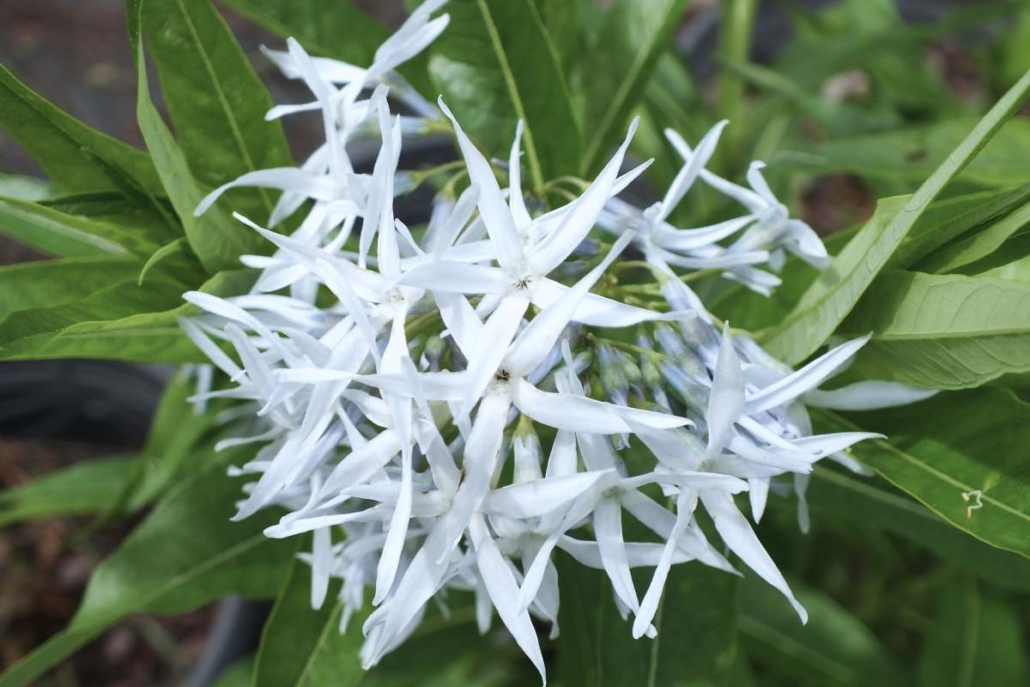
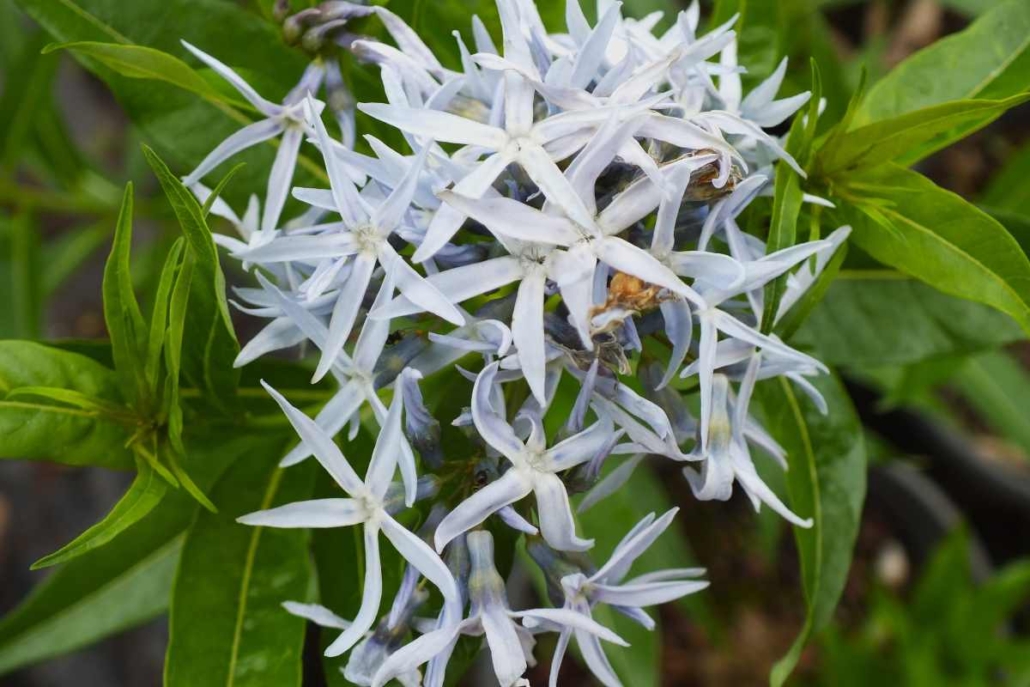
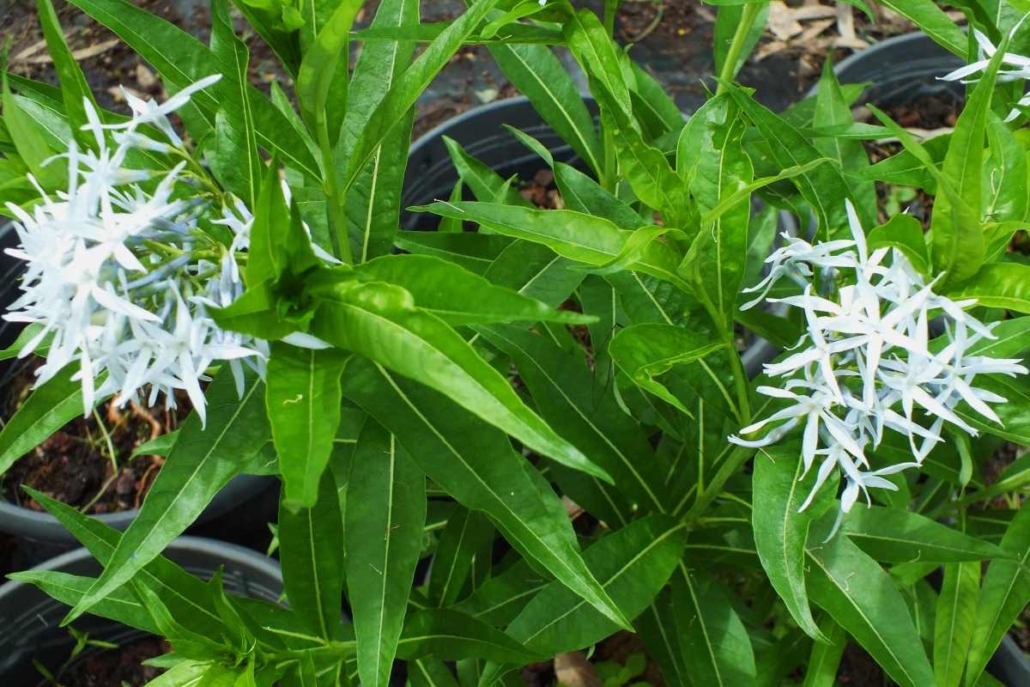
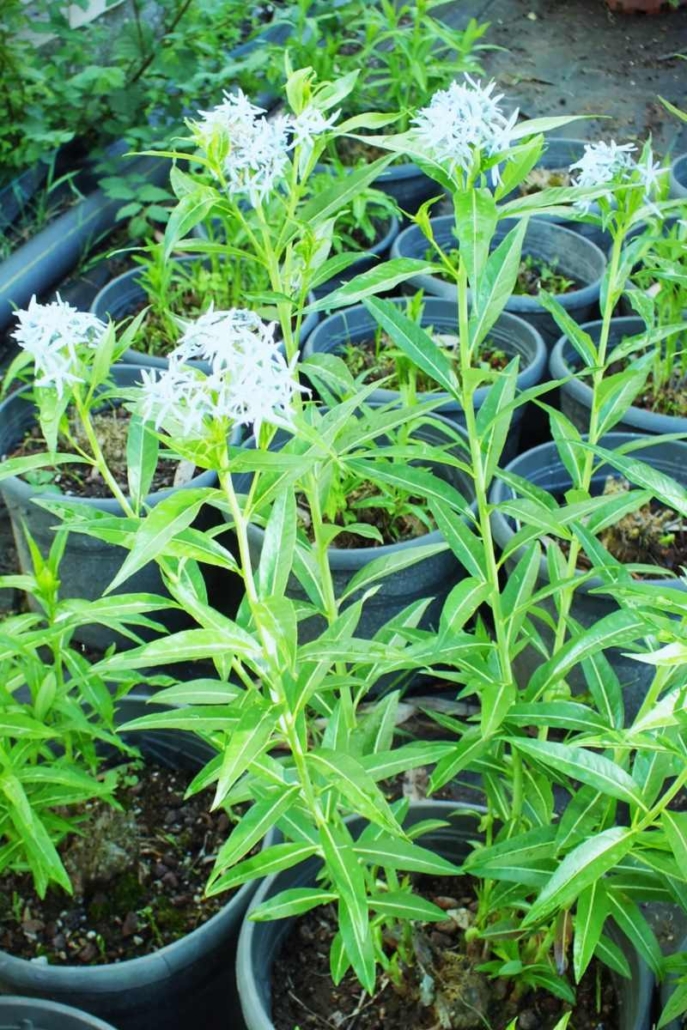
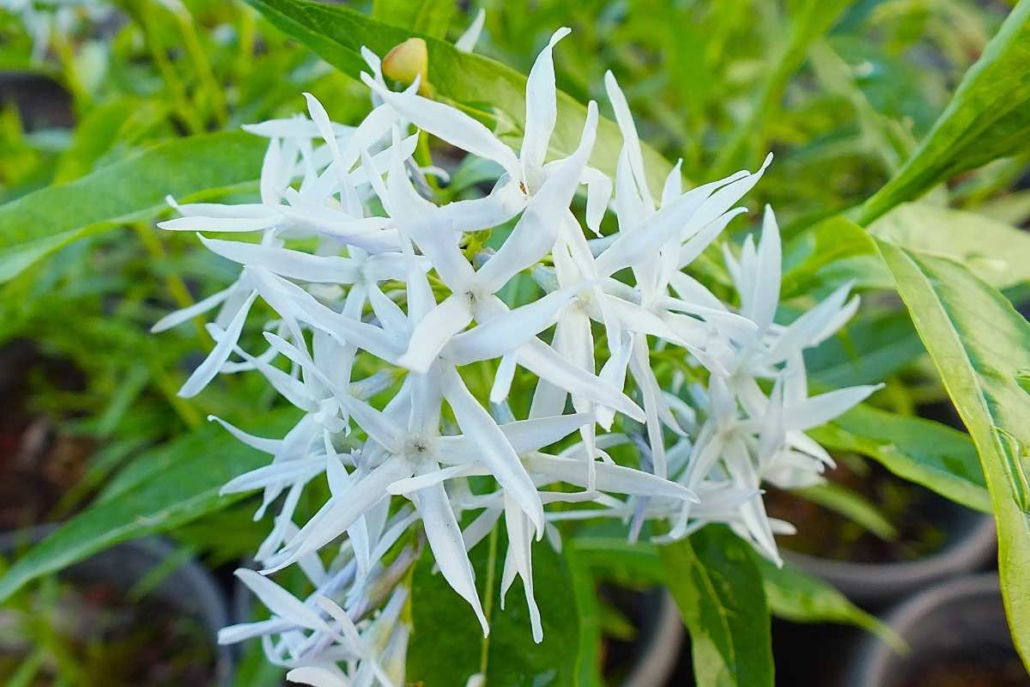
Amsonia elliptica is native to Honshu, Kyushu Islands of Japan, Korea and China. Amsonia sinensis sometime uses as a synonym. It is a multi-stem, deciduous, perennial plant reaches 40-80 cm tall. Narrowly ovate, green leaves are 6-10 cm long and 1-2 cm wide. Flowering time is April to May, sometimes flower in autumn as well. The small, blue to white, star-shaped flowers bloom at the end of each stem in fluffy clusters and put on a lovely show for several weeks. Following the bloom, seeds are formed in cylindrical capsules.
Blue Stars are very cold hardy plants, some withstands -40 ºC, Amsonia elliptica is supposed to be withstands -30 ºC. Propagation is done by seed after cold stratification or cutting or dividing basal cuttings. The only maintenance that is needed is a yearly cutting back of dead stems before new growth begins in spring. Amsonia needs regular watering, they do not like prolonged dry conditions but once established, plants can handle brief periods of drought.
Use in Landscape: Amsonia elliptica is a long-lived and dependable garden plant. In spring, the flowers make a fabulous show, then the attractive foliage holds its place throughout the summer. Autumn leaves offer an unexpected burst of warm, golden yellow at this time of year.
Plant can be used in city gardens, courtyard gardens, cottage gardens, informal gardens and rock gardens. Blue Star is especially attractive when planted crowded. Because its stems are not woody and die back to the ground during the winter, Amsonia’s upright, bushy character provides structure to the garden while allowing the landscape to be cleared completely each spring without needing to work around a more permanent shrub.