BRAHEA ARMATA – BLUE PALM

Human nature inclines individuals to desire what they do not possess and to envision or acquire objects with which they are unfamiliar. These tendencies are also reflected in plant preferences. For those of us living on the Mediterranean coast, commonly seen and familiar species such as Oleander (Nerium oleander), Olive (Olea europaea), Banana (Musaspp.), and Citrus species may attract little attention, whereas these same plants are highly prized in colder regions of our country or in Europe. Similarly, plants from the Far East, such as Orchids or cycads (Cycas spp.), do not generally attract more attention than familiar species like Geranium (Pelargonium) or Rose (Rosa spp.).
Leaf color in plants is generally green due to chlorophyll content. Non-green foliage always draws attention. Red or variegated (e.g., variegata) leaves, as well as blue foliage, have consistently been focal points both in natural and landscaped settings. A rule applicable to nearly all blue-leaved plants in nature is that they typically grow in environments with low water availability, making them drought- and neglect-tolerant.
The Blue Palm (Brahea armata) that we introduce today is rapidly gaining popularity due to its striking blue coloration and cold tolerance. Comparable in hardiness to the widely used Washingtonia palms in landscaping, the Blue Palm remains relatively unknown in our country because mass propagation has not yet been established and its slow growth keeps international prices high. Whether used solitarily or in groups, the Blue Palm can function as an intermediate plant along pathways, as a roadside plant, or as a transitional species between low shrubs and taller green palms.
BRAHEA: The genus Brahea comprises 16 species, mostly single-stemmed, native to Baja California, Guadalupe Island, Mexico, Guatemala, and El Salvador. They naturally grow on calcareous, nutrient-poor soils on slopes and in dry regions.
Brahea palms are characterized by broad trunks and slow-growing, fan-shaped leaves. They perform best on dry, calcareous slopes but also adapt well to tropical or warm climates. They are hermaphroditic, with individual plants capable of producing seeds. Seed germination can take up to 2–3 years.
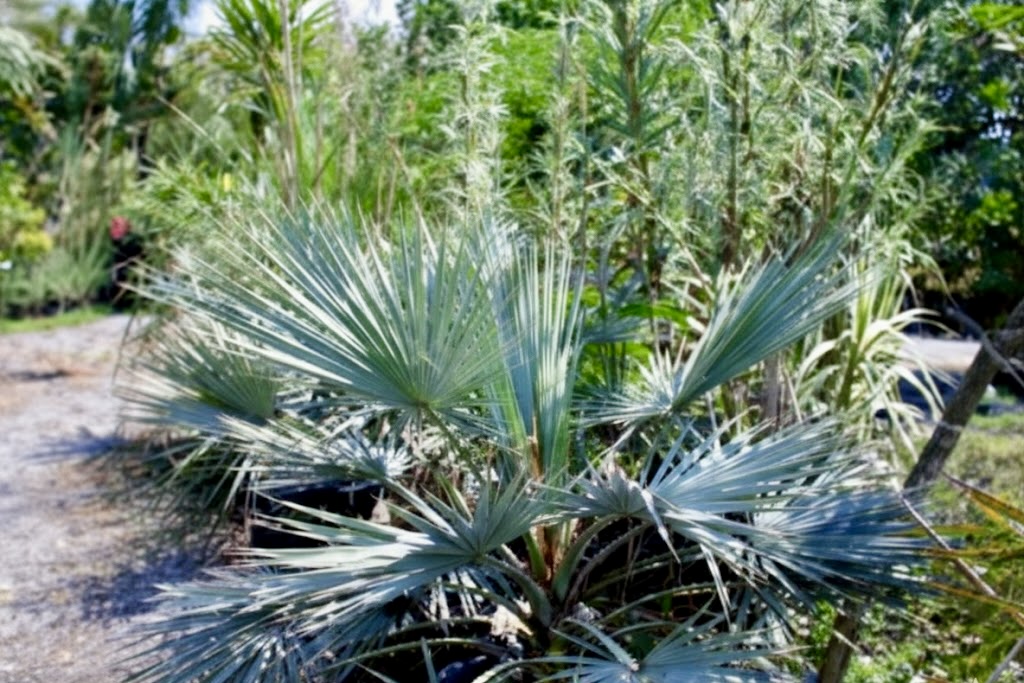
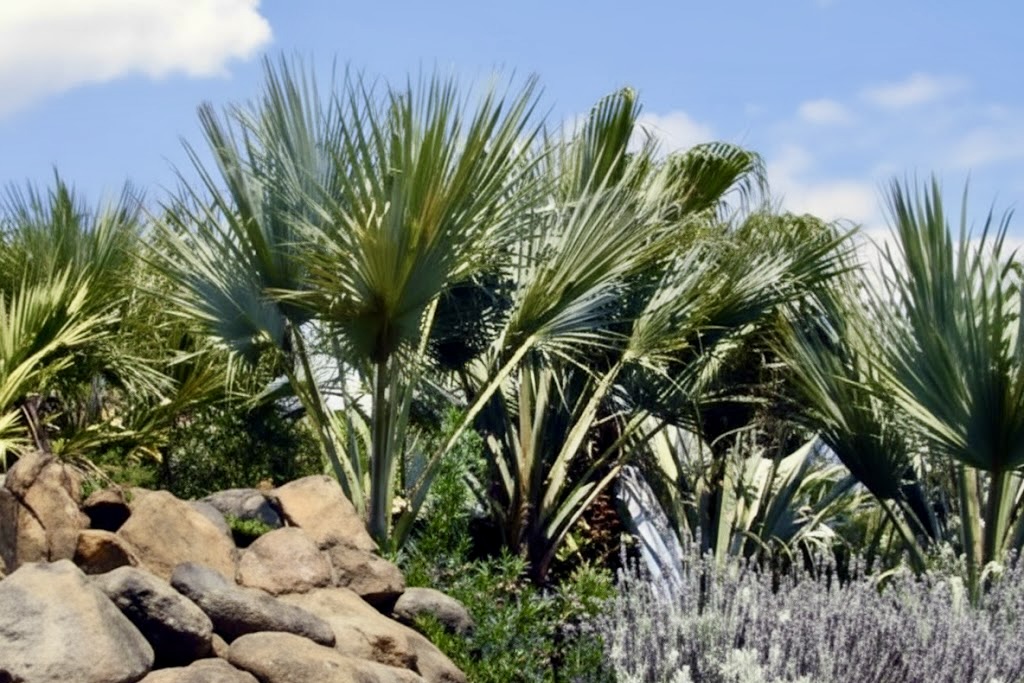
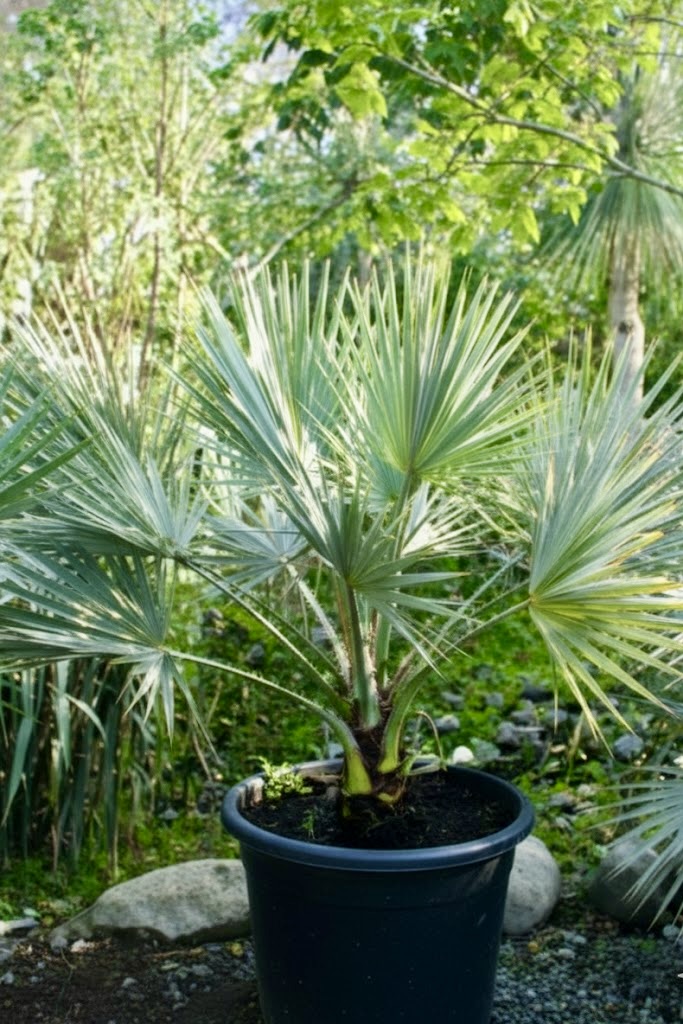
BRAHEA ARMATA – BLUE PALM: Native to Baja California, mature palms reach 10–12 m in height, with thick trunks covered in dead leaves. Leaf petioles bear white spines. The fan-shaped leaves are deeply divided, blue-green, and exhibit a waxy appearance.
Inflorescences of this striking palm can reach up to 5 m in length. Emerging from the crown, the flowering stalks arch outward before drooping downward. Mature fruits are brown. Seeds are round or oval, measuring 10–20 mm in length or diameter.
Other Brahea species in our collection include: Brahea brandegeei – San Jose Hesper Palm, Brahea berlandieri, Brahea dulcis – Sweet Brahea, Brahea edulis – Edulis Brahea / Guadalupe Palm, Brahea elegans – Elegant Brahea.