PUYA MİRABİLİS – PUYA PLANT
Puya species constitute the largest group within the Bromeliaceae family. Approximately 170 known species are all native to South America. Some species can reach up to 6 meters in height. These evergreen, perennial plants thrive even on rocky, sloping terrains at altitudes up to 2,000 m. Typically, basal rosettes are formed by leaves arising directly from the ground. In gardens, they are cultivated as shrub-like plants. Compared to many other members of the Bromeliaceae family, Puya species exhibit greater cold tolerance. In regions prone to frost, they should be cultivated in winter gardens or greenhouses. Their native range includes South America, specifically the Andes, Costa Rica, Colombia, Guyana, northern Brazil, and northern Argentina.
Cultivation Requirements: Puya species adapt readily to soils of various textures as long as drainage is adequate. They generally tolerate light frosts. As with other bromeliads, the marginal spines on the leaves necessitate careful placement; planting along pedestrian paths is not recommended.
Notable Cultivated Species: Puya berteroniana, Puya chilensis, Puya coerulea, Puya mirabilis, Puya raimondii.
Puya mirabilis: Native to Argentina and Bolivia, this species is acaulescent, with narrow leaves forming basal rosettes that reach 60–75 cm in length. The silver-brown leaves bear small, slender, dark brown marginal spines at the tips. The species propagates via offsets, forming wide clumps. To achieve a group effect, spacing between plants should not be less than 50–60 cm. For landscaping purposes, young plants can be initially planted closer together, with thinning performed after 2–3 years.
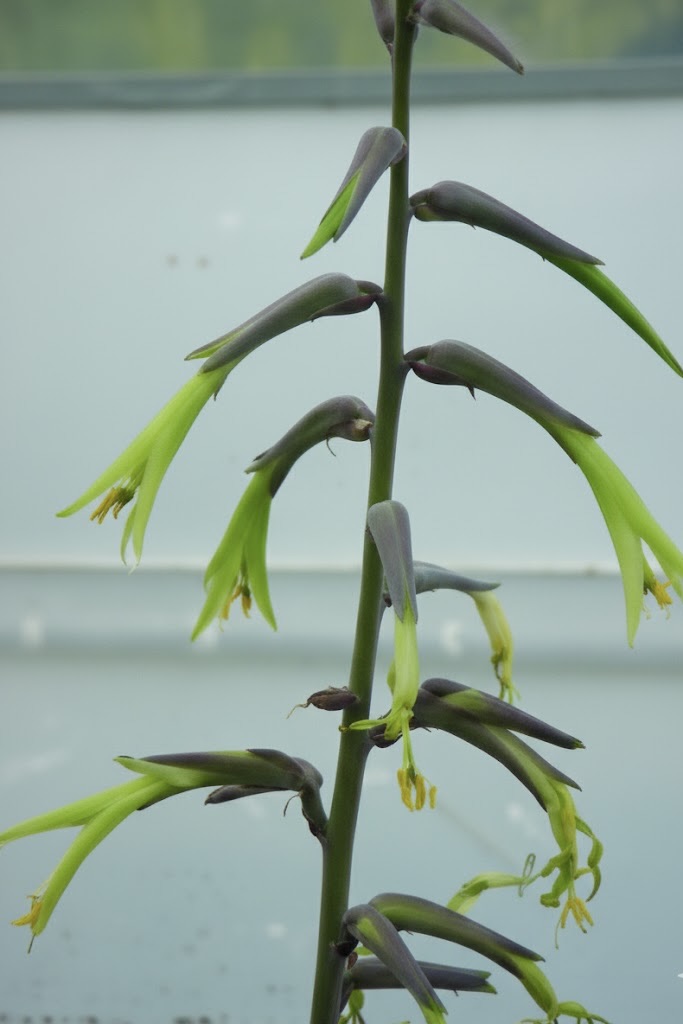
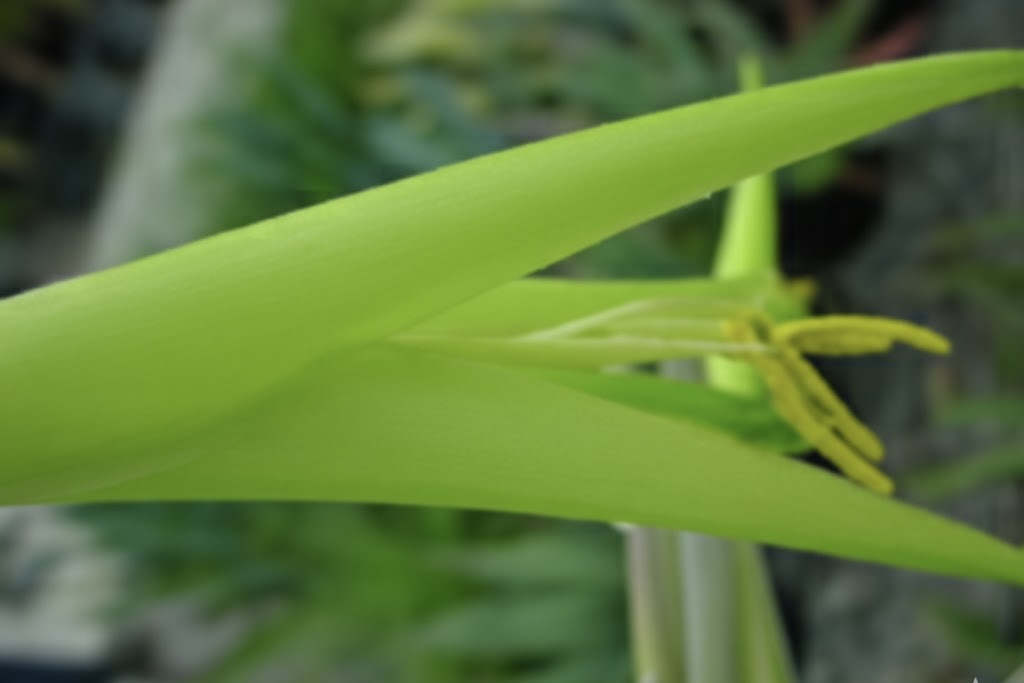
The inflorescence is remarkable: a 1–1.5 m tall spike bears racemose, tubular flowers up to 6–8 cm in length, with a yellowish-green coloration. After seed set, long, elliptical, brown seed capsules remain on the plant for an extended period, contributing to an interesting visual effect.
Observations at the Palm Center indicate that Puya mirabilis tolerates temperatures down to -4°C. If kept in a dry environment during winter, it can withstand even lower frost. In suitable microclimates along the Mediterranean and Aegean coasts of Turkey, it can be used outdoors in rock gardens, lawns, or as a solitary specimen or border plant in areas where human access is limited.