CRYPTOSTEGIA GRANDIFLORA – RUBBER VINE
Cryptostegia is a genus in the Asclepiadaceae family, consisting of two plant species. They originate from tropical West Africa and Madagascar. Both species are vines with a milky, rubber-like, toxic sap. Historically, they were used for rubber production. Despite being climbers, they can be maintained in a shrub form through pruning and are ideal for creating decorative hedges. They are salt-tolerant, making them suitable as fence plants in coastal gardens. Both species are frost-sensitive; leaves may burn in light frost but regrow from the stem.
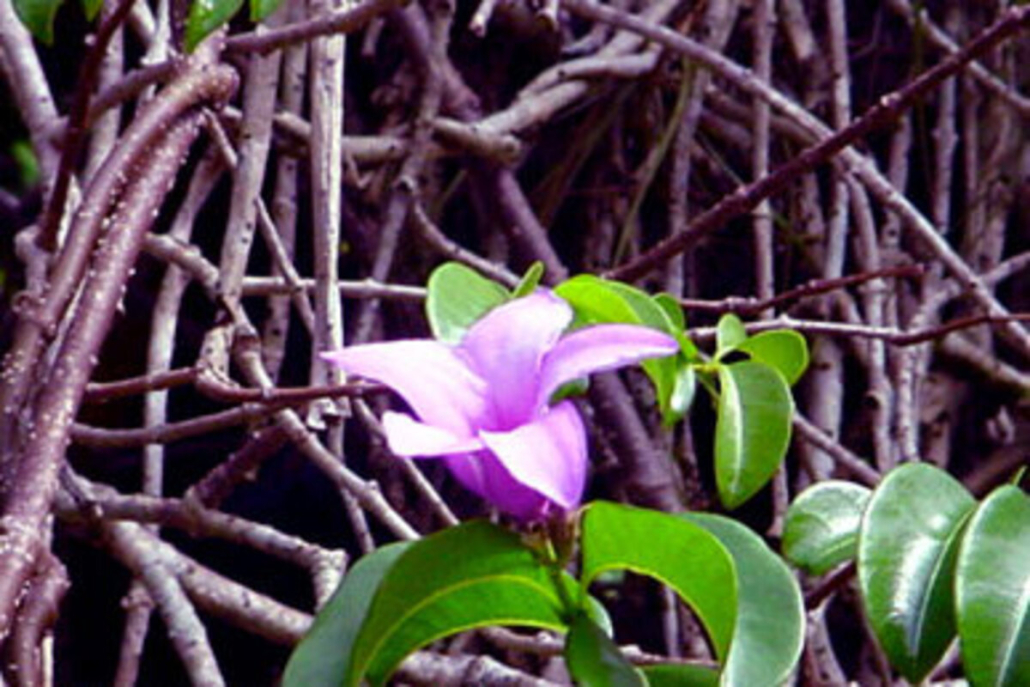
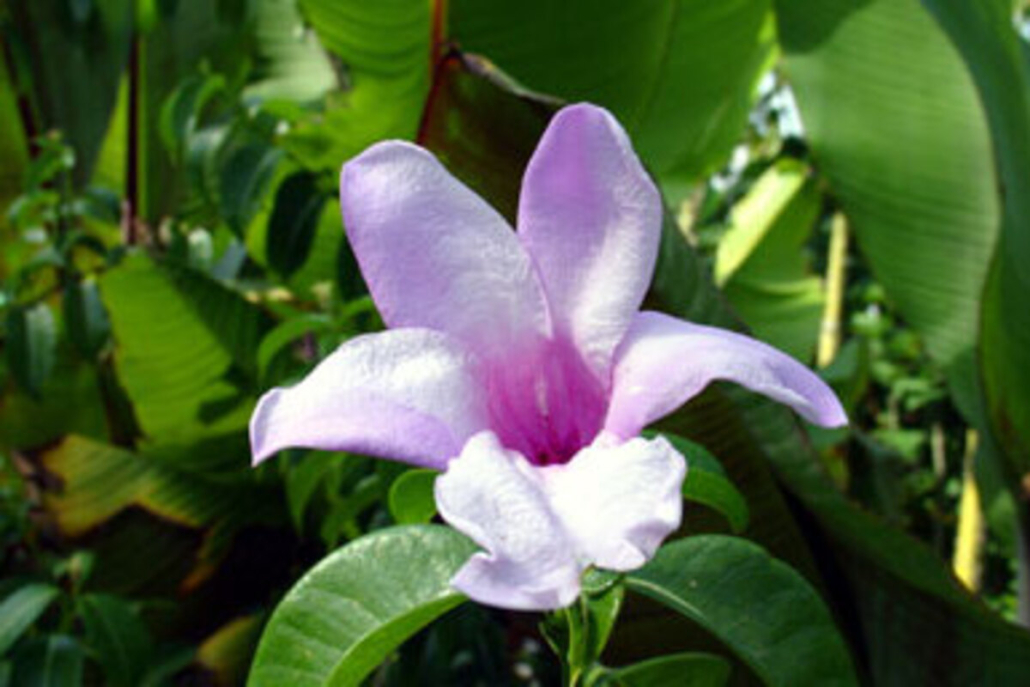
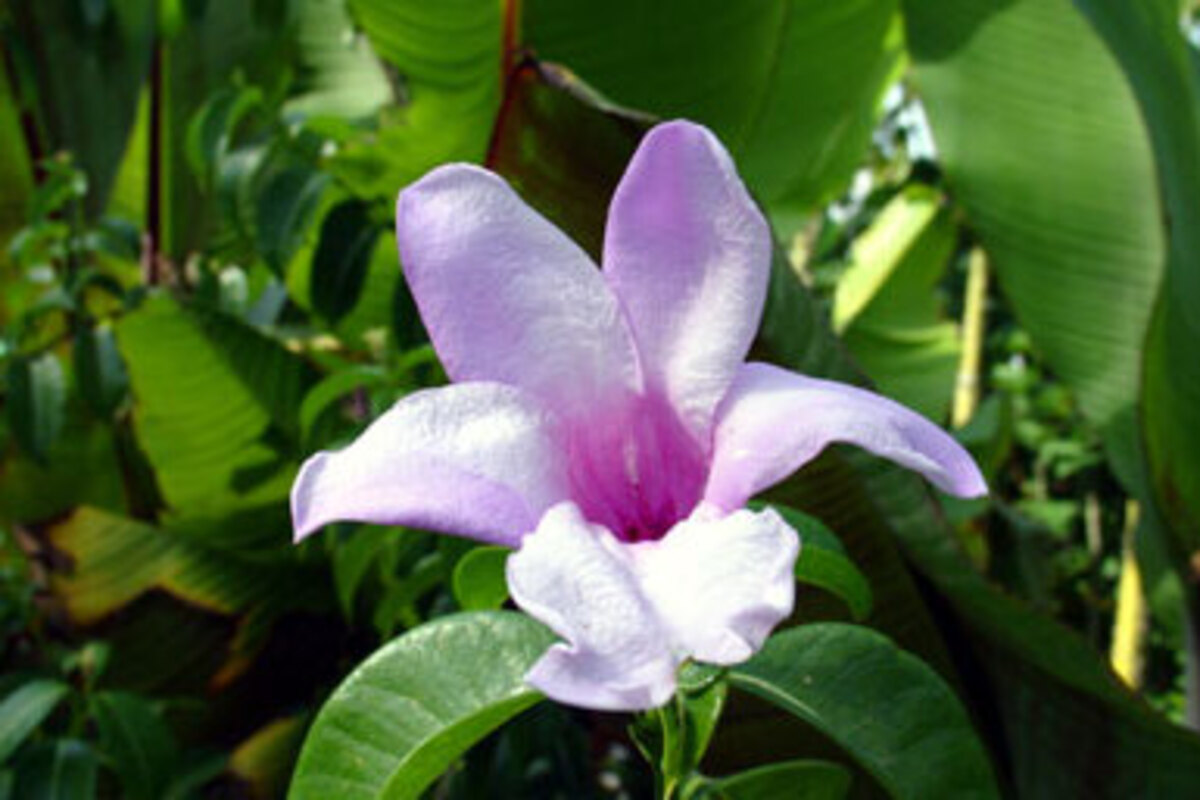
Rubber Vine (Cryptostegia grandiflora) originates from tropical West Africa. Its thick, rope-like stems climb trees and can reach 8–12 meters in length. Leaves are oblong, glossy green, and 8–10 cm long, with veins slightly lighter than the leaf color. Flowers are 3–5 cm long, pink-lilac, turning white as they fade, and bloom throughout the summer.
Seeds were brought to Palmiye Merkezi in 2004 from the Havana Botanical Garden, and the first flowers bloomed in September 2005. In October 2005, a limited number of plants were made available for sale.
Madagascar Rubber Vine (Cryptostegia madagascariensis) is very similar to Rubber Vine and reaches the same height. Its leaf veins are red, its flowers are slightly more striking, and they retain their color even after fading.