MOMORDICA CHARANTIA – BITTER MELON
Bitter Melon naturally grows in tropical regions such as the Amazon Basin, East Africa, Asia, and the Caribbean Islands. In South America and the Far East, it is especially cultivated for food and medicinal purposes.
Bitter Melon is an annual, climbing, vine-like plant that blooms during the summer months. Its leaves are lobed, fan-shaped, and serrated along the edges. The small yellow flowers are unisexual, with male and female flowers appearing on separate stems.
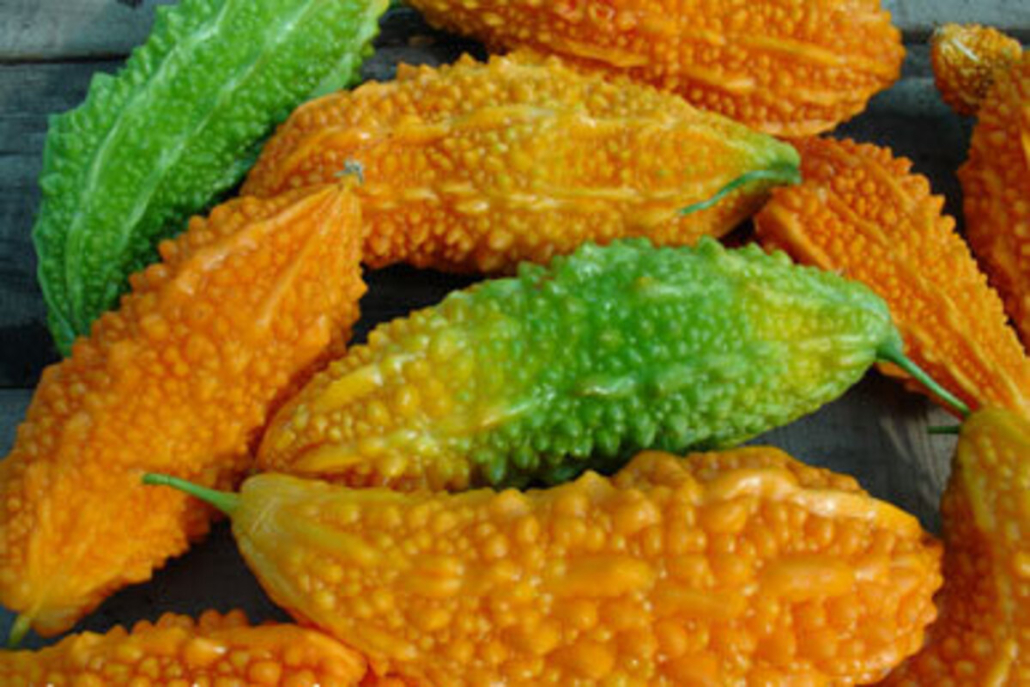
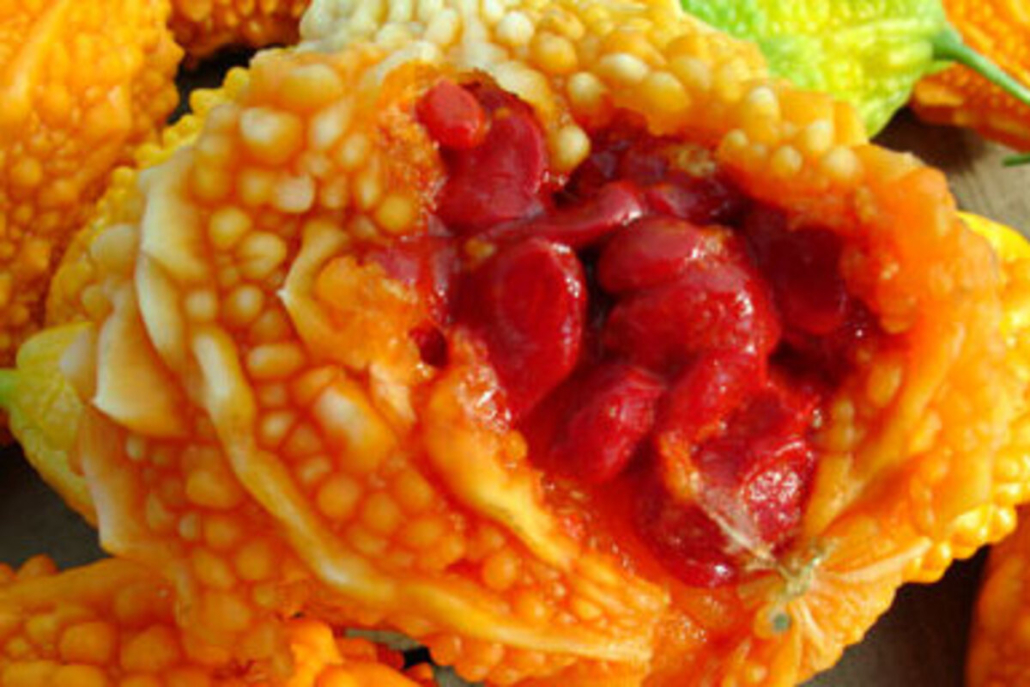
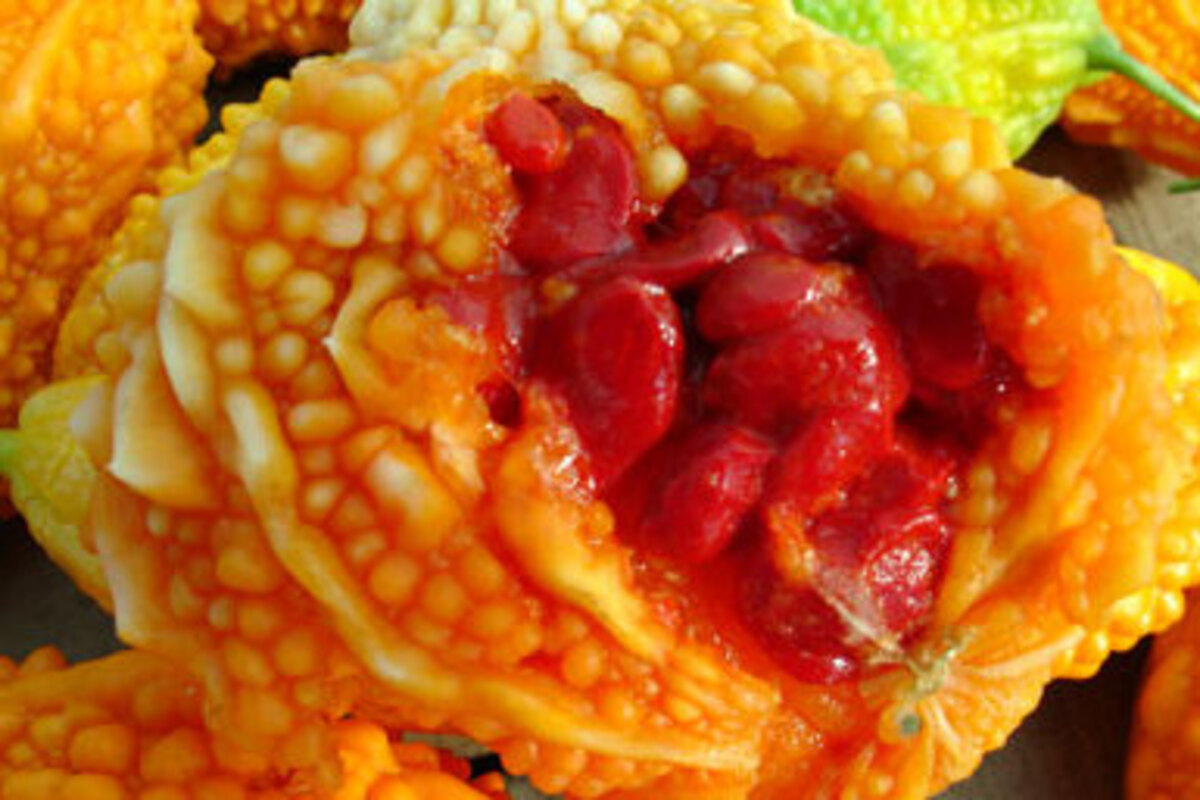
The fruit is initially green and turns orange-red when ripe. It measures 10–20 cm in length, has a broad, elongated shape, and features a bumpy, textured surface. When mature, the fruit splits into three sections, revealing numerous red-brown or white seeds. The seeds are flat, rough, and measure 7–10 mm in length. The Latin name Momordica means “to bite,” which refers to the appearance of the leaves as if they have been bitten.
All parts of the plant and its sap are very bitter. Bitter Melon fruits and leaves are rich in minerals and vitamins, particularly iron, calcium, phosphorus, and B vitamins. However, the extent to which these nutrients are retained in prepared extracts or absorbed by the intestines from consumed foods or liquids is not fully known.