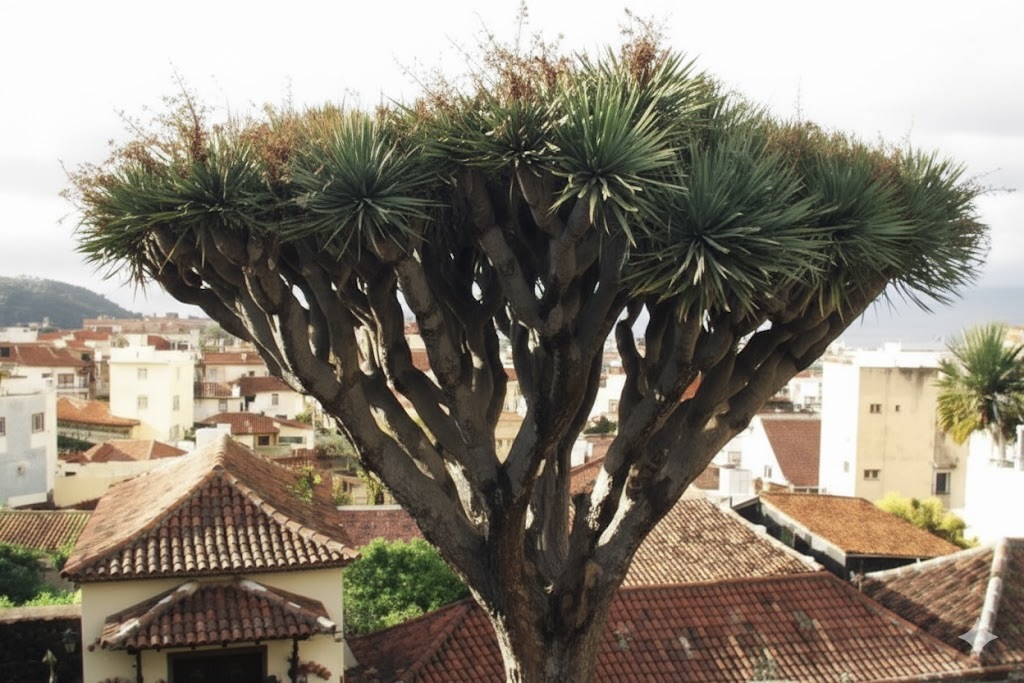
DRACAENA DRAGO – DRAGON’S BLOOD

The Dragon’s Blood tree has blood red sap from which it gets its common name. In recent years scientific research has shown that the blood red sap contains the same iron element that is found in haemoglobin in the blood of humans and animals. Research continues trying to prove that this tree has evolved from the same source as sentient beings.
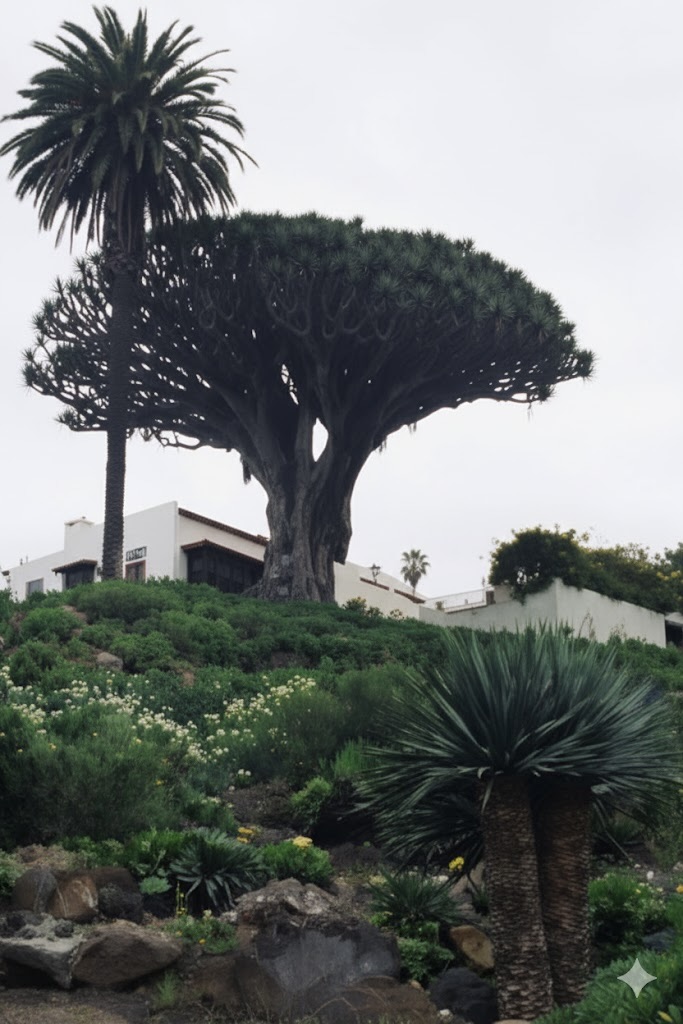
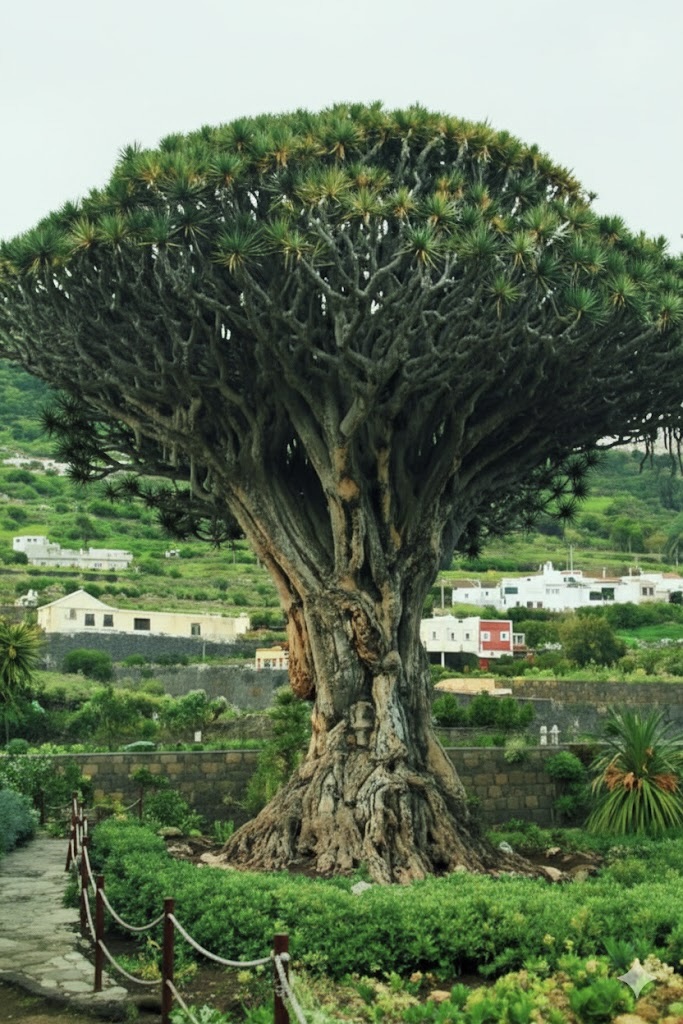
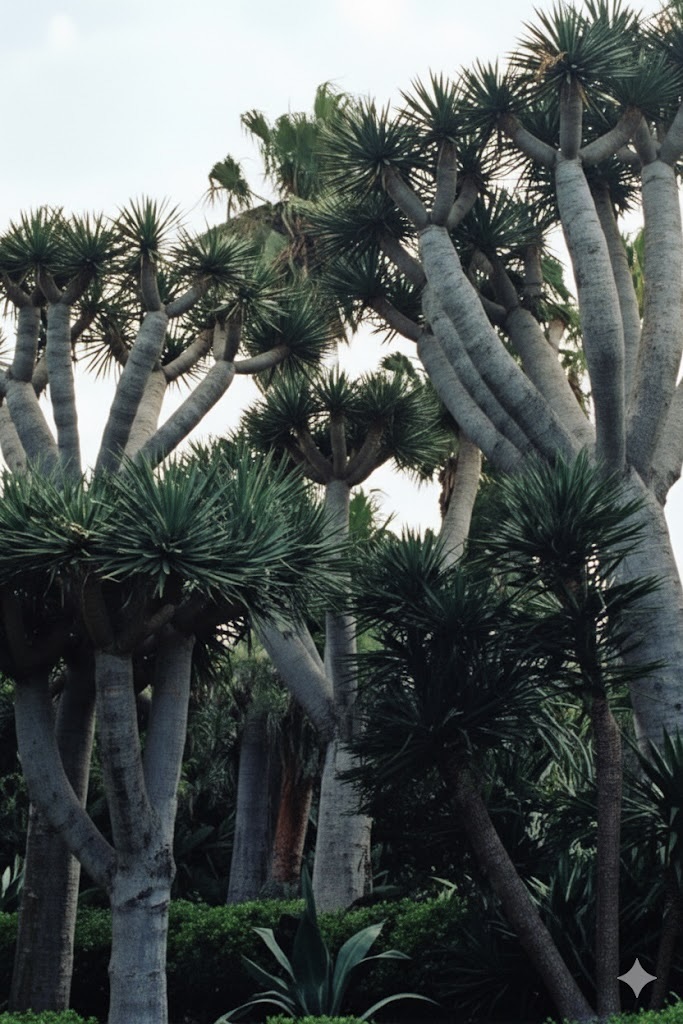
The Dragon’s Blood, Dracaena drago is a member of the evergreen Dracaena family, a group of 40 species of tree and shrub, found in Africa and Asia. Once seen the Dragon’s Blood tree is never forgotten. Its homeland is the Canary, Madeira and Cape Verde Islands in the North Atlantic. It is very long-lived, can grow to 10m in height with a trunk of up to 1m diameter.
On Tenerife, one of the Canary Islands, there is a specimen said to be 2000 years old. Until three years ago when age-testing took place the tree was believed to be a mere 950 years old and the news of its actual age has had a great impact on the village of Icod where it is growing. Bus loads of tourists arrive daily to view the venerable tree and the village has now become a centre for tourism. The village square, where the tree is located, has now been planted up as a mini botanic garden and the whole village declared traffic free to protect the plants.
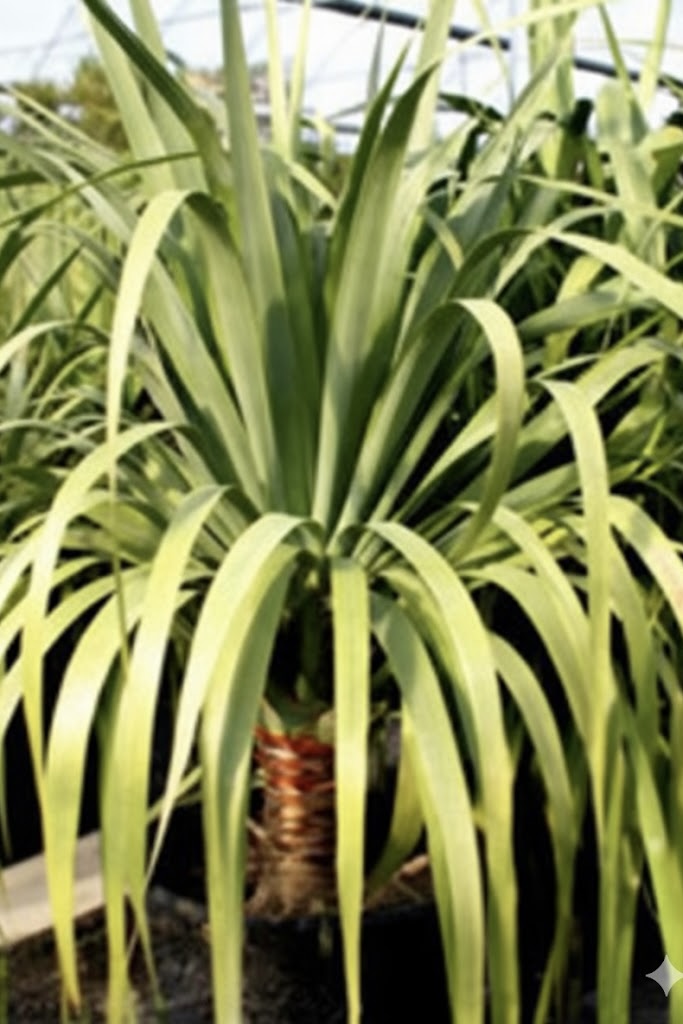
The Dragon’s Blood tree needs a subtropical climate to thrive although it can withstand temperatures down to -40C for short periods. In our Mediterranean region it is possible to create a suitable microclimate, protected from the north, in which to grow this tree. It has leaves up to 60cm in length, oval shaped and growing in the form of rosettes. Young trees resemble a form of agave. For 10-15 years the trunk grows smoothly and then the first flowers appear and branches start to be formed. Prior to the formation of branches, in its initial growing period, it resembles a palm. The flowers appear in spring and are green with white-bordered panicles, these later become orange-coloured fruits.
The Dragon’s Blood tree is grown from seed, at the Palm Centre we have some four-year-old specimens grown this way. It likes full sun or part shade and isn’t fussy about soil type but needs goods drainage and regular watering.
The blood red sap is said to have been smeared on house doors to prevent nightmares. The sap when reduced to resin is said to have been used to cover wounds and prevent bleeding – also to stop post-natal bleeding. These days the sap is used in the production of varnish and wood stains.