ABUTİLİON – ABUTILON

Abutilon is a genus within the mallow family (Malvaceae), comprising approximately 150 species. Some Abutilon species are evergreen, while others are deciduous. They may be annual or perennial and occur as small shrubs or small trees. Most species are native to tropical America; however, several species are distributed in North America, Asia, Africa, and Australia.
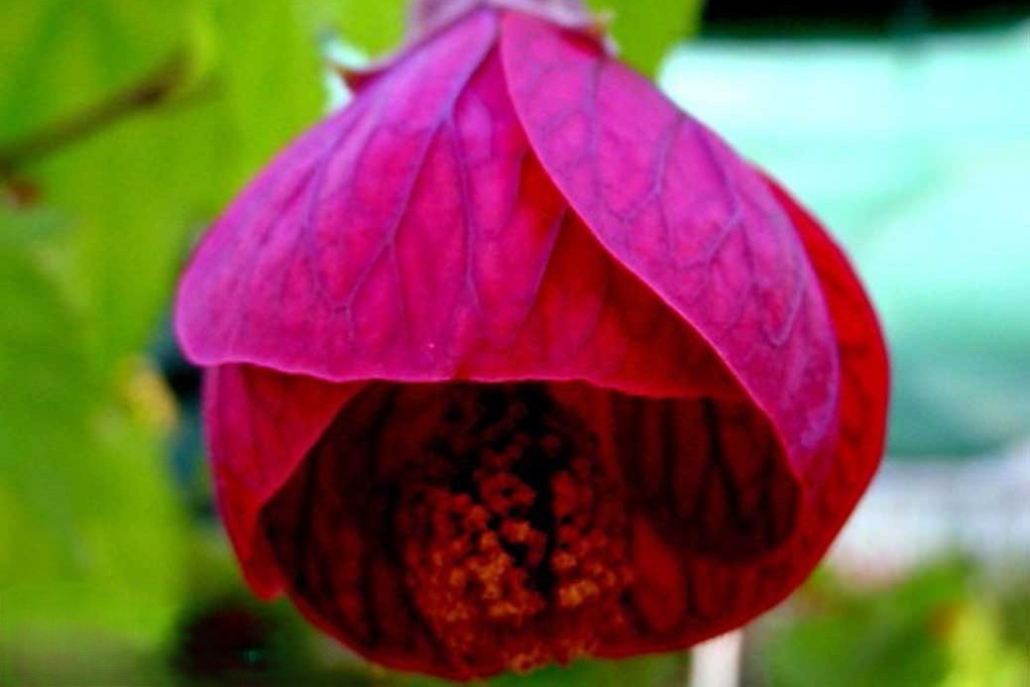
Leaves are entire-margined, ovate, rounded, or palmately lobed with 3–7 lobes. The flowers are generally solitary, pendulous, and bell-shaped, though they may occasionally occur in clusters. While some species are frost-sensitive, others exhibit tolerance to mild frost. Plants prefer full sun to partial shade and flower from early spring through winter.
Abutilon species are cultivated as greenhouse or houseplants in continental and cold climates, whereas in temperate, subtropical, and tropical regions they are grown as outdoor plants. Propagation is carried out by seed sown in spring or by cuttings, which may be taken throughout the year. As with many ornamental plants, they grow best in well-drained, humus-rich soils.
At the Palmiye Center, Abutilon pictum, Abutilon pictum ‘Thompsonii’, Abutilon grandifolium, and various hybrid cultivars are cultivated.
Abutilon grandifolium (large-leaved abutilon) is a small tree reaching 2–3 m in height. The leaves are rounded to ovate, slightly serrated at the margins, and pubescent. The flowers are yellow and bell-shaped. This species is tolerant of short periods of light frost and is suitable for outdoor cultivation in the coastal Aegean and Mediterranean regions.
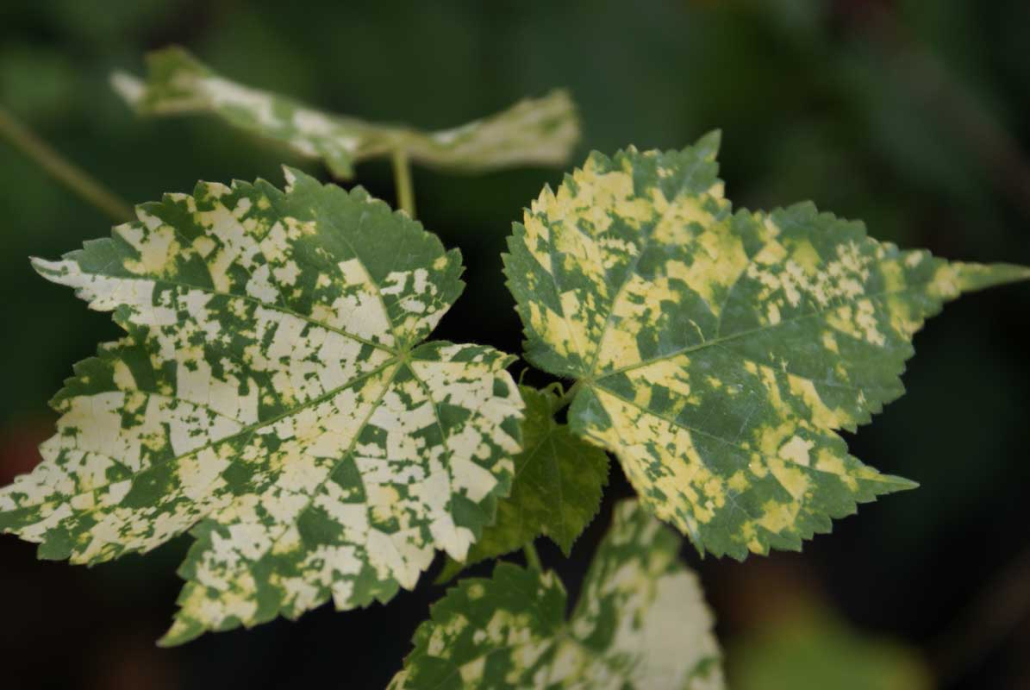
Abutilon pictum is characterized by green, patterned foliage and orange flowers. Its variegated form is known as Abutilon pictum ‘Thompsonii’ or Abutilon pictum variegata. The variegated appearance is caused by Bean dwarf mosaic virus. Infected leaves display a yellow–green mosaic pattern due to virus-induced chlorosis. Under full sun, the yellow coloration becomes more pronounced. Because of its ornamental appeal, this virus-infected form is more widely used in cultivation than the healthy green-leaved plants. Plants propagated by cuttings retain the virus, whereas seed propagation results in virus-free, normally green-leaved individuals.
In contemporary landscape design, hybrids derived mainly from Central American species are commonly used; these cultivars are characterized by abundant, continuous flowering and a wide range of flower colors