EUPHORBİA PULCHERRİMA – POİNSETTİA

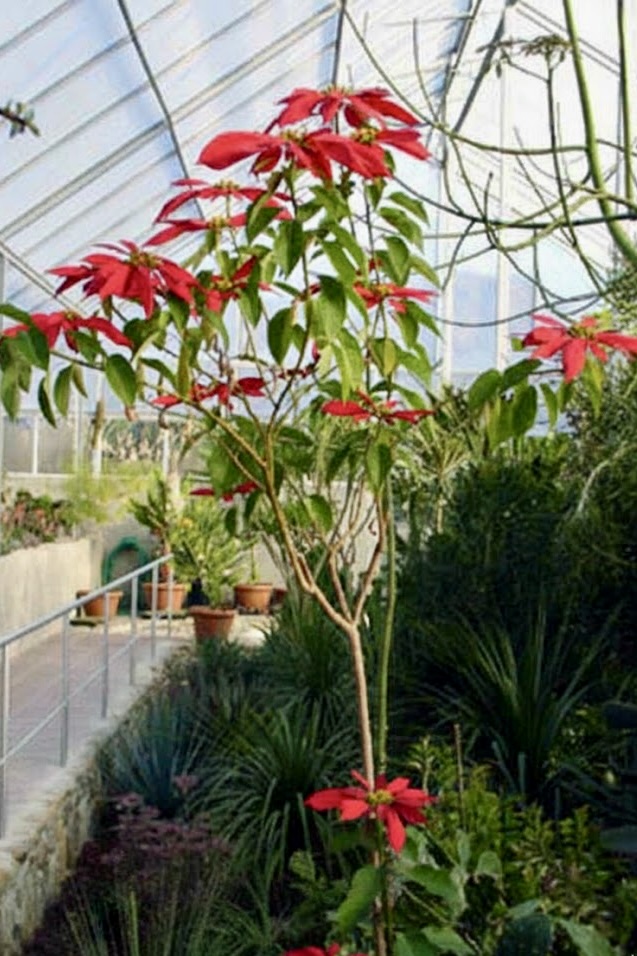
Euphorbia pulcherrima, commonly known as poinsettia, is native to Mexico and Central America. Owing to its flowering period coinciding with the Christmas season, it is widely known as the Christmas plant and, in Turkey, as the Atatürk Flower. In its natural habitat, the species occurs on mountainous slopes in the Taxco region of Mexico. It was first introduced to the United States in 1825 by Joel Robert Poinsett, the U.S. Minister to Mexico, from whom the common name is derived.
Optimal growing temperatures range between 18–20 °C during the day and 12–15 °C at night; however, plants tolerate both slightly higher and lower temperatures. Prolonged exposure to temperatures below 10 °C or to excessive heat generally results in leaf abscission. Plants should therefore be protected from direct heat sources and cold draughts. Poinsettias prefer moderately moist substrates; irrigation should be applied when the growing medium begins to dry. Overwatering is detrimental. During active growth, plants should be fertilized every two weeks with a balanced, water-soluble fertilizer (e.g. 15–15–15). The species is perennial.
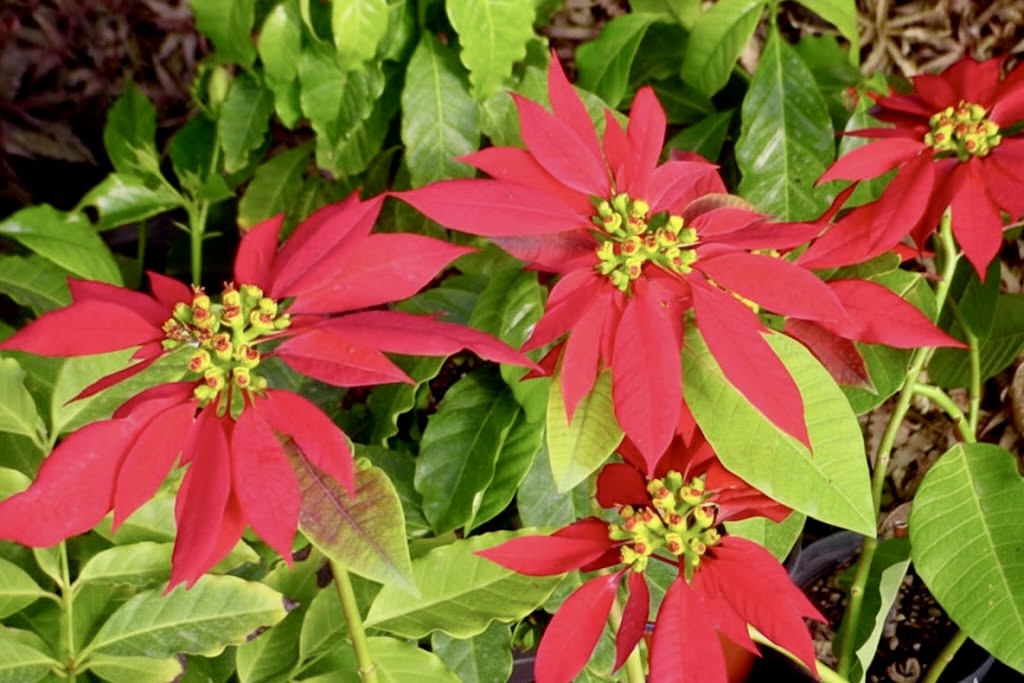
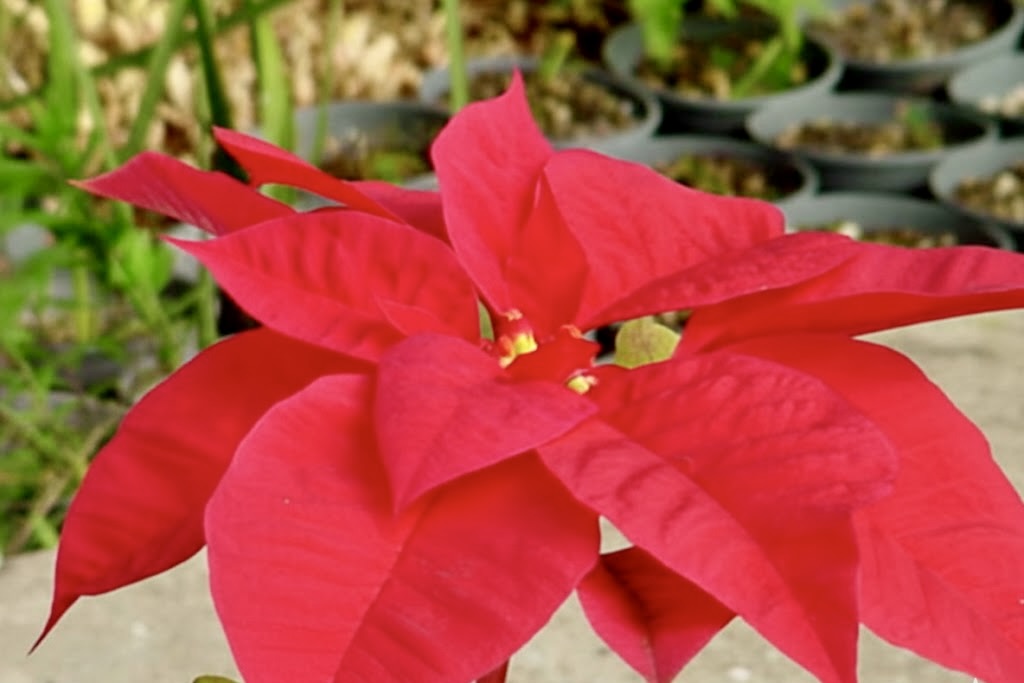
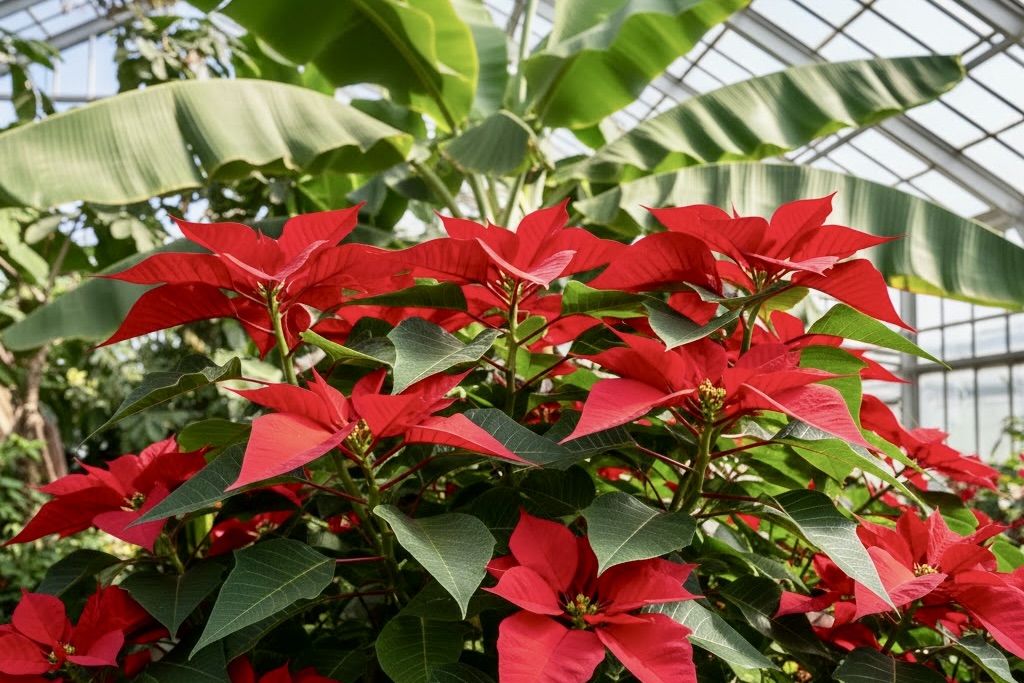
The true flowers are small and inconspicuous, typically yellow, while the showy bracts are white, red, or yellow. Flowering occurs from November to January. Red-bracted cultivars retain their colour for approximately six weeks, while white-bracted forms remain ornamental for up to two months. Newly developed cultivars and selections may remain attractive until spring. Following flowering, plants enter a quiescent phase during which partial defoliation may occur; irrigation should be reduced during this period. Flower induction requires cooler temperatures. Throughout the year, plants perform best in bright, warm conditions with protection from direct sunlight. Container-grown plants may be placed outdoors during summer.
Repotting is preferably carried out in May. Light pinching of young plants promotes improved branching and a more compact growth habit.