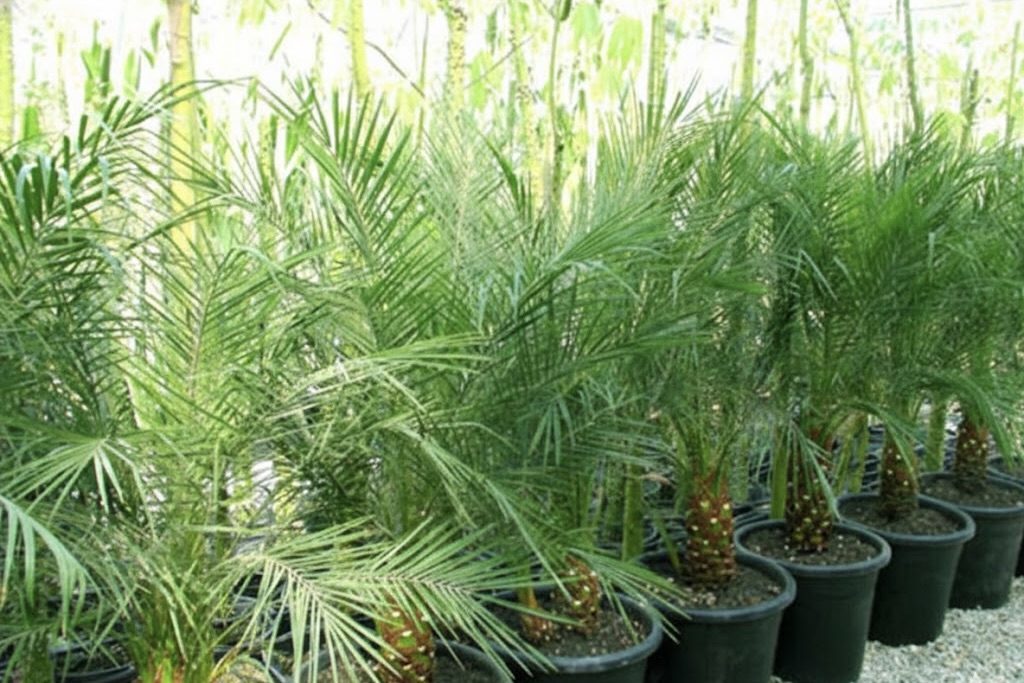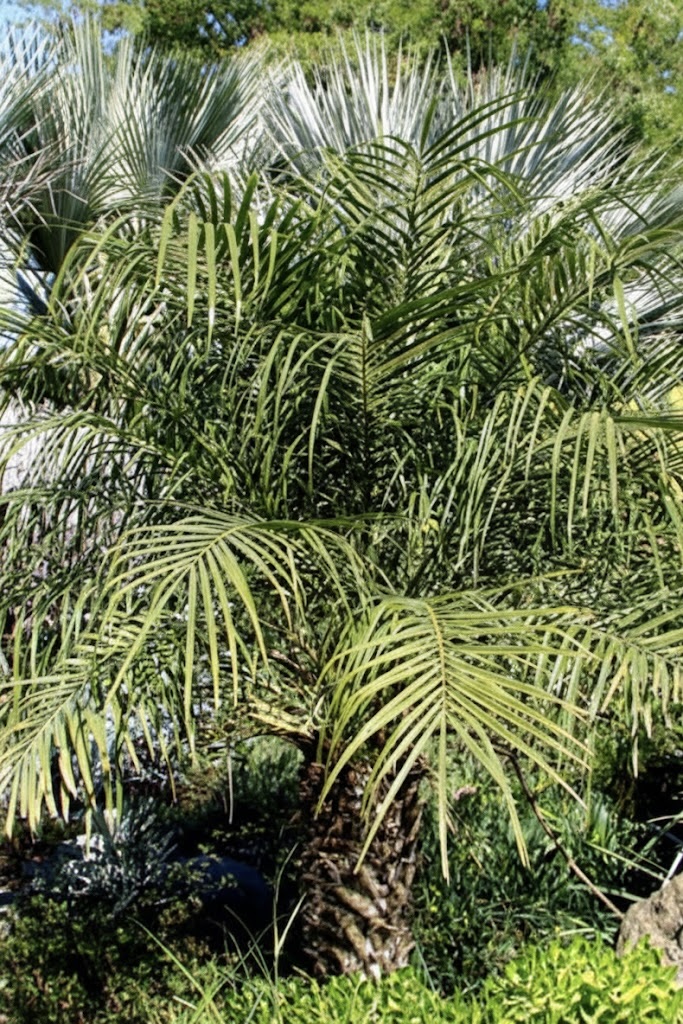
PHOENİX ROEBELENİİ – DWARF DATE PALM
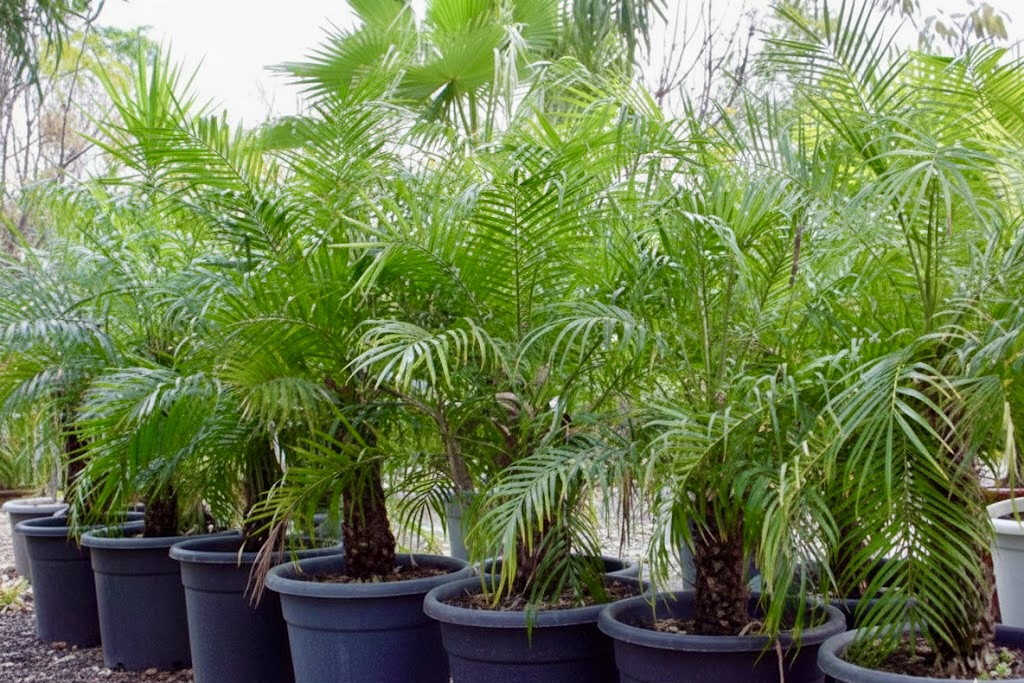
Native to Laos, the Pygmy Date Palm (Phoenix roebelenii) is commonly found along the Mekong River. It was first introduced to Europe by the collector Carl Roebelen, after whom the species is named.
This palm features a single, slender trunk, rarely exceeding 3 meters in height. The leaves are fine, feathery, glossy green, and elegant, reaching 90–150 cm in length. Leaves radiate from the trunk and arch downward, giving the palm a graceful appearance. Its slender trunk combined with long, drooping leaves makes it a highly ornamental species, widely used in landscaping, particularly in subtropical and warm-temperate climates. In colder regions, it is also cultivated as an indoor plant.
Phoenix roebelenii flowers at an earlier age compared to other palms. Flowers are cream-colored. Like all palms, the species is dioecious, with individual plants being male or female. Upon successful pollination, small elliptical green fruits develop on female plants, turning black at maturity.
Propagation is achieved from seed. In cultivation, hybrids derived from this species are commonly used. At the Palm Center, hybrids between Senegal Date Palm (Phoenix reclinata) and Pygmy Date Palm (P. roebelenii) have been produced.
According to the Palm Center’s observations, leaf damage occurs at -2 to -3°C, though the plant resprouts in spring. The minimum tolerated temperature is approximately -6°C. Phoenix roebelenii thrives in well-drained, organic-rich soils. While it prefers regular watering, it is also drought-tolerant. It favors full sunlight but exhibits tolerance to partial shade.