FORTUNELLA MARGARITA – KUMQUAT
Today we would like to introduce a plant of Asian origin that has been used as an ornamental and fruit-bearing tree in Europe, America, and Australia for over 150 years. Although its history in our country is not very old, it has become more widely recognized in recent years. With its exotic appearance and edible fruit, this small tree is an attractive ornamental plant and, contrary to what many assume, one of the most cold-tolerant citrus species. Today we present this beautiful ornamental and fruit tree.
Previously placed in the Citrus genus by botanists, kumquats were reclassified in 1915 by Dr. Walter Swingle as the genus Fortunella. The Fortunella genus includes five Asian species of kumquats. The name kumquat comes from the Chinese word meaning “Golden Orange.”
Kumquats are native to southern China and Malaysia. In the second half of the 19th century, they were introduced to Europe and North America as ornamental plants and later spread worldwide.
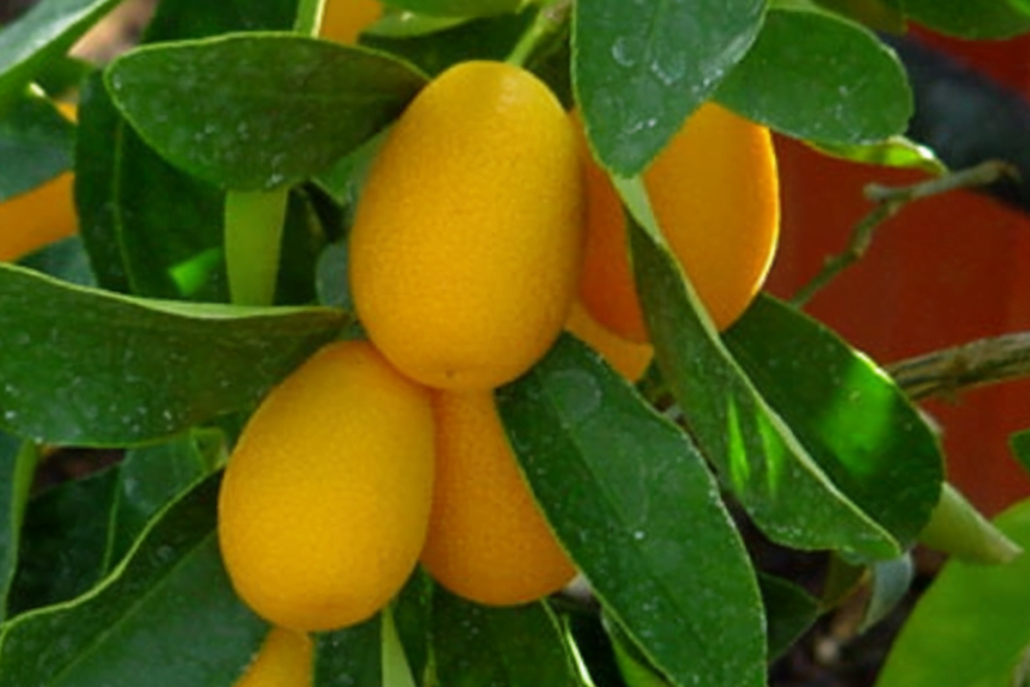
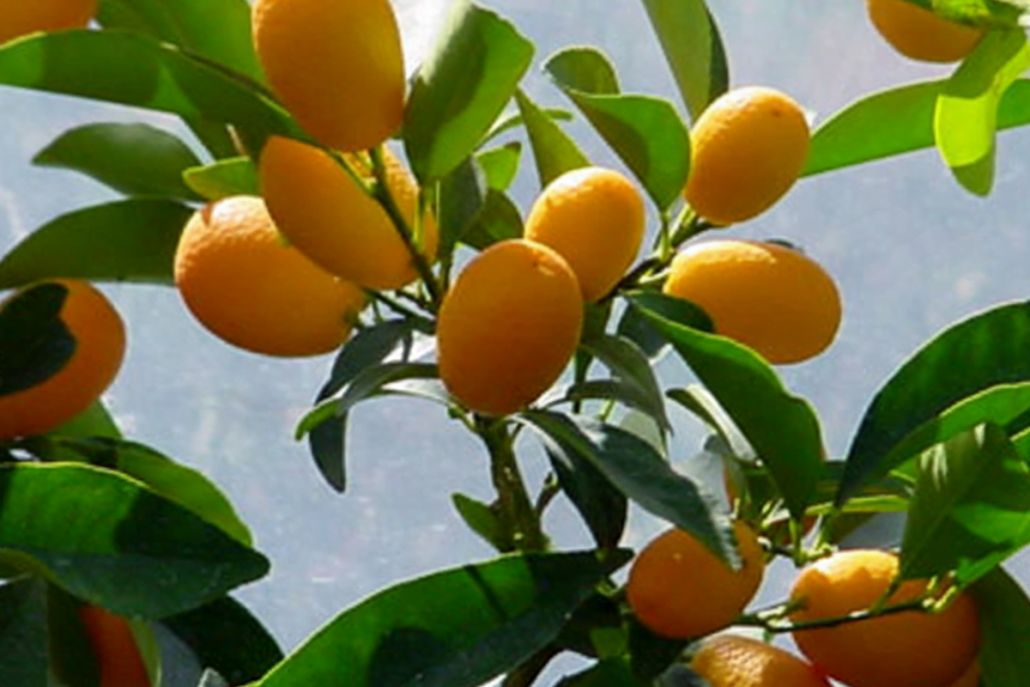
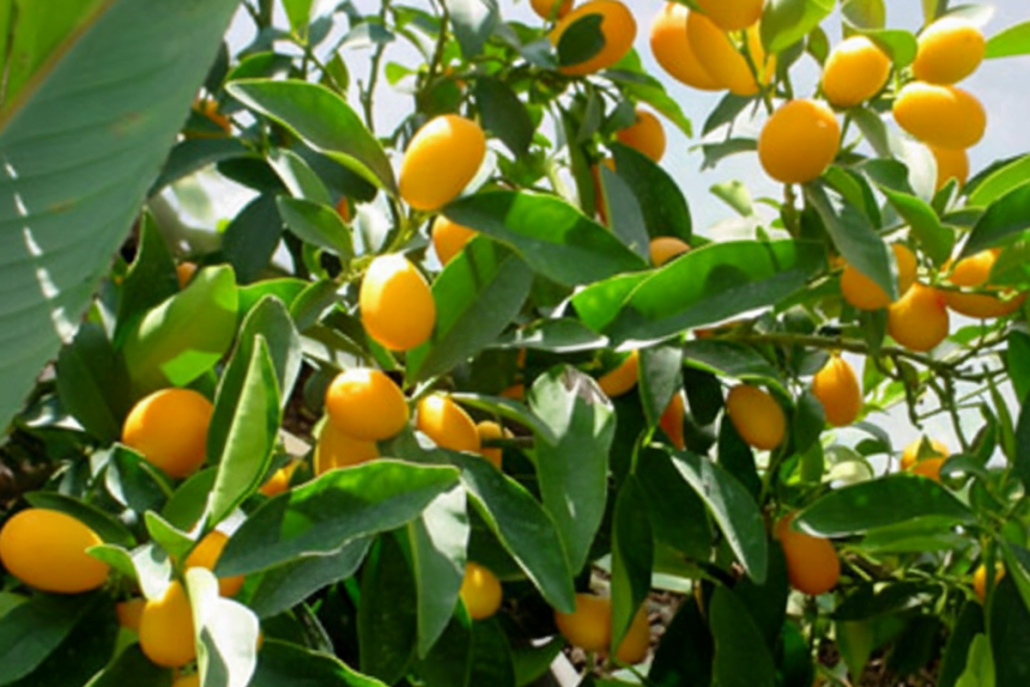
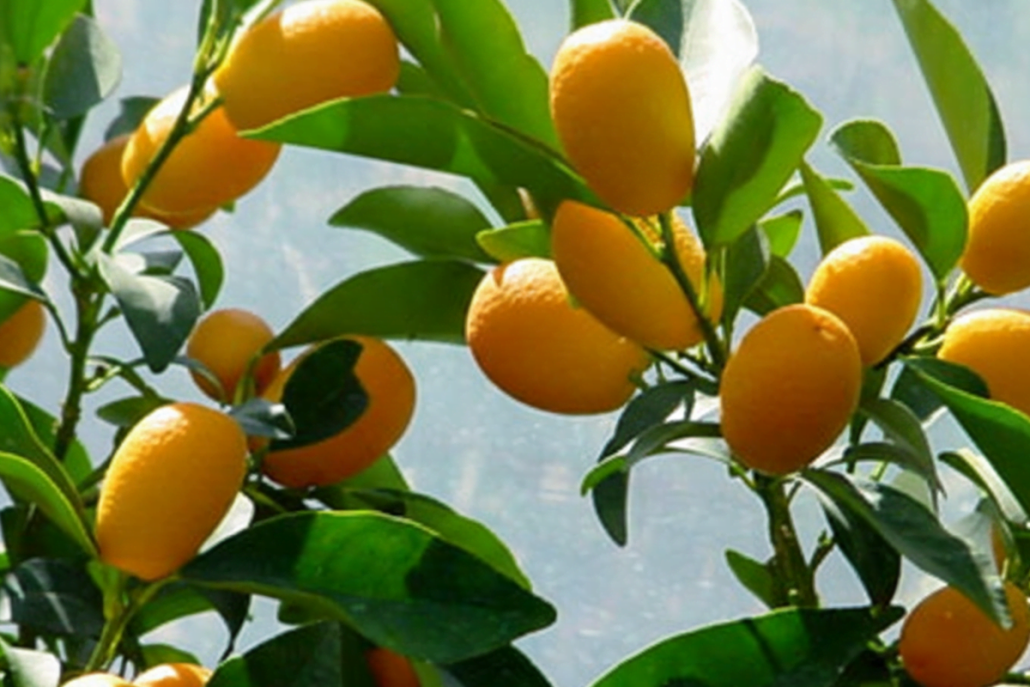
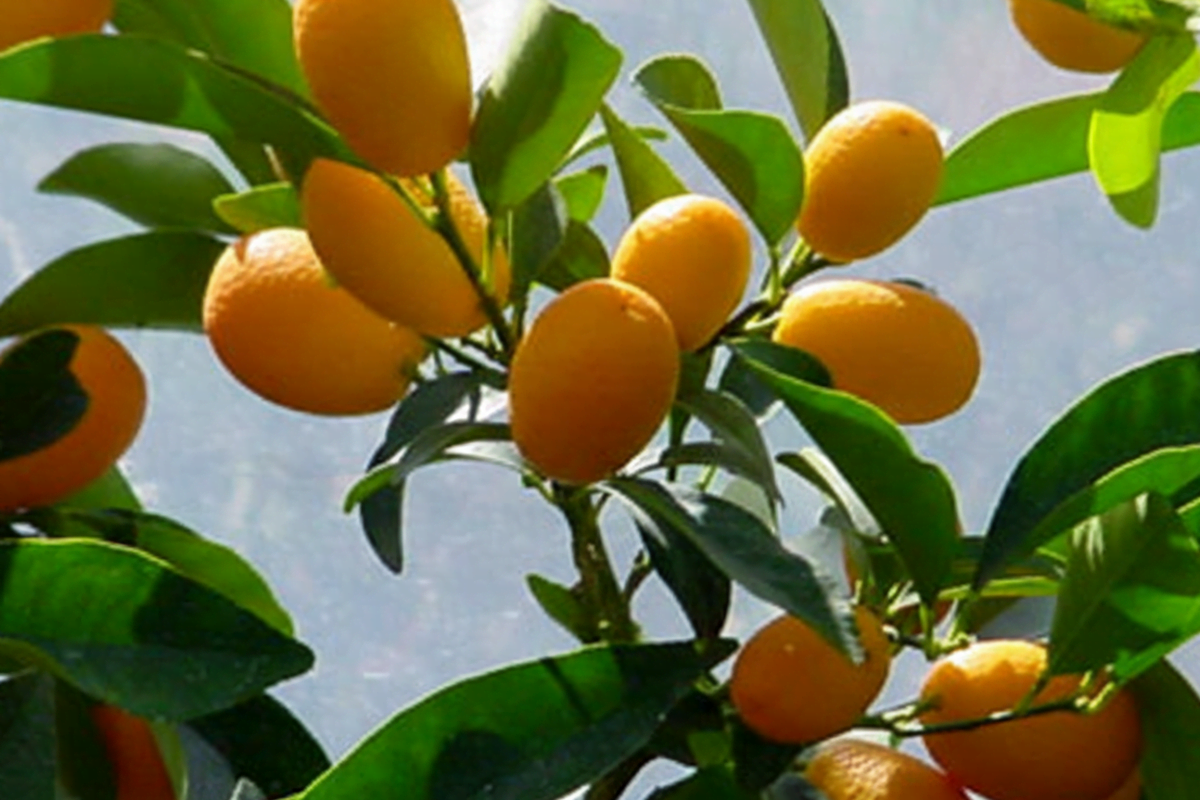
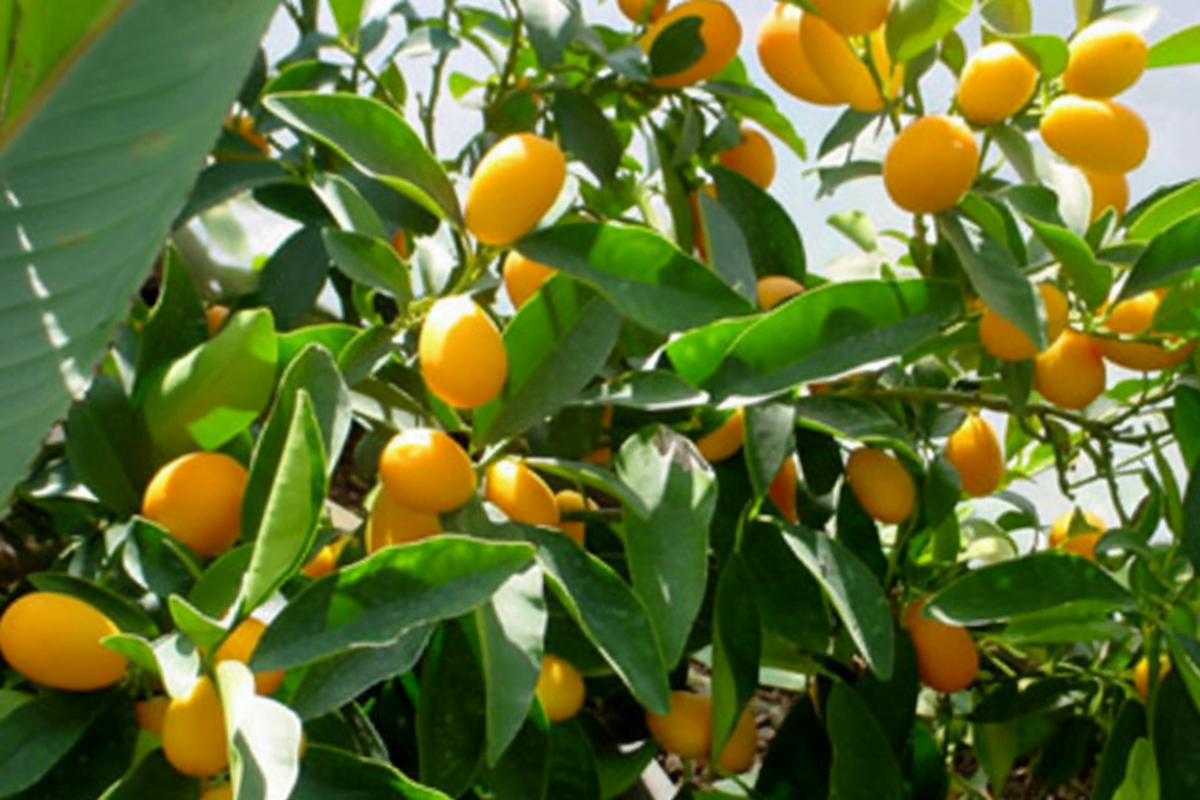
Kumquat trees are slow-growing, compact plants that reach a height of 3–4.5 meters. When young, their branches are greenish and twisted, either thornless or lightly thorned. Their leaves are pointed, oval-shaped, slightly serrated, glossy above, and pale green below. Depending on the variety, the fruit may be round or oval. The peel may be golden yellow or orange-red. The acidic fruit consists of 3–7 segments, is not very juicy, and may contain seeds or be seedless. The fruits can be eaten whole, with their peel. They usually flower in summer, and their fruits begin to turn yellow in late autumn and will remain on the plant throughout winter if not harvested.
Species:
-
Fortunella hindsii – Hong Kong Wild:
Native to Hong Kong. Produces round fruits 1.5–2 cm in diameter. Although edible in China, this very thorny species is grown in other countries only as an ornamental potted plant. -
Fortunella japonica – Marumi or Round Kumquat:
Produces round fruits 1.5–2 cm in diameter. The tree can reach 2.5–3 meters. Similar to Nagami, but more thorny. -
Fortunella crassifolia – Meiwa or Large Round Kumquat:
Produces round fruits about 4 cm in diameter, with an orange-yellow peel and several seeds. The branches of this dwarf tree are thornless or have very small spines. Among kumquats, it is the best variety for fresh eating. -
Fortunella crassifolia “Sun Stripe”:
A variegated ornamental variety developed in Japan, with striped yellow fruits and variegated leaves. -
Fortunella polyandra – Malaysian Kumquat:
Not commonly known in our country. -
Fortunella margarita – Nagami or Oval Kumquat:
The most widely grown kumquat variety in both the world and Turkey. The tree grows up to 4 meters. Its oval fruits are 4–5 cm long, 2–3 cm wide, and orange-yellow in color. It is one of the most cold-resistant citrus species and can tolerate temperatures down to –12°C. It is cultivated both as an ornamental and as a fruit-bearing tree.
Kumquat fruits can be eaten whole without peeling. They are also used fresh to add color and flavor to cocktails. They are commonly made into jams, marmalades, and syrups. In Chinese cuisine, kumquats are often cooked in orange juice, honey, salt, and butter to prepare sauces. Sweet pickles are also made from kumquats.
Kumquats can be propagated by seed or cuttings, but the most suitable method is grafting onto a strong rootstock. This method ensures a plant that is more resistant to external factors and preserves the characteristics of the parent plant. The preferred rootstock (seedling) is Poncirus trifoliata (Trifoliate Orange). Plants obtained this way grow more compactly and are more suitable for pot cultivation. When grafted onto sour orange, growth becomes faster but the compact form is somewhat lost. In alkaline soils or water conditions, sour orange rootstock is more suitable.
Kumquats are not very demanding. Although they prefer well-drained soils, they also grow in clay soils. They prefer full sunlight but can tolerate partial shade under large trees. During summer, they should be watered when the soil dries out. In the Mediterranean region, from June to September, precautions should be taken against leaf miner (apply mospilan or an equivalent pesticide to the trunk once a month).