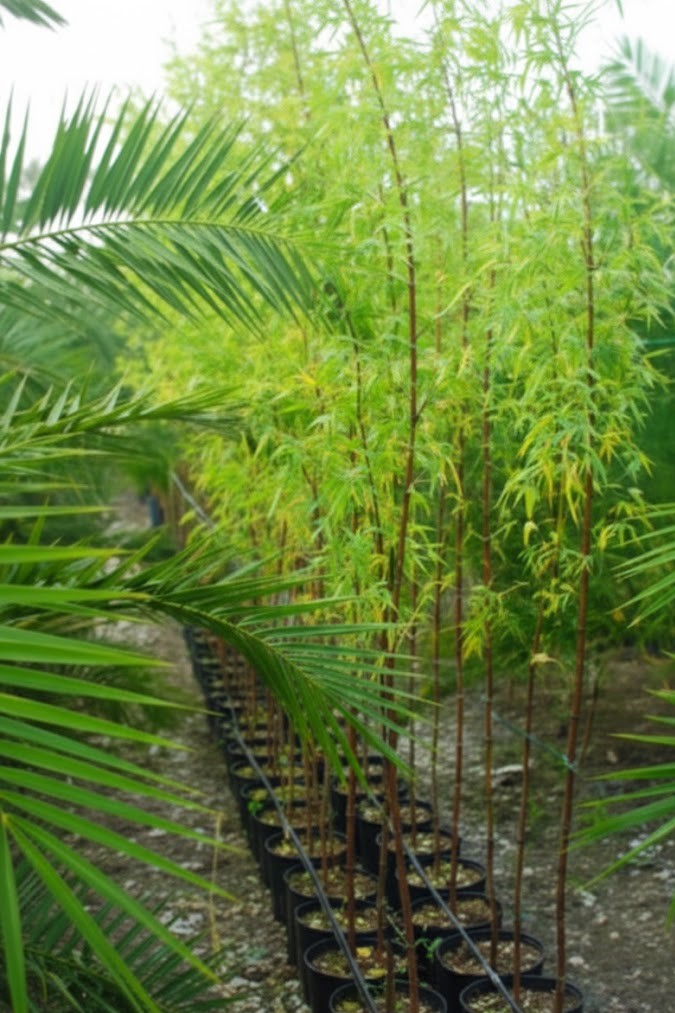
RHUS PENDULİNA-WEEPİNG SUMAC

Weeping Sumac is naturally distributed from the Cape region of the Republic of South Africa to southern Namibia. For nearly ten years, it has been cultivated at our center, propagated from seed, and has successfully completed adaptation trials as a medium-sized tree.
It exhibits characteristics similar to willow trees. With its light green, consistently fresh-looking and attractive foliage, it serves as an excellent shade tree. It can also be used as a roadside tree or as a windbreak. It is generally drought-tolerant and demonstrates a notably rapid growth rate. Mature specimens can reach up to 8 meters in height and 7 meters in crown diameter. The primary reason for its preference over willow trees is that it is evergreen. Research conducted at our center has shown that at –8 °C, the tree sheds its leaves, yet the trunk remains undamaged.
Experimental studies at our center have demonstrated that this tree shows good growth even in areas with high groundwater levels and problematic soils, and it is tolerant of soil salinity. The small, greenish-yellow flowers, which are not particularly showy, bloom in early spring and later develop into small, round fruits in autumn. Since these fruits are consumed by birds, the tree is especially favored by those who wish to attract birds to their gardens.