RAVENALA MADASCARİENSİS – TRAVELER’S PALM – TRAVELER TREE
Today, the tree we will introduce is one of the most remarkable and striking in the world. Once seen, it is a tree that can be recognized even from hundreds of meters away, and it can be grown in winter gardens in our country. In the mild Mediterranean coastal zone, precautions must be taken to protect it from frost during winter.
The Traveler’s Palm is among the most beautiful trees of the tropics. Despite its name, this plant—belonging to the Strelitziaceae (Bird of Paradise) family—is neither a banana nor a palm.
As its name suggests, Ravenala is native to Madagascar Island and is endemic to that region (naturally occurring only on this island in the world).
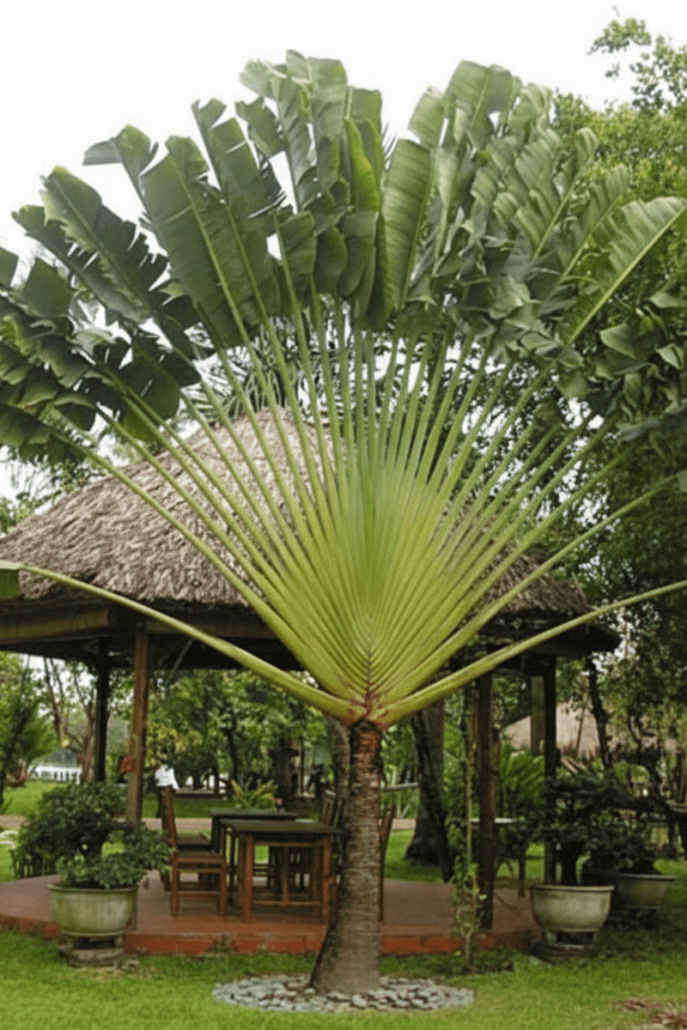
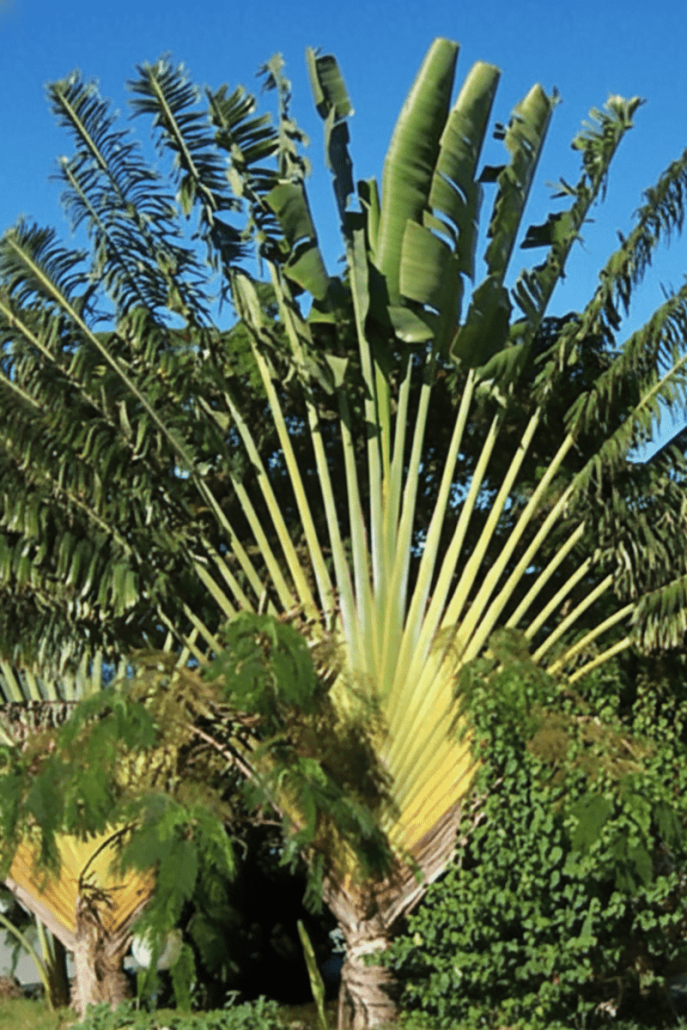
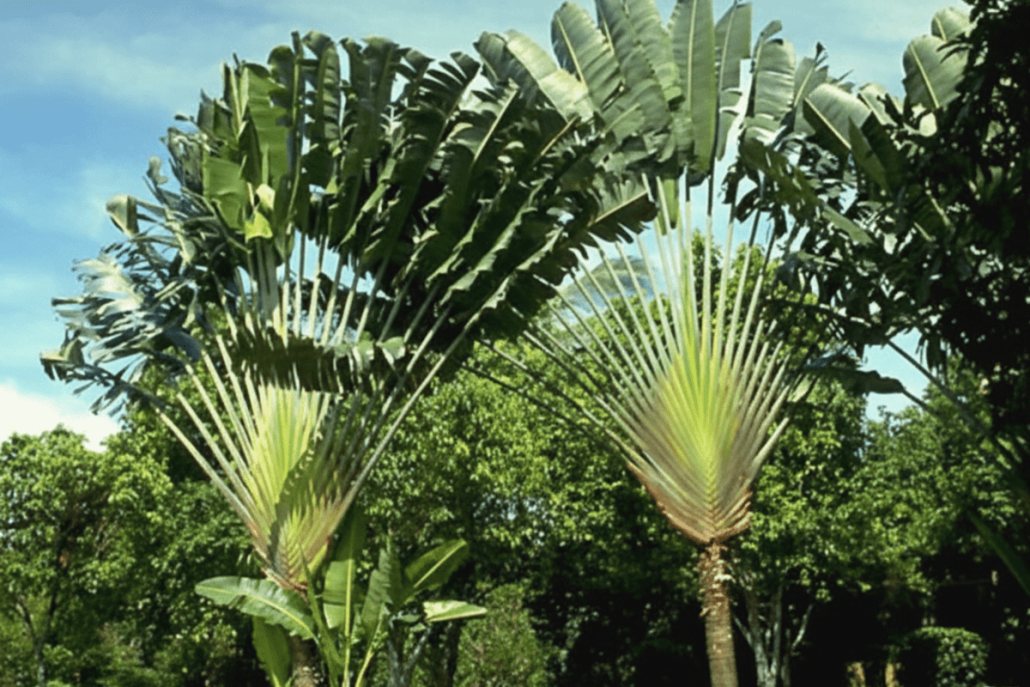
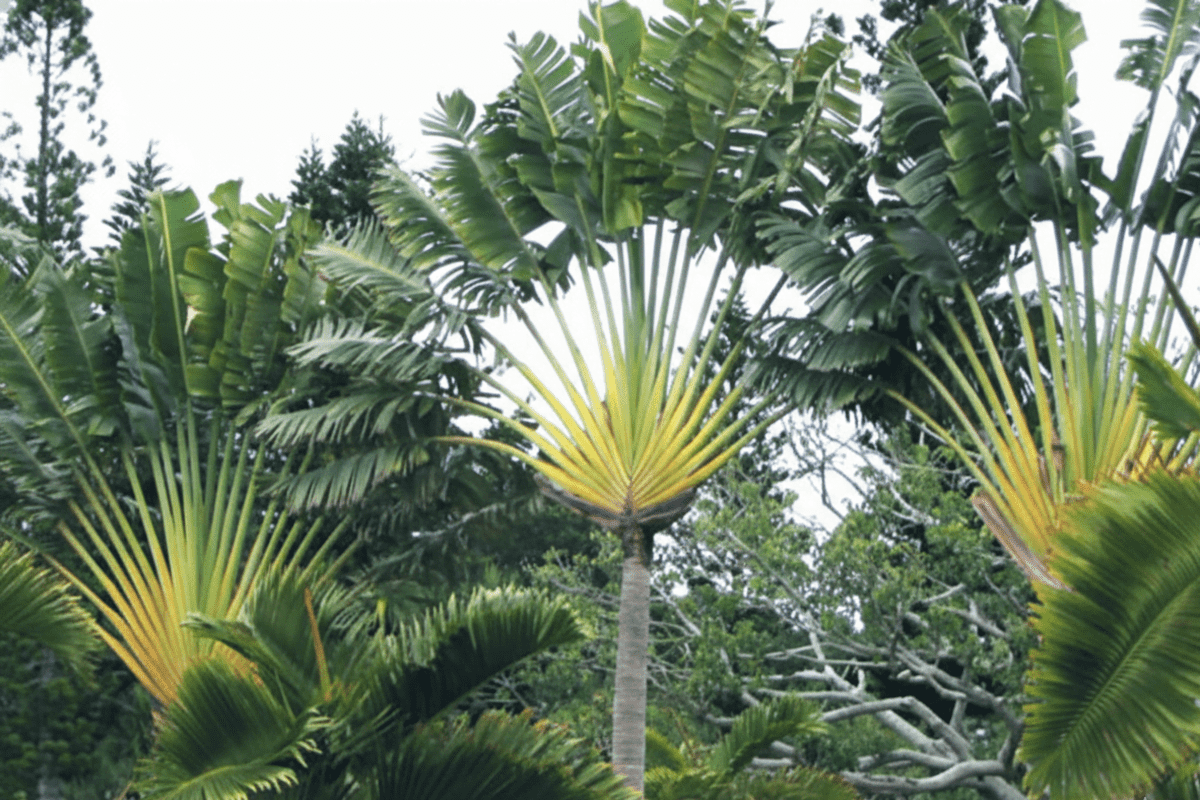
When young, its trunk is formed of soft, strelitzia-like leaves, but over time it thickens and becomes a round tree trunk about 30 cm in diameter. The Traveler’s Palm can grow up to 18 meters tall. Its banana-like leaves stretch symmetrically to both sides, measuring 25–50 cm in width, and together with their stalks can reach up to 3 meters. Because of the shape of its leaves, it resembles a banana plant, and from afar, it looks like a broad-leaved fan palm—hence the name “Banana Palm” in Turkish.
The English also call it the “Traveler’s Palm.” This name comes from travelers in Madagascar who could meet their water needs in the rainforest by drinking the water collected in the wide leaves of Ravenala.
Its many small, cream-colored flowers appear on a single stalk, which can reach 30 cm in length, and look like a single large flower. In the tropics, the tree blooms throughout the year. Inside its brown fruits are bright blue, angular seeds that are as attractive as the plant itself.
Although it is a tropical plant, it can tolerate short periods of light frost. It should be protected from wind, as its leaves may tear from wind damage, similar to banana plants. It is not very picky about soil and can grow in sandy or clayey soils. It does not like its roots sitting in water, but it grows better in consistently moist soil. It prefers full sun but can tolerate partial shade.
It was first grown in our center in 1995 and made available for sale in the late 1990s. A specimen planted in the protected inner garden of a hotel in Marmaris reached the height of the building’s second floor, but died after being relocated. After a long break, its production was resumed in 2004.
In our country, it can be grown in winter gardens or in the southern coastal regions if protected from frost during winter.