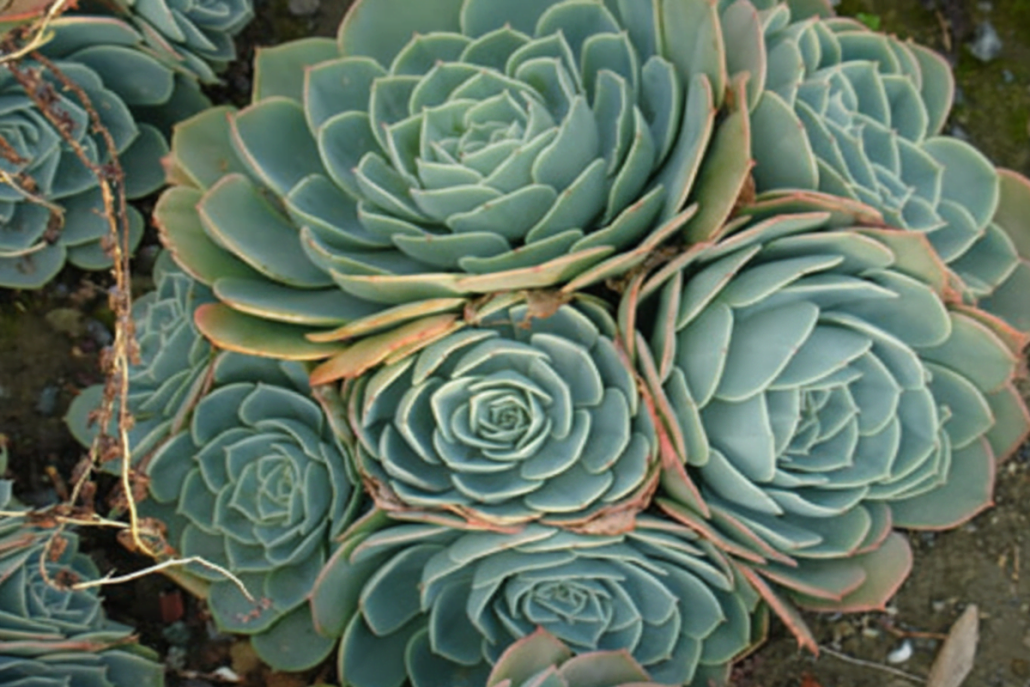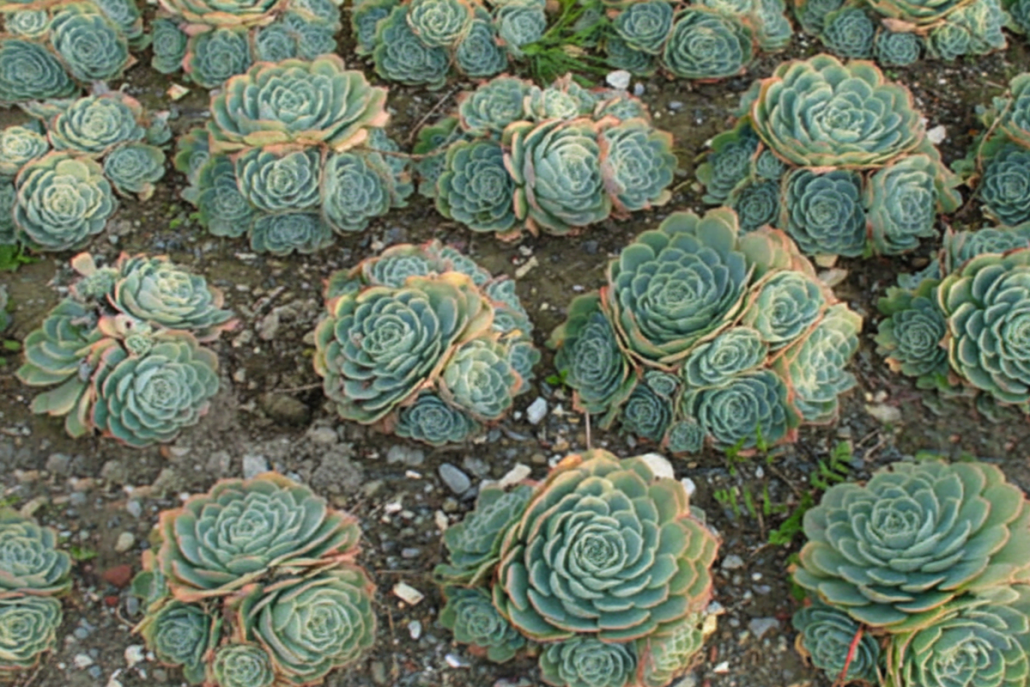
ECHEVERIA GLAUCA – BLUE ECHEVERIA
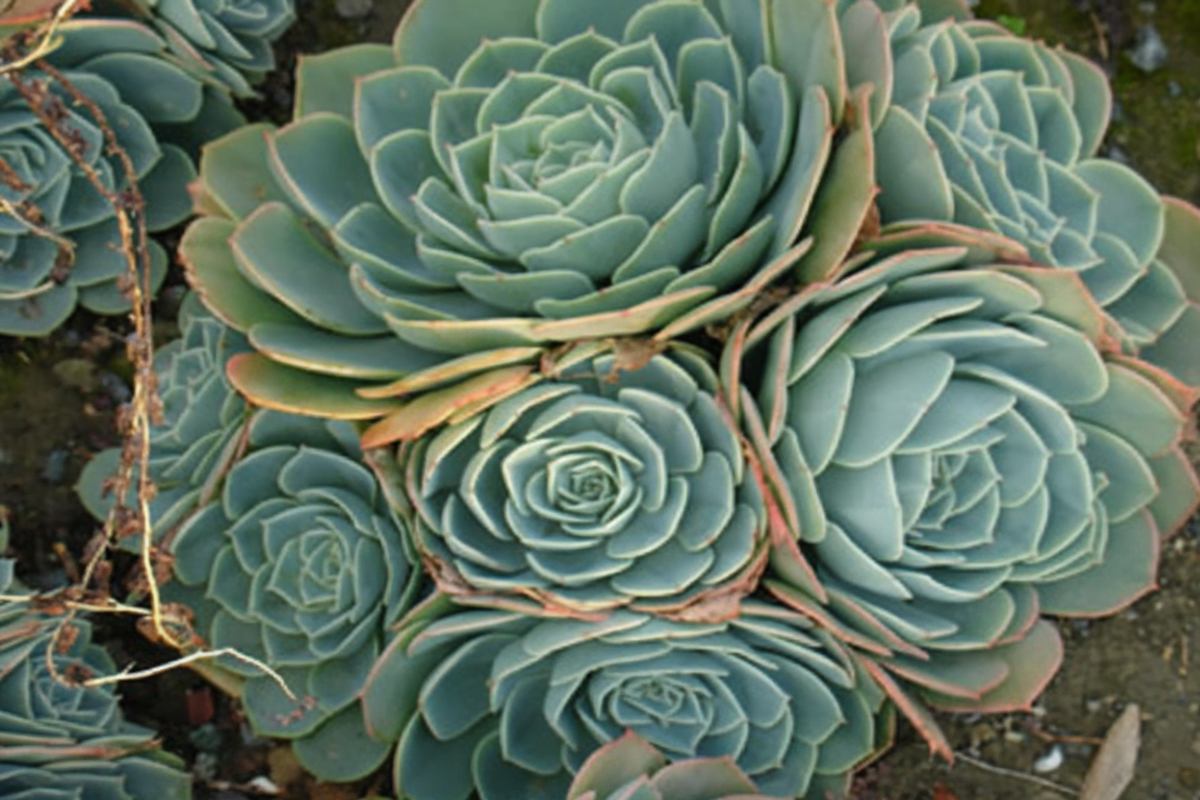
Echeverias belong to the Crassulaceae family, which includes cacti and succulent plants. They are naturally found from Mexico to the northwestern regions of South America. These plants are drought-tolerant and can survive under full sun without protection.
The species we are introducing, Blue Echeveria – Echeveria glauca, is relatively little known in Türkiye. It forms a rosette of leaves and attracts attention with its gray-blue foliage. Under intense sun or drought, the leaf tips may turn slightly reddish. It blooms yellow to orange flowers in summer and autumn, arranged in clusters on a 20–25 cm tall stem.
Blue Echeveria reaches a diameter of 20–30 cm, and over many years may grow up to 30 cm in height. However, taller plants often lose their lower leaves and their stems grow unevenly, leaning to one side, which may reduce their visual appeal. For this reason, in formal gardens, older plants should ideally be renewed every 2–3 years.
It grows well in full sun or partial shade and, provided it receives sufficient light, can also be used as an indoor plant. Considering its frost tolerance of –12°C, it can thrive outdoors throughout the coastal regions of Türkiye.
Naturally drought-resistant, Blue Echeveria is often used in dry rock gardens. Although it tolerates humidity, it does not like wet leaves, so watering should ideally be done at the soil level. It is not suitable for planting in areas with constant sprinklers, such as lawns.
It is ideal for decorative use around non-spreading, shade-free trees like palms, along garden paths, in central beds where irrigation may be inconsistent, or in rock gardens.
Aging or damaged leaves should be removed. The plant produces offsets regularly, which can be separated for easy propagation. If the stem elongates and bends over time, the top portion can be cut, rooted in a soil mix, and replanted.