AGAVE GUIENGOLA – GUIENGOLA AGAVE – GHOST AGAVE – DOLPHIN AGAVE
The genus Agave is native to the American continent. It comprises about 200 species, of that 150 of them are endemic to Mexico, which it is centre of origin and diversification. These plants are adapted to arid and semiarid environments and therefore to hostile conditions, such as low water availability, intense solar radiation and extreme temperatures. Agaves are an outstanding part of arid ecosystem, and have important relations with other organisms, especially pollinators such as bats, bees, wasps, ants, among others conferring them an undisputable ecological importance. On the other hand, agaves were used by human in many ways since ancient times, and they are currently a source of food, alcoholic beverages like tequila and mezcal, fibres and other raw materials, and have great potential in the production of sweeteners and biofuels.
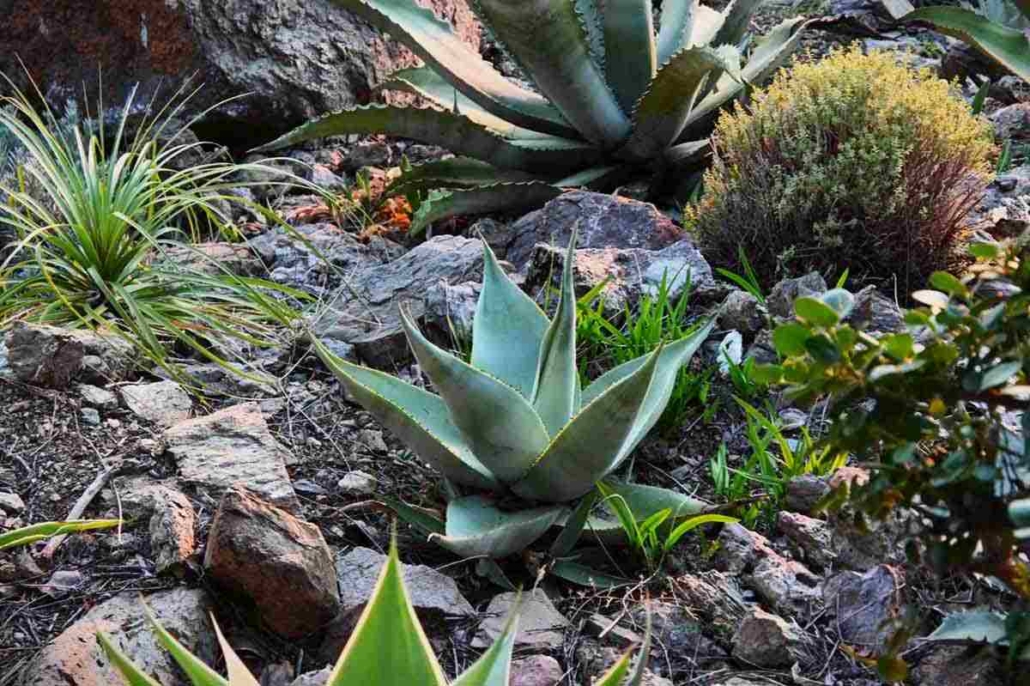
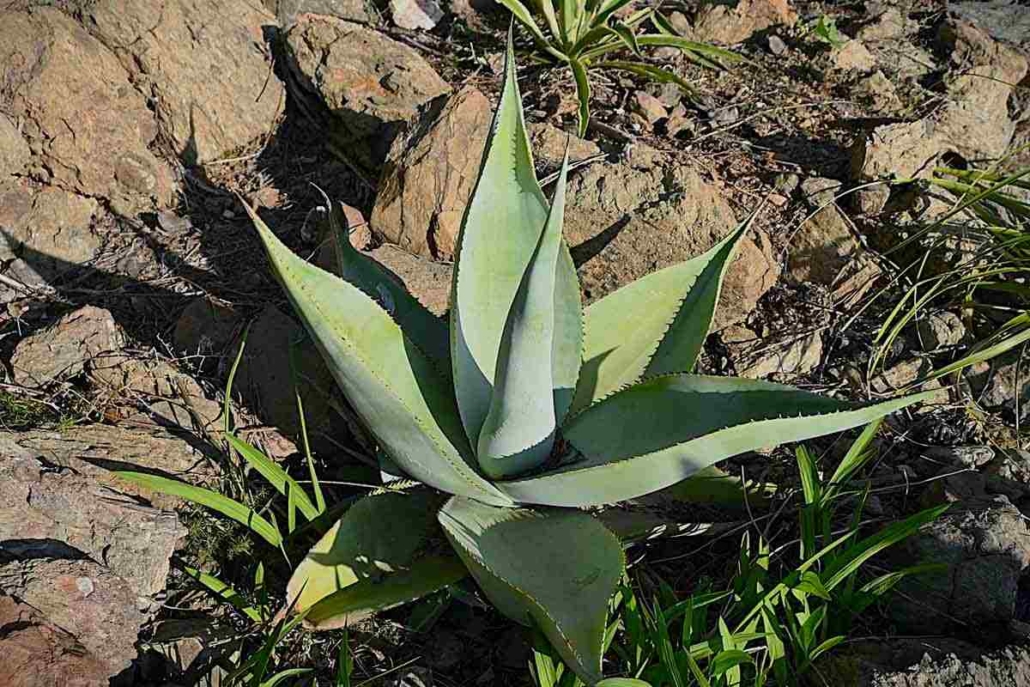
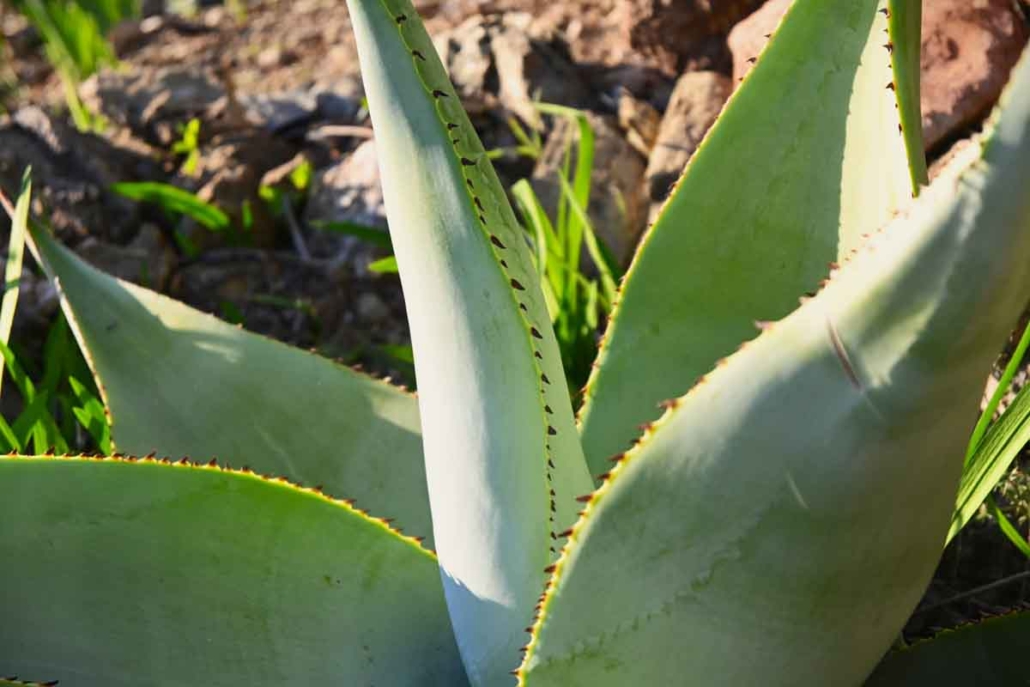
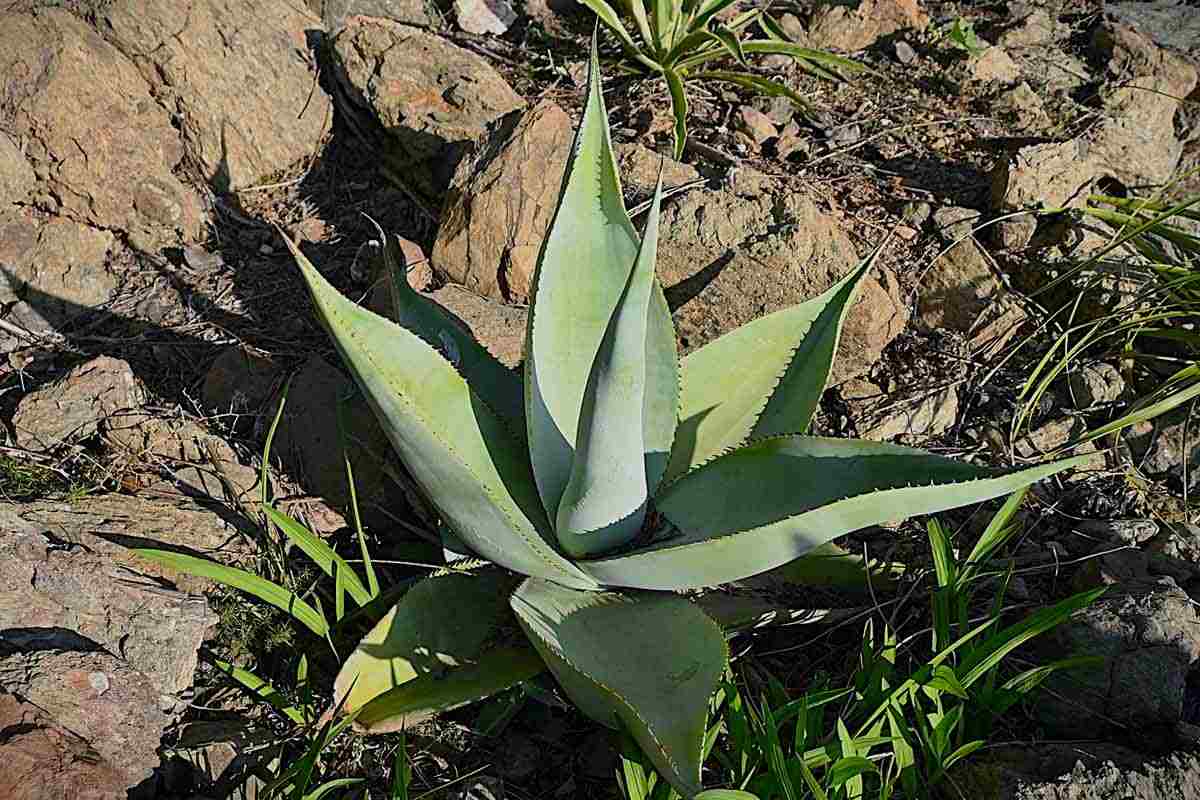
Agave guiengola is a fast-growing, large, evergreen, succulent plant belonging to the family Asparagaceae. Plant is endemic to the State of Oaxaca, in southern Mexico. It grows on limestone slopes at an elevation between 110–1100 metres above sea level. The species name Guiengola refers to Cerro Guiengola, the mountain where the species was first discovered (The name Guiengola in the Zapotec language is a combination of guie meaning rock and ngola meaning large, and when combined means large rock. There once was a Zapotec city on Cerro Guien-gola, but that has long been abandoned). Plants in habitat are mostly single while the more common cultivated clones sucker profusely. Unlike the crowded, spiky rosettes of its cousins, it features broad, thick leaves that look like they were carved from pale blue marble, so often called the Ghost Agave. The plant also called Dolphin Agave for its broad, smooth, soft leaves.
Guiengola Agave these large succulent forms open rosettes to 120-150 cm tall by 120 to 180 cm wide. The few massively thick white-green glaucous leaves have dark brown marginal teeth are very broad at the base and taper to a brown terminal spine. The leaves lay more horizontally than most Agaves. Normally it flowers only at maturity once after 15-25 years and the main crown dies after blooming. 200-300 cm tall unbranched spike, flowering from near the base. Inconspicuous pale-yellow flowers that are about 35 mm long, almost tubeless with distinct tepals and the insertion of the filaments at the base.
The fruits are elongated, brown capsules 2–2,5 cm long.
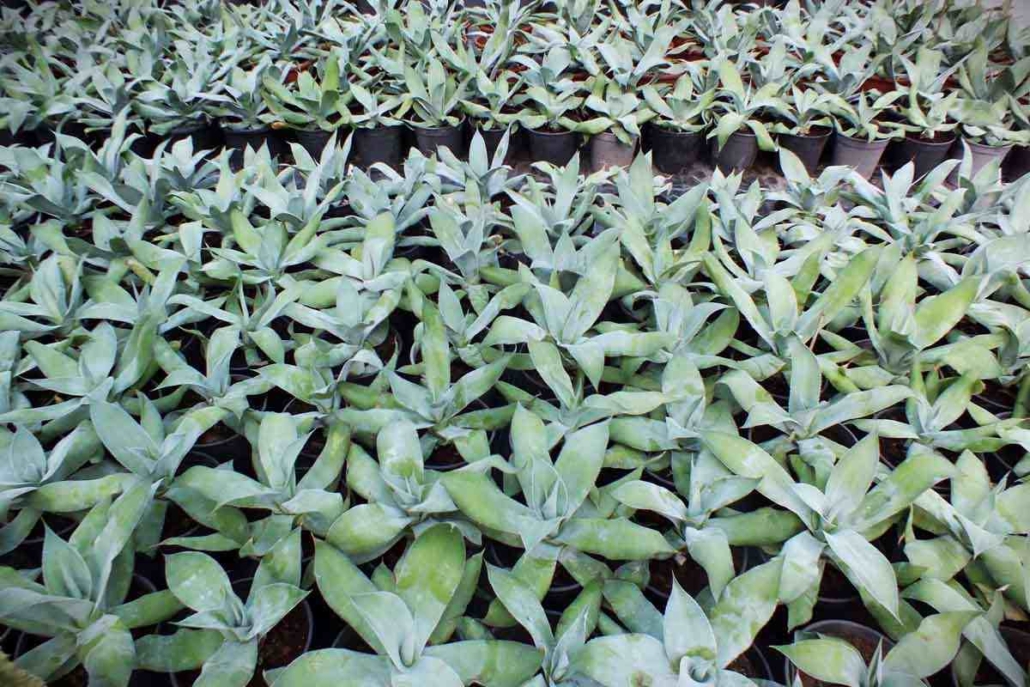
Agave guiengola is one of the few Agaves that like semi shade rather than full sun as the leaves tend to burn in hot blazing sun. Plant likes regular watering, over watering or consistently wet medium causes oedema. It does not like cold, hardy down to -4°C to -5°C. Propagation is done by seed or offsets (plants in cultivation sucker or produce offsets profusely, while plants in habitat usually stay solitary). This plant shows relation to Agave bracteosa and Agave ellemeetiana, but its monocarpic rather than polycarpic habit set off Agave guiengola from either of the species mentioned.
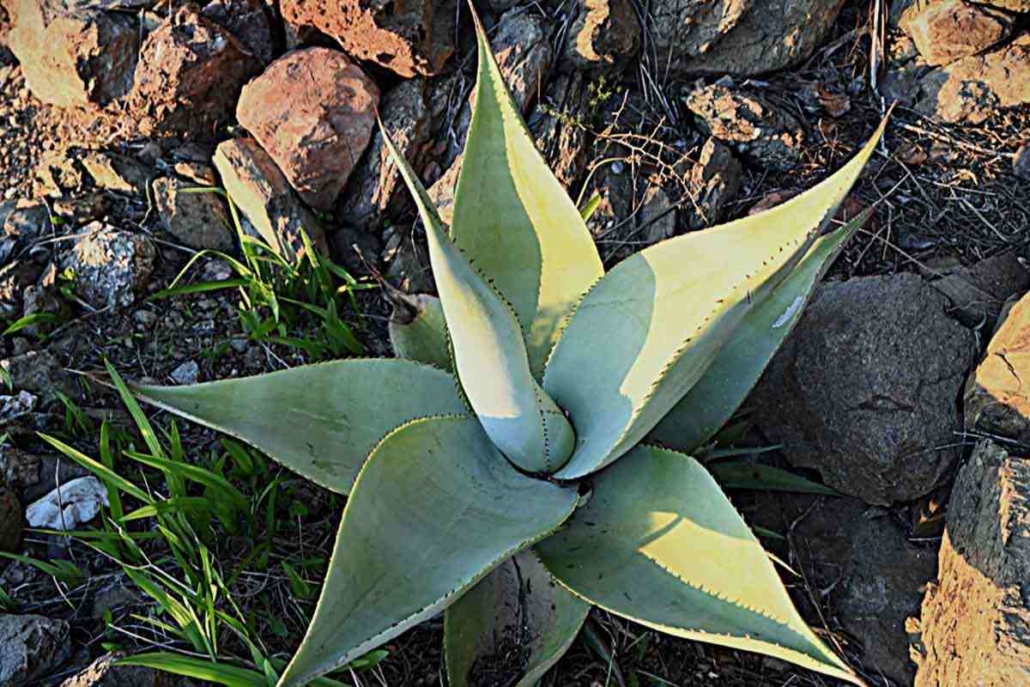
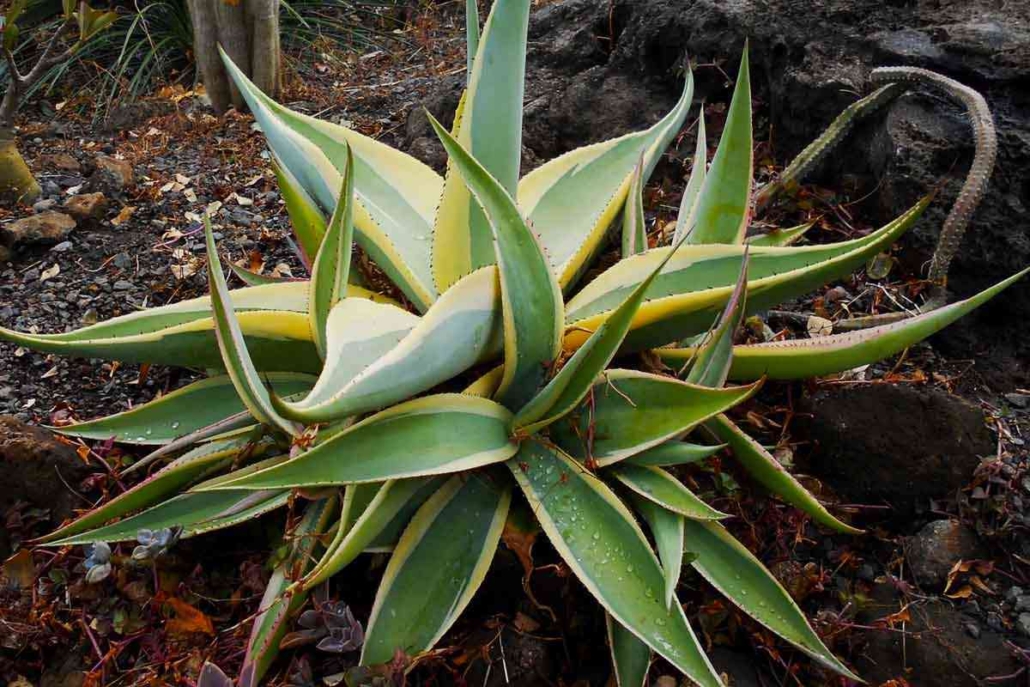
Agave guiengola cv. ‘Creme Brulee’ this cultivar was discovered by California Agave specialist Kelly Griffin. This soft-leaf agave is simply elegant with wide, bluish-green leaves surrounded 1-2,5 cm border of creamy white to butter cream yellow that takes a nice pink hue with cold and sunny conditions. The variegated form is about 25 percent smaller than the normal one. There is also another variegated cultivar of this species called Agave guiengola ‘Medio Picta’.
Use in Landscape: Guiengola Agave’s uniquely shaped, silvery-bluish leaves make it a unique statement in the landscape. According to many collectors it is most spectacular large agave because of its sculptural form.
Plant is used in rock gardens, succulent gardens and xeric landscape. It is also a stunning plant for large containers.