FURCRAEA MACDOUGALLII – MACDOUGALL’S CENTURY PLANT – FALSO MAGUEY GRANDE
Furcraea is a small genus of succulent plants belonging to Asparagaceae family. There are 25 accepted species in the genus. Plants are native to tropical regions of Mexico, the Caribbean, Central America and Northern South America. Some species are also naturalized in parts of Africa, Florida of United States, Portugal, Thailand, India, and Australia, as well as on some oceanic islands. The name Furcraea was given to the genus, to honour French chemist and politician, Antoine F. de Fourcroy (1755-1809), who was the Director of the Jardin des Plantes in Paris.
Plants of this genus are the origin of cabuyo, a natural fibre. Furcraea’s are monocarpic, generally non-suckering rosette making plants with thick, stiff, succulent leaves. Some form, tall stems while others remain stemless. Some have armed leaves like many agaves while others have smooth, leaves. Furcraea inflorescences are very tall; up to 12 meter in some species and produce hundreds of bulbils.
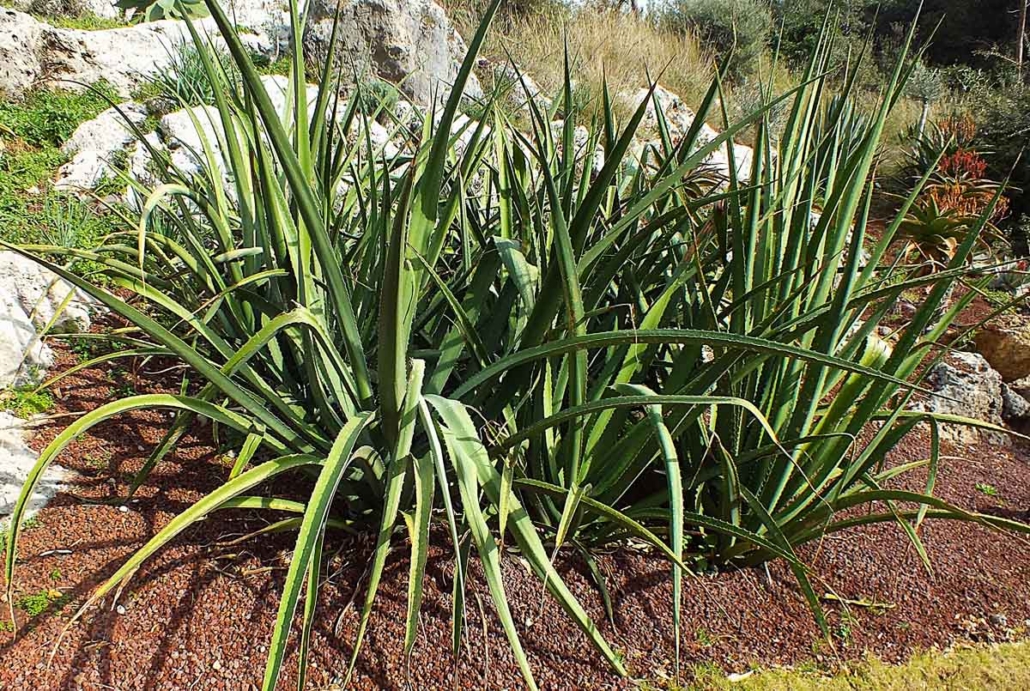
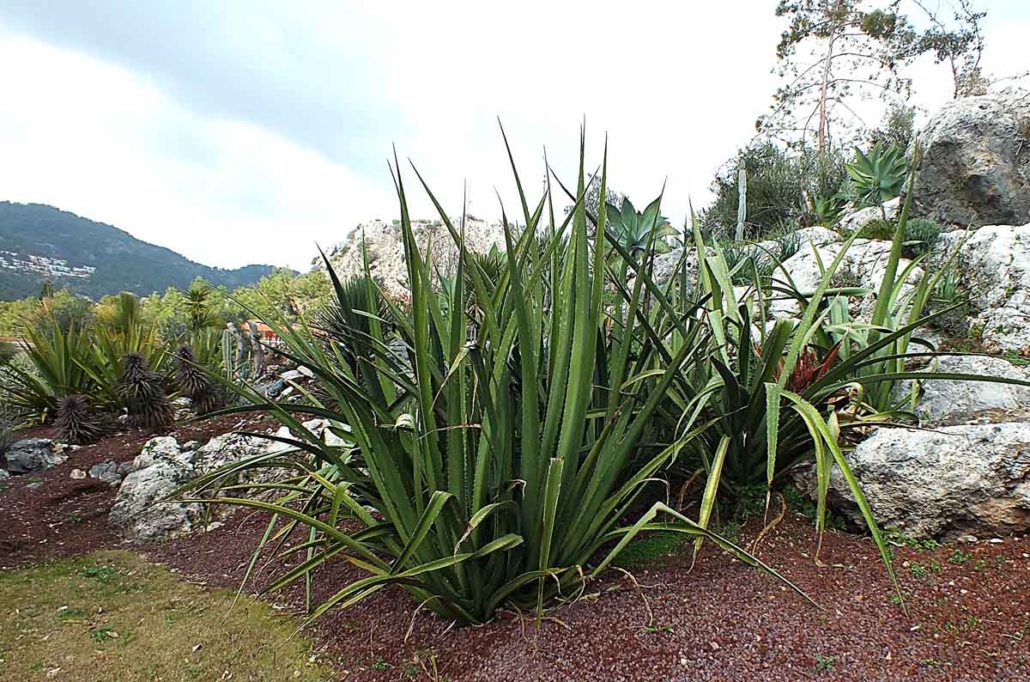
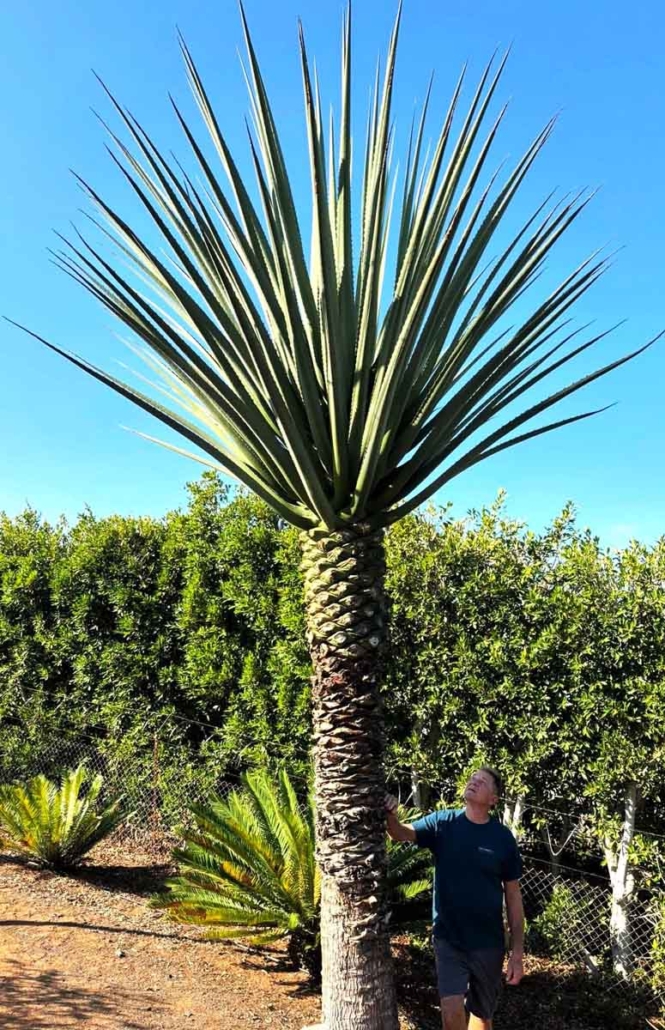
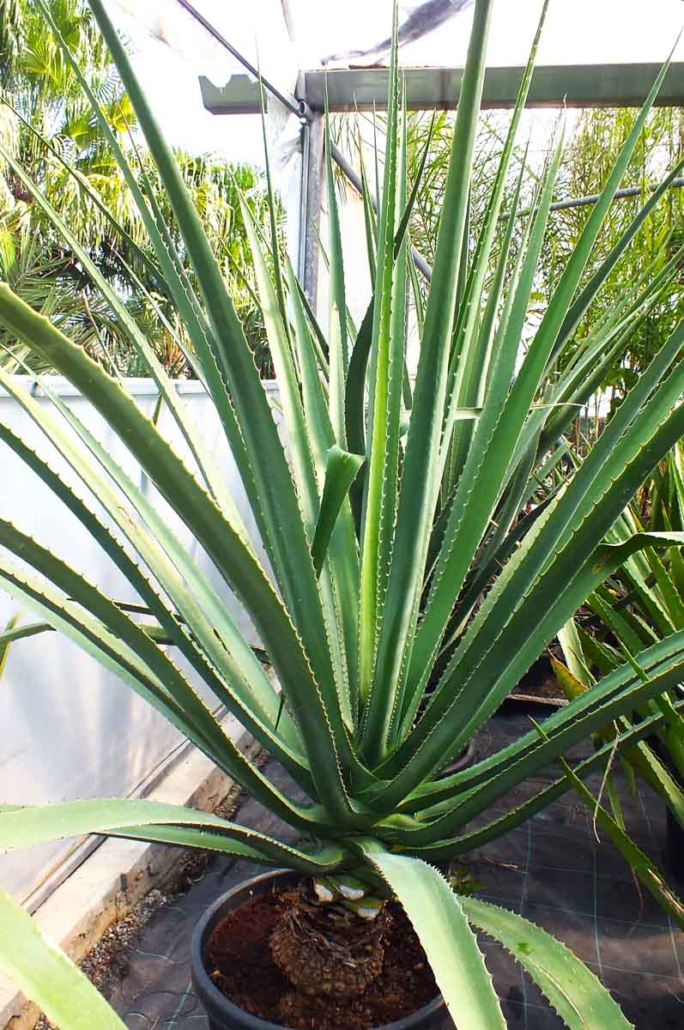
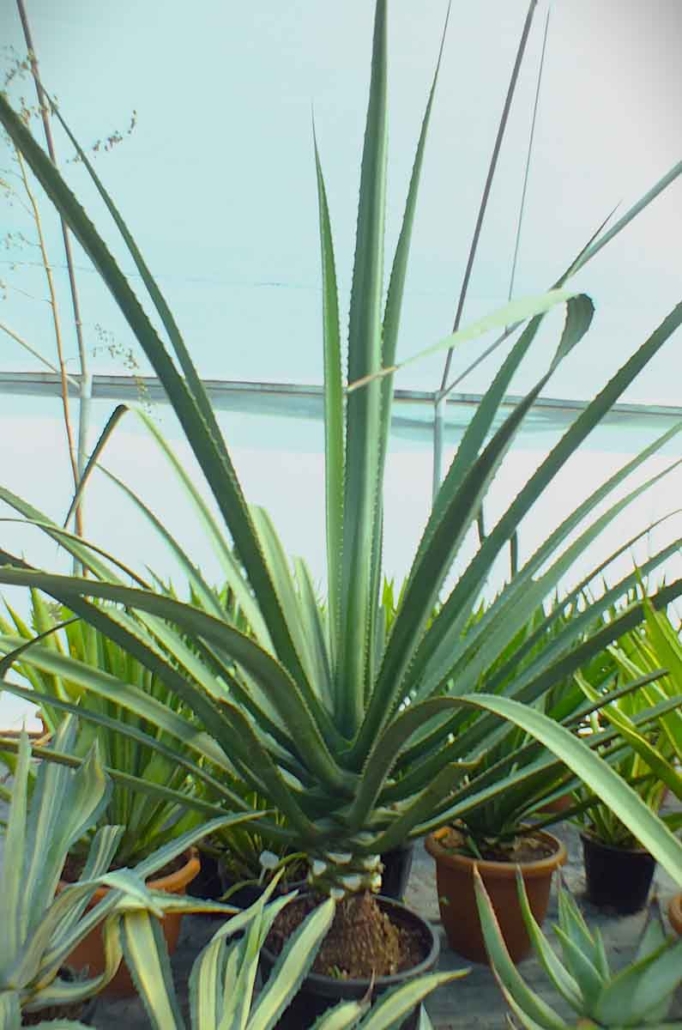
Furcraea macdougallii is a succulent plant belonging to Asparagaceae family, with a tree-like growth form up to 9 m tall. This species was described by Eizi Matuda in 1955 and named to honour Thomas Mac Dougall, a Scottish-born naturalist who explored southern Mexico and who first discovered this plant in Oaxaca, Mexico. Furcraea macdougllii was assessed in November 2019 and listed as being extinct as it has not been seen in the type locality since the last collection made by Gentry in 1965. Although John Trager at Huntington Botanical Gardens confirmed that a population persists around the town of Santiago Chazumba in northern Oaxaca these plants are probably clonal, grown from bulbils transported from the type locality.
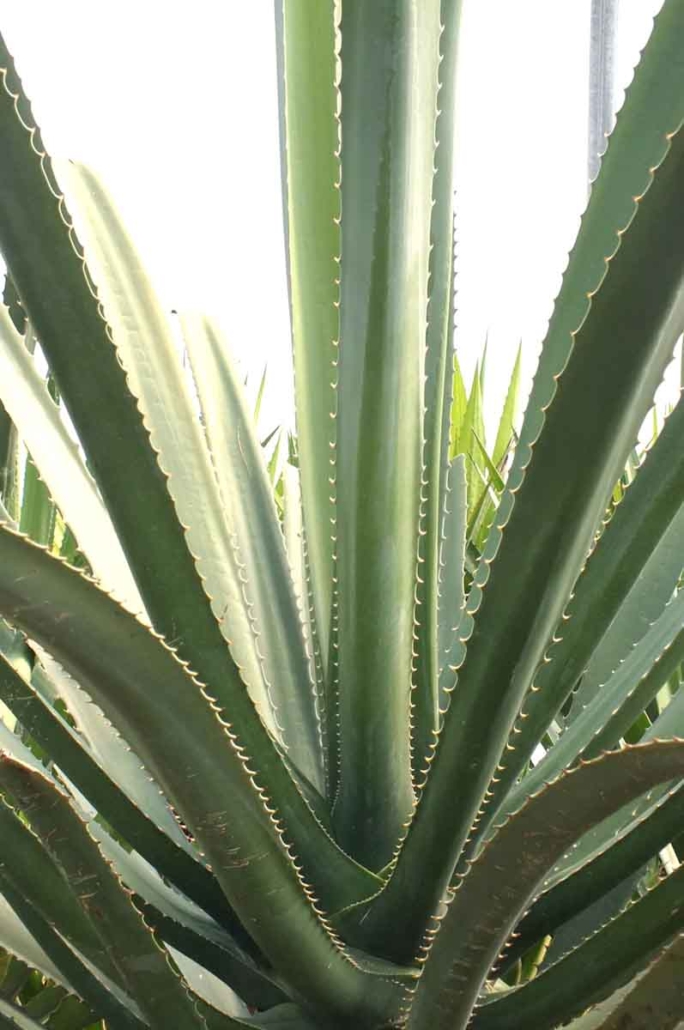
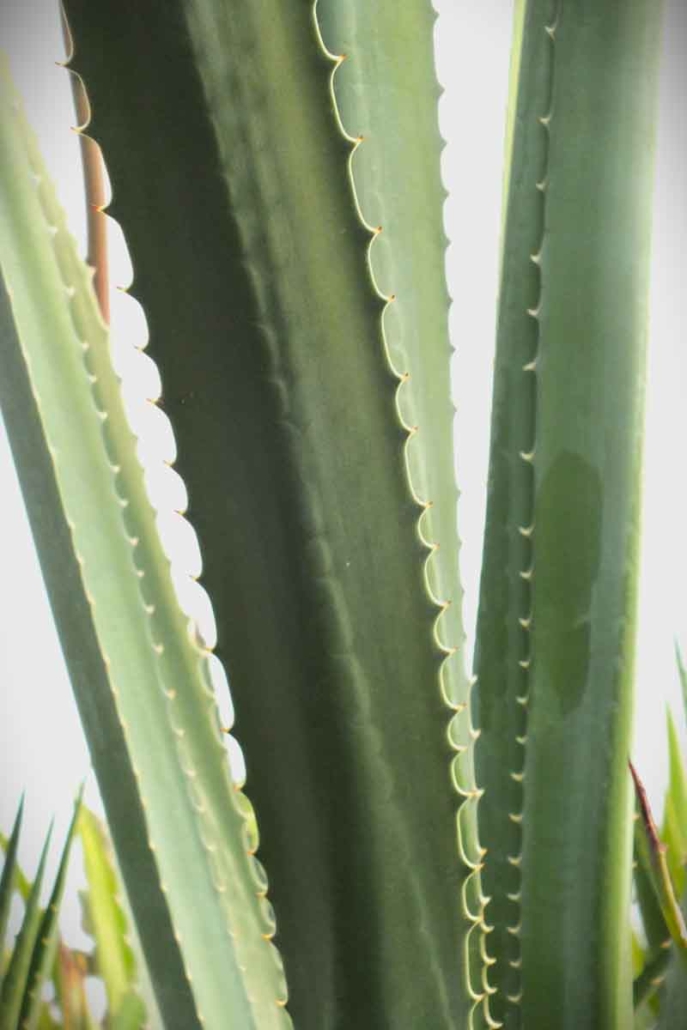
MacDougall’s Century Plant is an evergreen perennial, grows at a slow rate, and under ideal conditions can be expected to live for 40 years or more. A very strong upright succulent, single stem up to 9 meters or more, with a caudex 30 centimetres in diameter. It is one of the tallest growing agave relatives. Narrow, green, succulent leaves are linear to oblong in shape and tapering towards the tip. The leaves are up to 250 cm long, 8 cm wide, with serrated reddish brown marginal teeth and a sharp terminal spine. Inflorescence terminal up to 8 m tall, forming a branched panicle, with numerous white pendulous flowers. Capsules and seeds not formed in cultivation, replaced by bulbils. As a monocarpic, plant will die after flowering.
Furcraea macdougallii prefers well drained soil with little water and lots of sun. It prefers dry to average moisture levels with very well-drained soil and will often die in standing water. Plant does not particular to soil pH, grows best in poor soils. It is highly tolerant of urban pollution and will even thrive in inner city environments. Plant withstands -5 ºC cold.
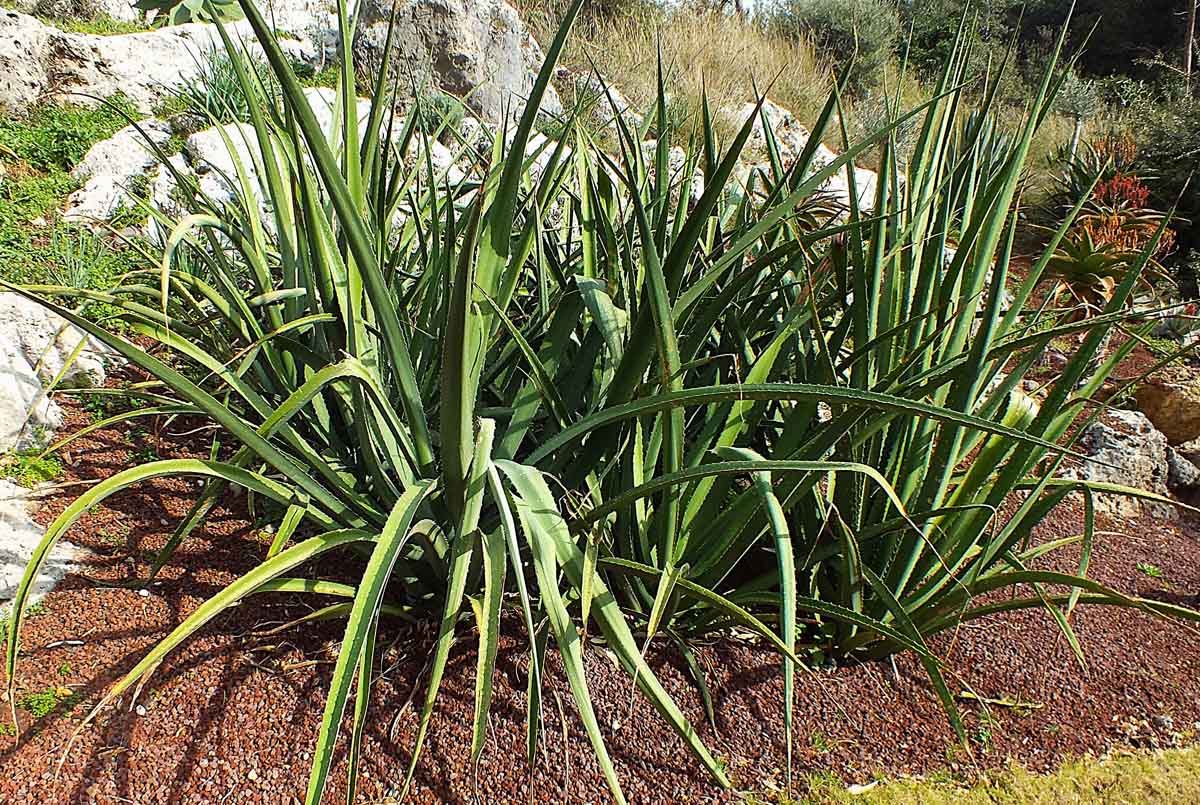
Use in Landscape: Macdougall’s Century Plant is a drought-tolerant plant and thus makes an ideal choice for a dry garden or xeriscape application. Its large size and upright habit of growth lend it for use as a solitary accent, or in a composition surrounded by smaller plants around the base. Plant may be used in front of large walls where vertical coverage is desired. It is also a good selection for planting in outdoor pots and containers. A big specimen of the plant take considerably attraction when grown alone in a suitable container. Today Furcraea macdougallii is becoming a staple in modern USA’s Southwest landscapes and is prized for its ability to boldly accent any space.