FURCREA SELLOANA – FURCRAEA SELLOA- WILD SISAL – MAGUEY
Furcraea is a small genus of succulent plants belonging to Asparagaceae family. Plants are native to tropical regions of Mexico, the Caribbean, Central America and Northern South America. Some species are also naturalized in parts of Africa, Florida of United States, Portugal, Thailand, India and Australia, as well as on some oceanic islands. The name Furcraea was given to the genus, to honour French chemist and politician, Antoine F. de Fourcroy (1755-1809), who was the Director of the Jadin des Plantes in Paris.
Plants of this genus are the origin of cabuyo, a natural fibre. Furcraea’s are monocarpic, rosette making plants with thick, stiff, succulent leaves. Some form, tall stems while others remain stemless. Some have armed leaves like many agaves while others have smooth, leaves. Furcraea inflorescences are very tall; up to 12 meter in some species and produce hundreds of bulbils.
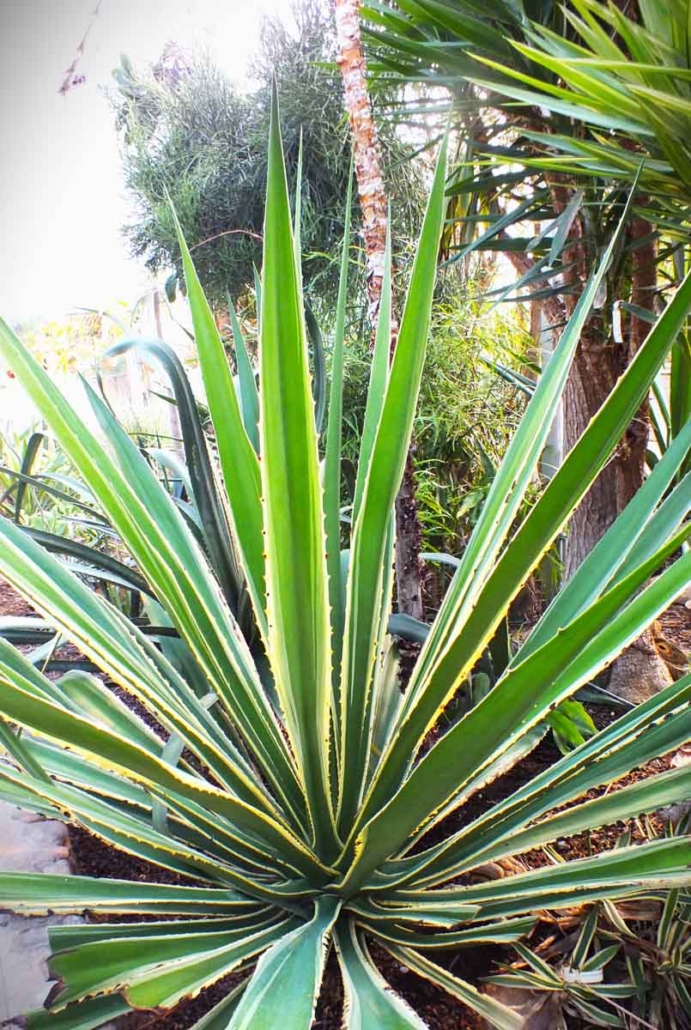
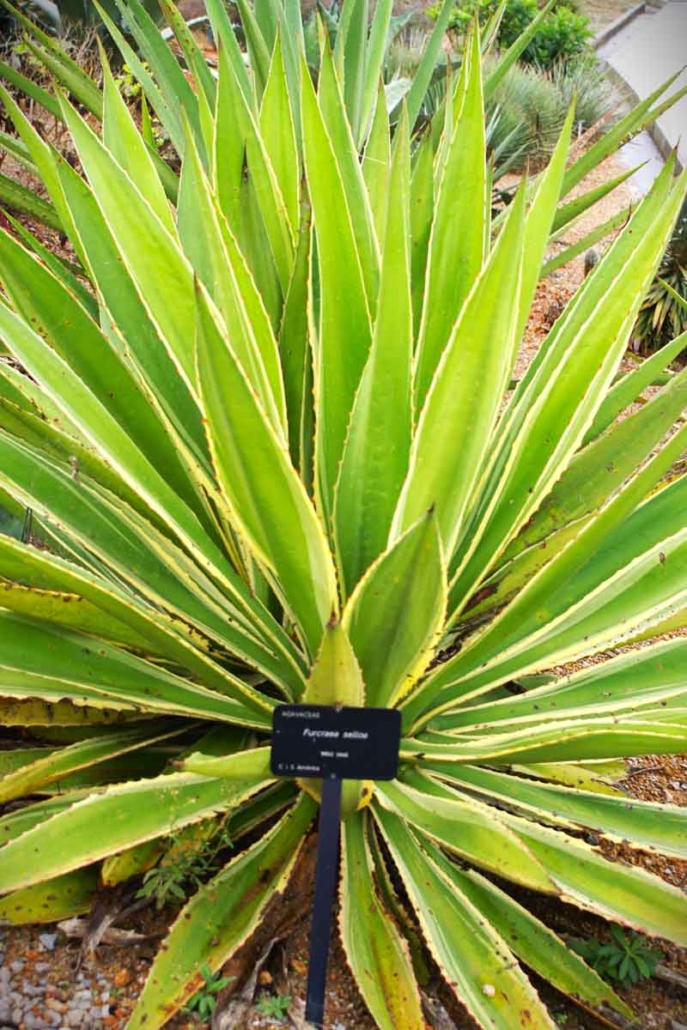
Furcraea selloana is a large, evergreen, monocarpic succulent plant belonging to Asparagaceae family. Plant is native to Colombia and Ecuador, featuring rigid sword-shaped leaves, hook-like marginal spines, it forms a bold architectural rosette that can resemble a tree-sized agave. Plant is probably the next to the most grown Furcrea foetida in cultivation, it is a much larger and less friendly plant due to its spines. The specific epithet selloa honours the German botanist and naturalist Friedrich Sellow (1789-1831). This plant was long listed in horticulture as Furcraea selloana but in 2020 it was determined that “selloana” is the orthographically correct epithet. Wild Sisal and False Agave are known English names.
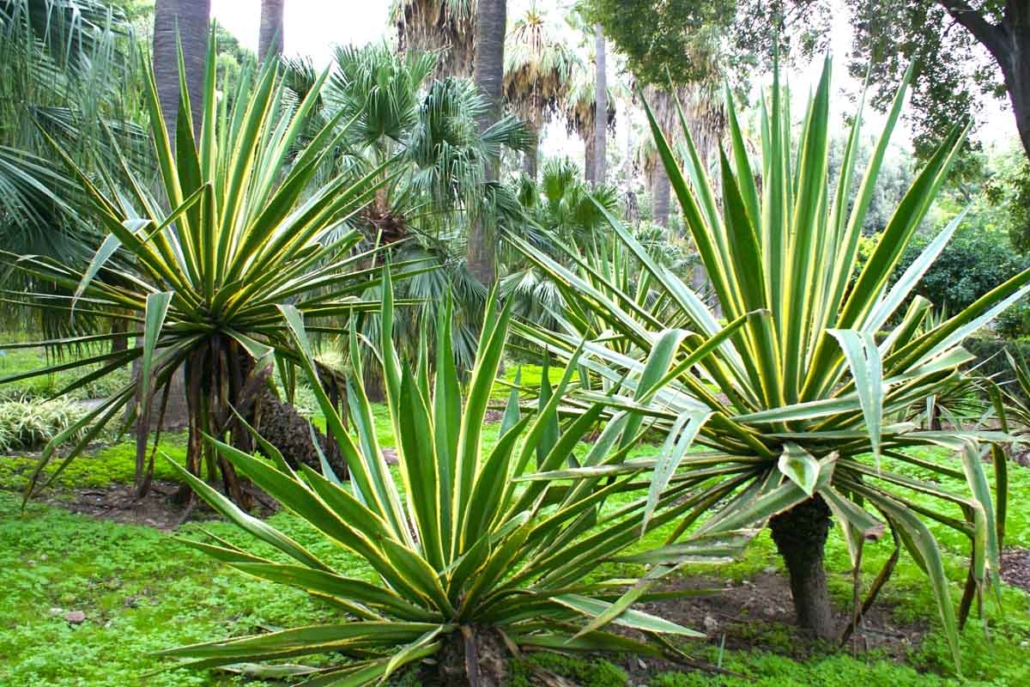
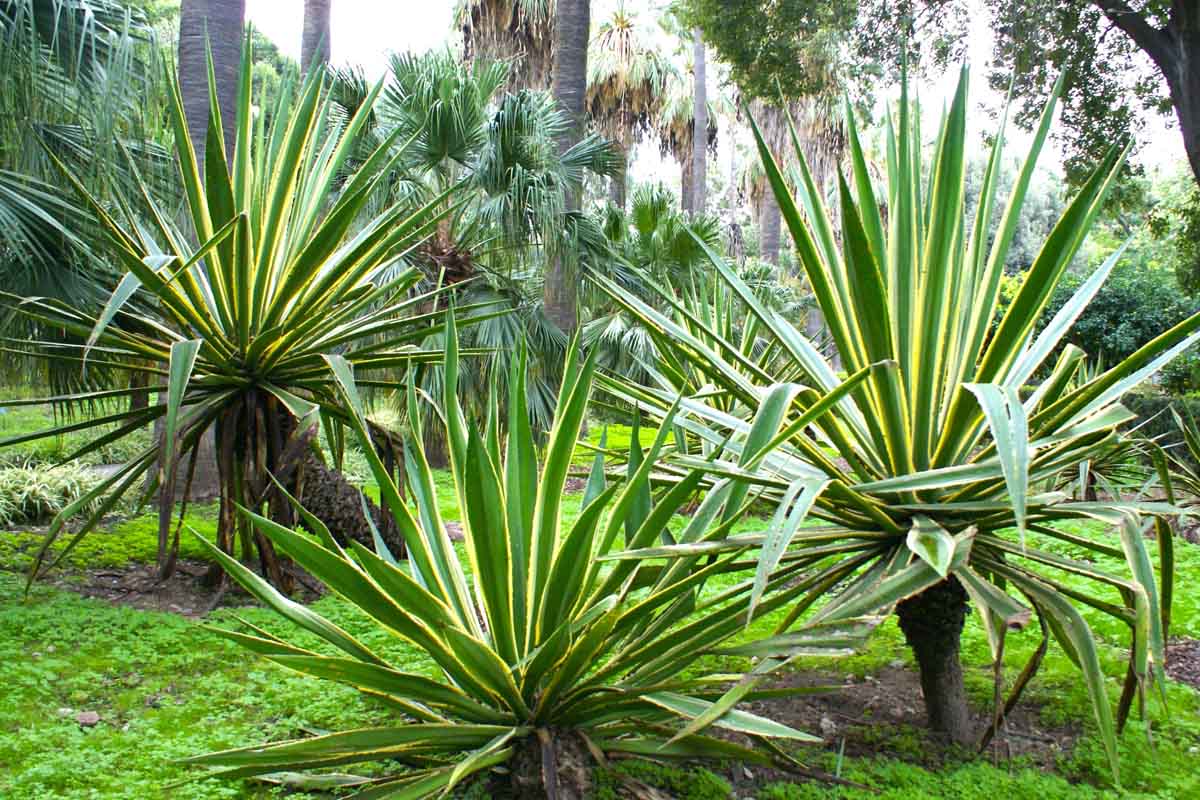
Furcraea selloana ‘marginata’: this cultivar was first described from plants in cultivation in Germany that were thought to have originated from Quetzaltenango- Guatemala, though no current specimens have been found growing in the wild in Central America. This very showy cultivar has broad creamy-white leaf edges over a dark green centre. ‘Marginata’ benefits from light afternoon shade to prevent scorching of the white leaf margins.
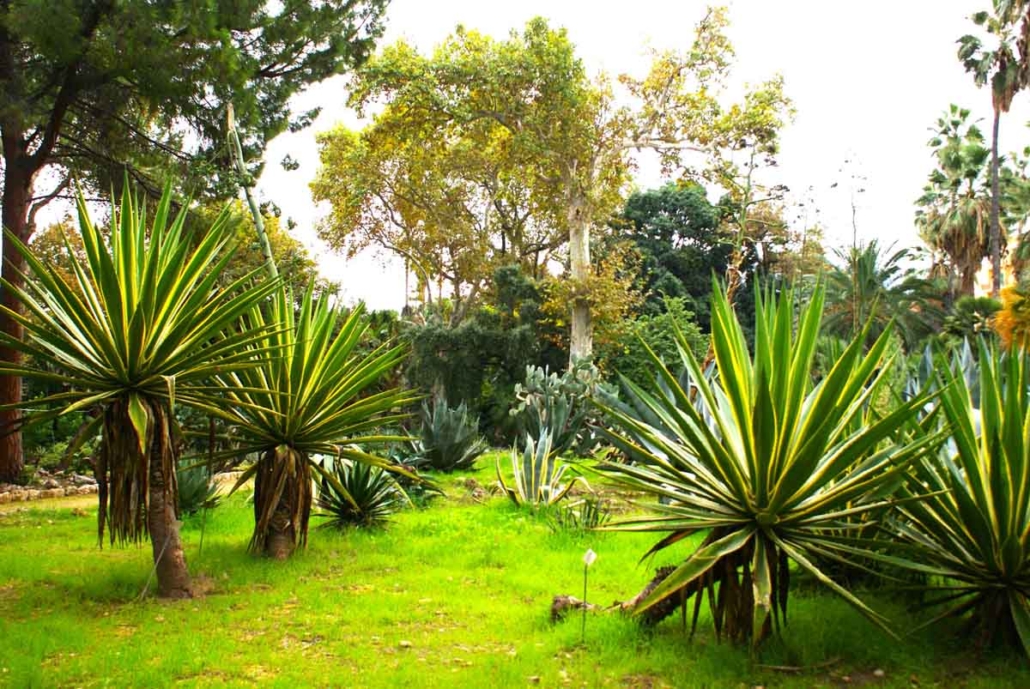
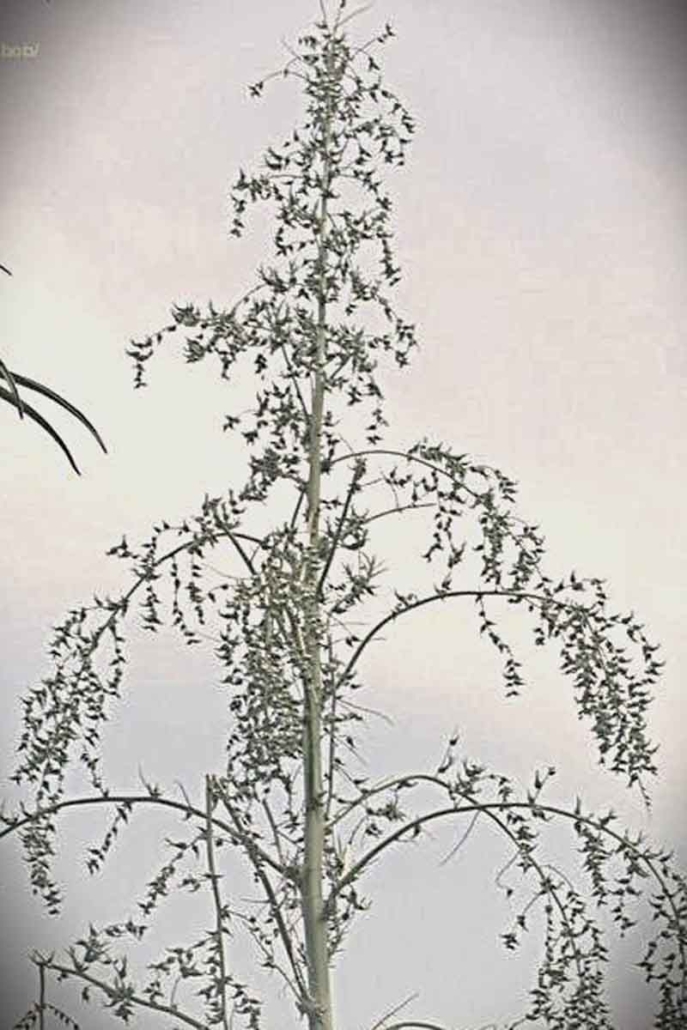
Wild Sisal develops a stout trunk up to 150 cm tall with age, trunk is covered with the persistent fibrous bases of dead leaves. Leaves are long, stiff and sword-shaped, 90 to 150 cm in length, widening somewhat near the tip before narrowing to a sharp, rigid terminal point. The leaf margins are heavily armed with regularly spaced, sharp, hooked teeth along their entire length. This is the most aggressively armed of the commonly cultivated furcraeas. As a monocarpic plant, flowers only once in her life; the inflorescence grows up to 6 meters tall, panicle with pendulous branches, bearing white, bell-shaped, fragrant flowers. After flowering, the stalk produces abundant bulbils, then mother plant dies.
Furcraea selloana thrives best in full sun to partial shade. Requires well-drained soil, does not need a lot of water. It is tolerant of poor soils and urban pollution. The main threat in areas with wet winters is root decay. Plant can withstand up to -4 ºC cold. Plant does not produce basal offsets, also it is very rare get seeds, so propagation is done by bulbils. On the other hand, cultivar Furcraea selloana ‘marginata’ makes a lot of offsets.
Wild Sisal has been cultivated for fibre in Central America and as an ornamental worldwide. yielding a fibre identical in quality to that of Furcraea foetida. Today this use has largely been abandoned in favour of synthetic alternatives, but the fibre’s biodegradability maintains niche interest.
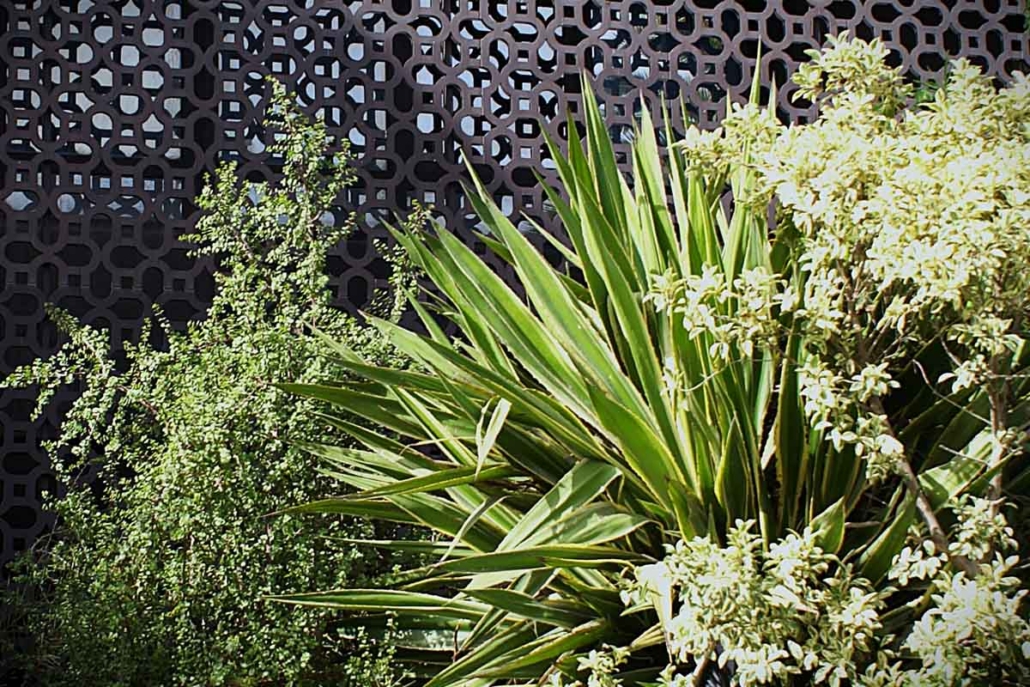
Use in Landscape: Furcraea selloana and her cultivar ‘marginata’ is an attractive large succulent plant a commanding architectural accent for large gardens, parks and commercial landscapes. It is best used as a specimen focal point surrounded by low-growing companions, in open borders or on hillsides. When its silhouette seen from a safe distance it gives the garden a tropical look. To prevent injuries due to hooked marginal teeth of the plant, should be planted well away from walkways, play areas etc.