FURCRAEA FOETIDA – MAURITIUS HEMP – GREEN-ALOE
Furcraea is a small genus of succulent plants belonging to Asparagaceae family. Plants are native to tropical regions of Mexico, the Caribbean, Central America and Northern South America. Some species are also naturalized in parts of Africa, Florida of United States, Portugal, Thailand, India, and Australia, as well as on some oceanic islands. The name Furcraea was given to this genus to honor French chemist and politician, Antoine F de Fourcroy (1755-1809). Plants of this genus are the origin of cabuyo, a natural fibre. Furcraea’s are monocarpic, non-suckering rosette making plants with thick, stiff, succulent leaves. Some form, tall stems while others remain stemless. Some have armed leaves like many Agaves while others have smooth, leaves. Furcraea inflorescences are very tall; up to 12 meter in some species and produce hundreds of bulbils.
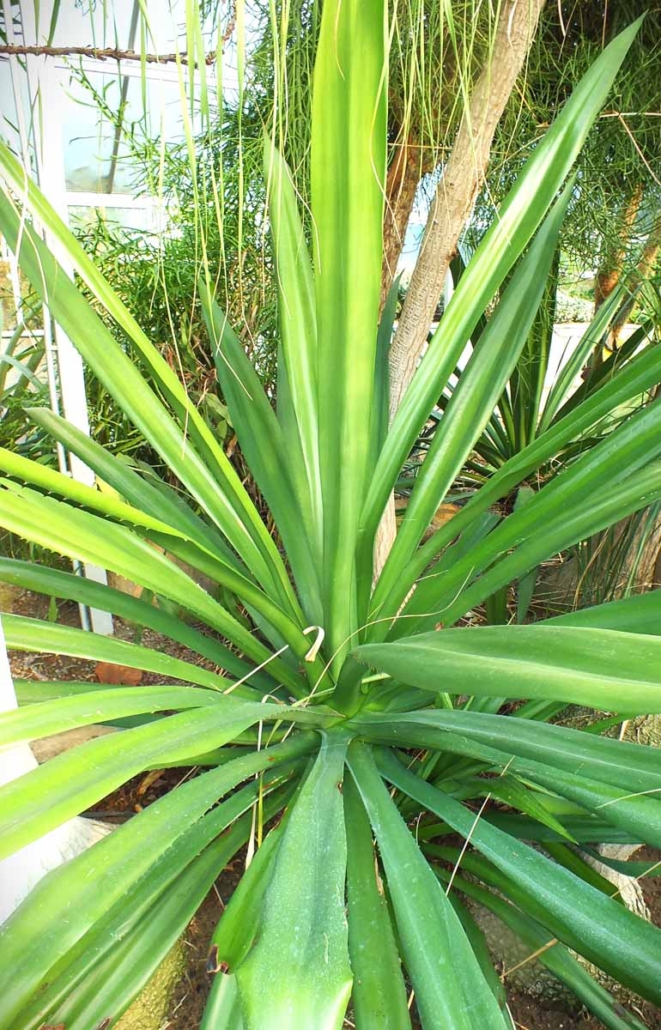
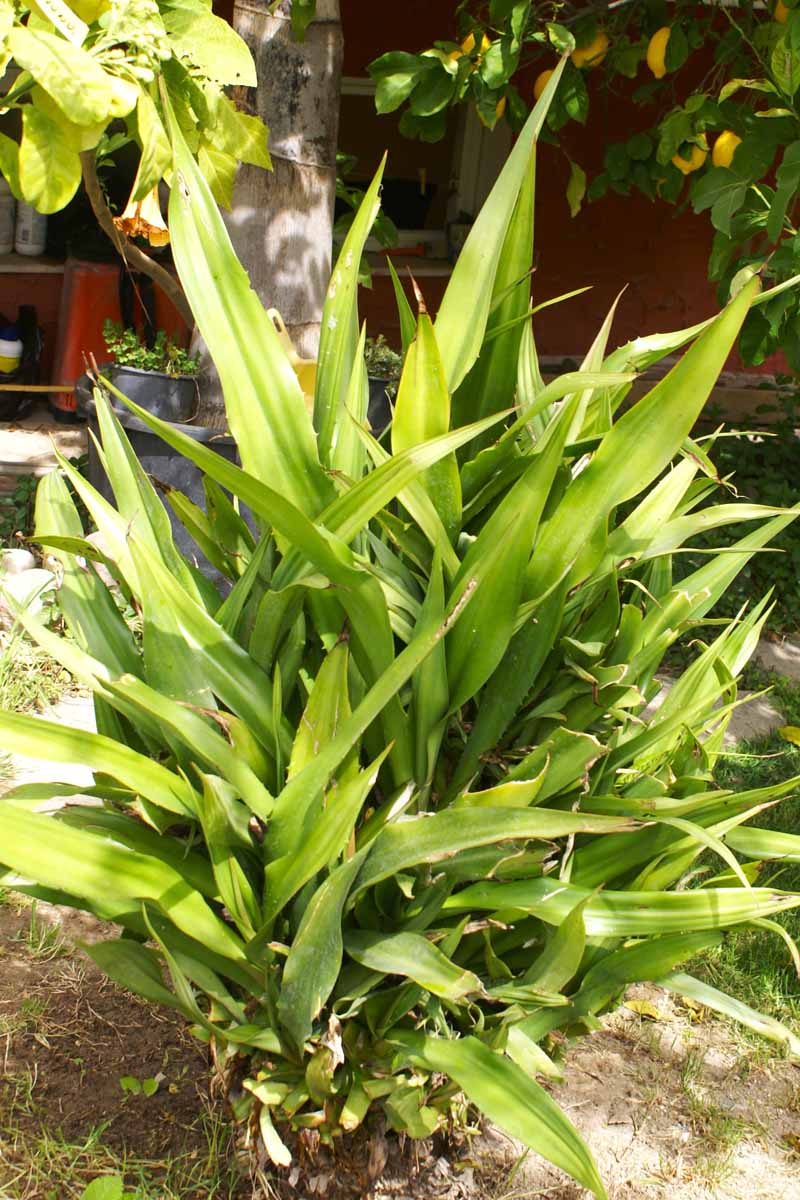
Furcraea foetida is a succulent plant belonging to Asparagaceae that forms a rosette of sword-shaped leaves with usually entire margins. Plant is native to the Caribbean and northern South America. It is probably the most common Furcraea in cultivation partly due to is economic important as a source of hemp fibre. Although it is originally a South American species, grown in massive quantities on the island of Mauritius, for this reason it is called Mauritius Hemp. Green Aloe and Giant Gabuya are other names of the plant.
Mauritius Hemp is stemless or has a short stem and can reach up to 1.5 m in height. The leaves can grow up to 2 m long and 20 cm wide, each leave have a 4-8 cm long, sharp brown spine at the tip. The numerous greenish-white or yellowish-green flowers are borne on inflorescences up to 6 m long. Terminal panicles consist of numerous 3-4 cm long pendent flowers. Each flower has six petals and six stamens with yellow anthers borne on stalks. Flowers also have an ovary. The flowers are heavily fragrant, produced during autumn and winter. Flowering usually only occurs once, the whole plant dying about 1 year after the onset of flowering (monocarpic plant). The true fruit, which are rarely seen is generally not produced. Instead, large plantlets (bulbils) appear on the branches of the old flower clusters.
Furcraea foetida is happy in a large variety of climates, from hot arid to moist tropical. It can withstand -4 ºC degree cold. Propagation done usually with bulbils or seeds. The plant is used as animal food, for fuel and a medicine.
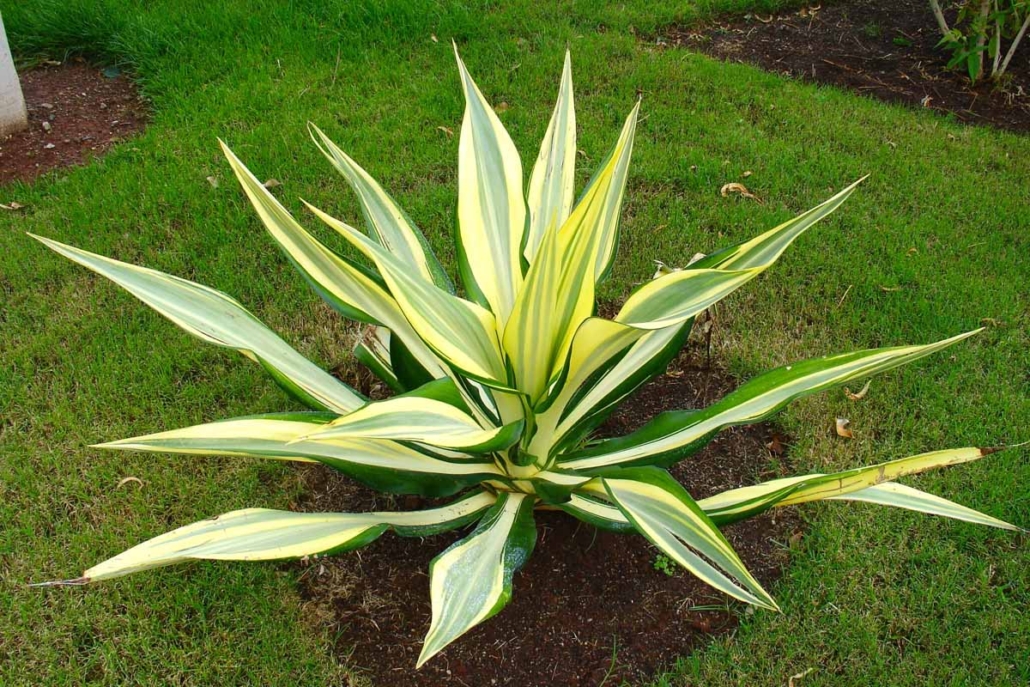
Use in Landscape: Mauritius Hemp has been widely cultivated as a succulent garden ornamental. The variegated form; Furcraea foetida ‘cultivar mediopicta’ is particularly popular in cultivation. Plant can be used as an accent plant, also it is a good choice for rock or cacti gardens.