CARNEGIEA GIGANTEA –
SAGUARO CACTUS

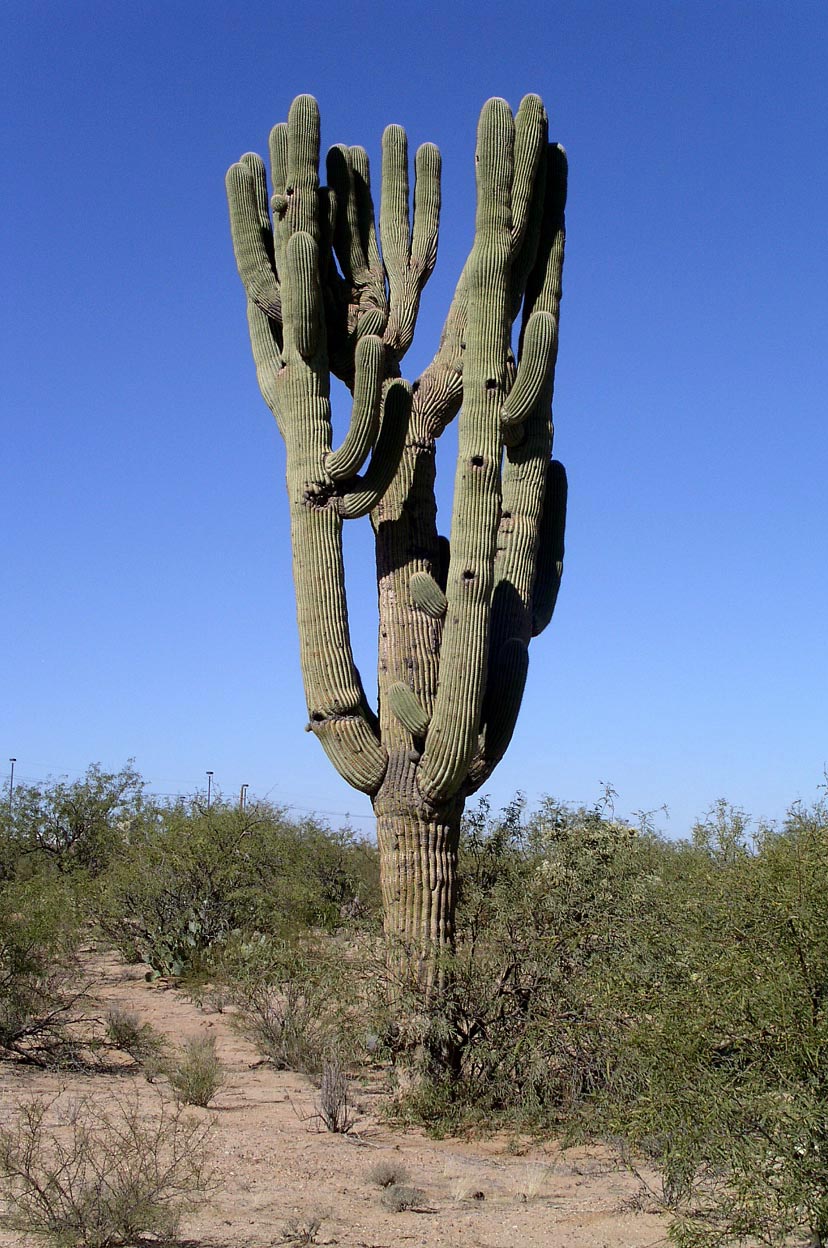
Carnegiea gigantea is a tall, tree-like cactus, belongs to cactus (Cactaceae) family and the only species of Carnegiea genus. It is endemic to the Sonoran Desert, found only in western Sonora in Mexico and in southern Arizona in the US also some found in Baja California. The Saguaro Cactus is certainly a symbol of the Arizona. It received the botanical name after Andrew Carnegie who was a researcher at desert laboratory in Tucson. The name Saguara is a Spanish word; meaning very large!
Carnegiea gigantea grows up to 16 m tall and up to 75 cm in diameter. They can weigh as much as 8 to 10 tons when mature. Tree can live to 250 years old a true giant of the cactus family. Saguaros are protected as endangered species. In 1994, Saguaro National Park, near Tucson, Arizona, was designated to help protect this species and its habitat.
Saguaro Cactus is a columnar cactus that grows notable branches, usually referred to as arms. As many as 49 arms may grow on one plant. It is extremely slowly-growing tree. It reaches 30 cm tall after the age of 15 years. It may take 20-50 years, to reach a height of 1 m. The first branches, which grow out from the sides of the stem, only appear after the tree reached a height of 4 m and age of 50 years.
Carnegiea gigantea is a stem cactus; it stores water in its trunk and branches as an adaptation to its dry environment. Tree has a deep anchoring taproot up to 1 m long and an extensive, shallow, lateral root network that can extend up to 30 m. Root system allows it to take up water quickly after the infrequent rains at the Sonoran Desert. During this time the trunks swell considerably. Inside the Saguaro, there are many “ribs” of wood which form something like a skeleton. Leaves of the plantmodified into spines, there are no glochids. Carnegiea gigantea normally does not bloom before 30 years of age and a height of about 2 meters. The flowers are found at the top of their arms. 8–12 cm long, white, waxy flowers appear in April and May at night. The flowers will close during the heat of the day. Flowers pollinated by bats, birds and insects. The red, edible fruits are 6 to 9 cm long and ripen in June. A well-pollinated fruit contains about 2000 tiny seeds. Propagation is done by seed. The plant can tolerate -5oC.
Saguaro Cactus has become a part of film history as the iconic ‘Western Cactus’ featured in many Western films. Its flower is the official state flower of Arizona. Native Americans ate the fruit fresh and dried, or turned into juice, syrup, jam, wine or vinegar. The ribs of dead saguaros are used as building material. In times of extreme dryness, many animals such as deer and rabbits will eat the cactus for their water requirement.
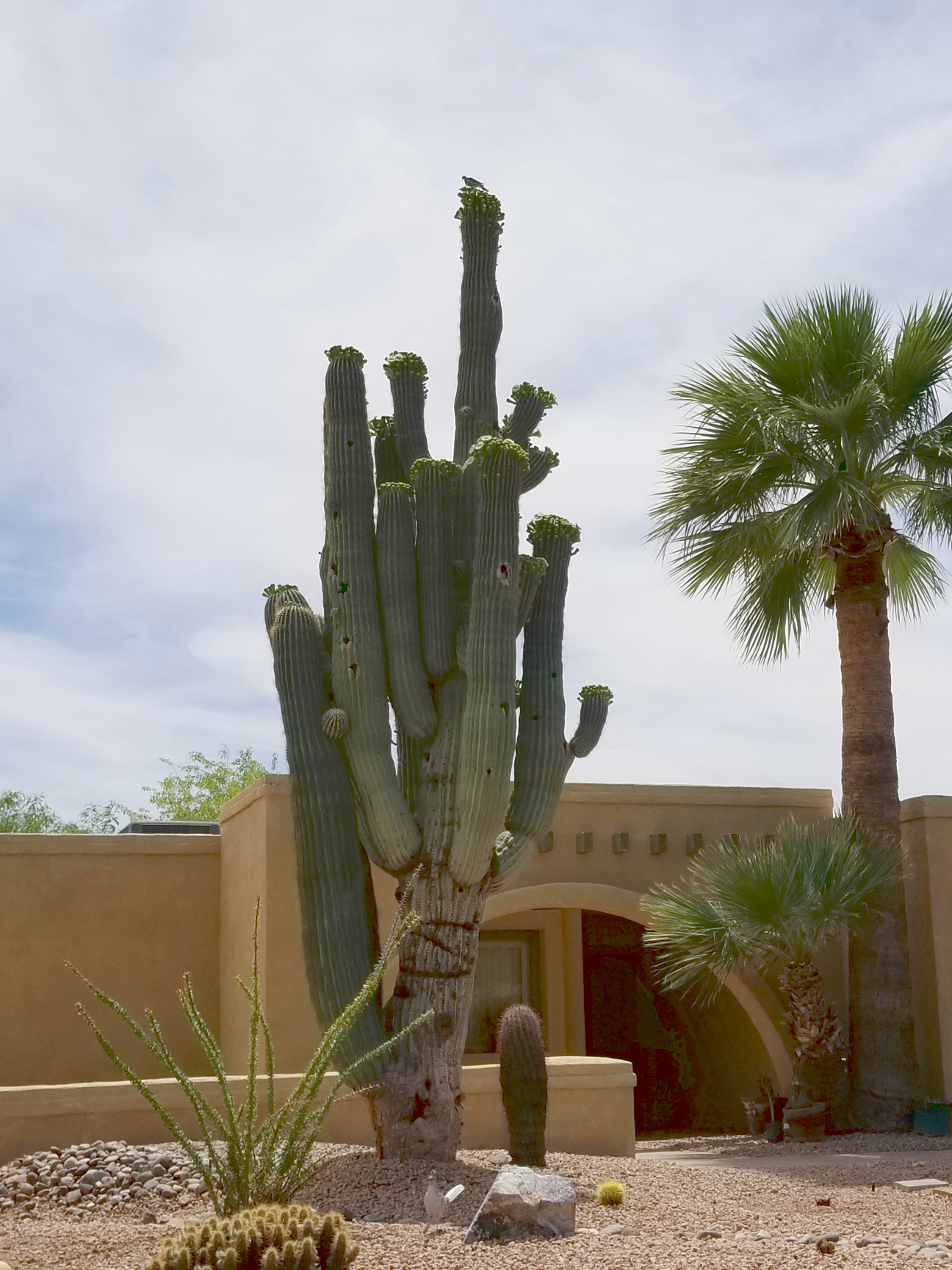
Use in Landscape: It can be used as a dominant focal point, strong accent, or at xeriscape at temperate areas. Because of their visual dominance in any landscape situation, they should be used sparingly and with much predetermination. A saguaro in a normal residential front yard will eventually grow much too large and be out of proportion for the space. It is also kept at container for many years by cactus lovers.
The largest known living saguaro is the Champion Saguaro growing in Maricopa County, Arizona, measuring 14 metres high with a girth of 3.2 metres. The tallest saguaro ever measured was an armless specimen found near Cave Creek, Arizona. It was 23.8 metres in height before it was toppled in 1986 by a windstorm.