CICHORIUM INTYBUS – BLUE DANDELION – CHICORY

The genus Cichorium (Asteraceae) is made up of six species with major geographical presence in Europe and Asia.
Cichorium intybus is a herbaceous perennial, belonging to Asteraceae (Daisy) family. The plant is originally from Europe, western Asia and northern parts of Africa but is now widespread in South Africa, North America and other temperate or semi-arid regions of the world. Plant is common along roadsides, railroads and in disturbed sites or waste ground. Chicorium is from Arabic word ‘kesher’ for chicory, Intybus is from the Egyptian word tybi, for ‘January’, the month in which the vegetable is commonly eaten.
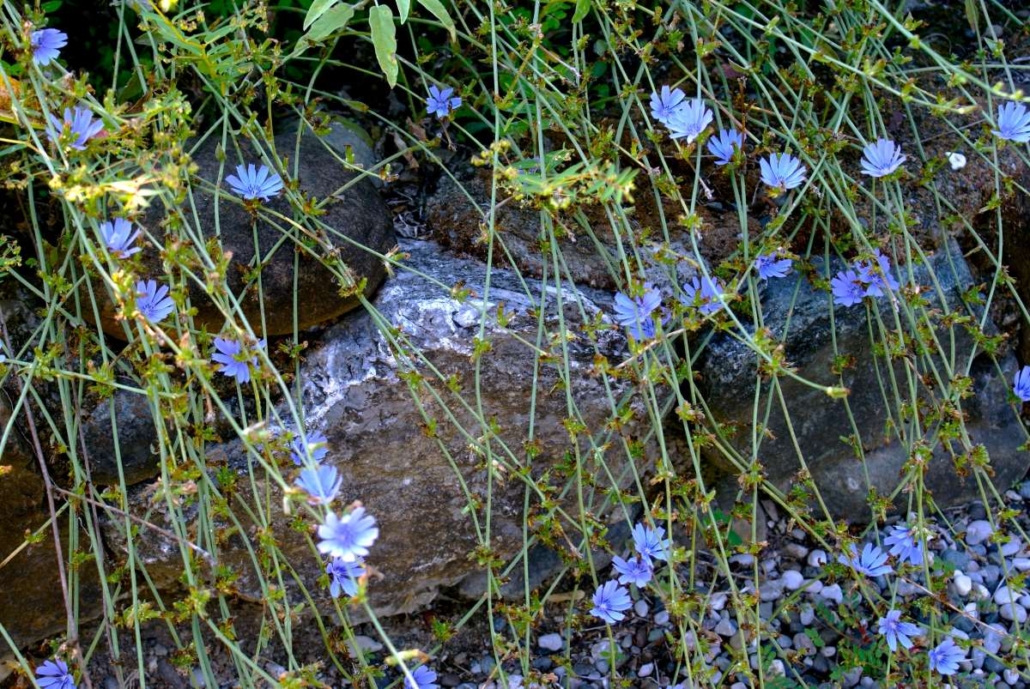
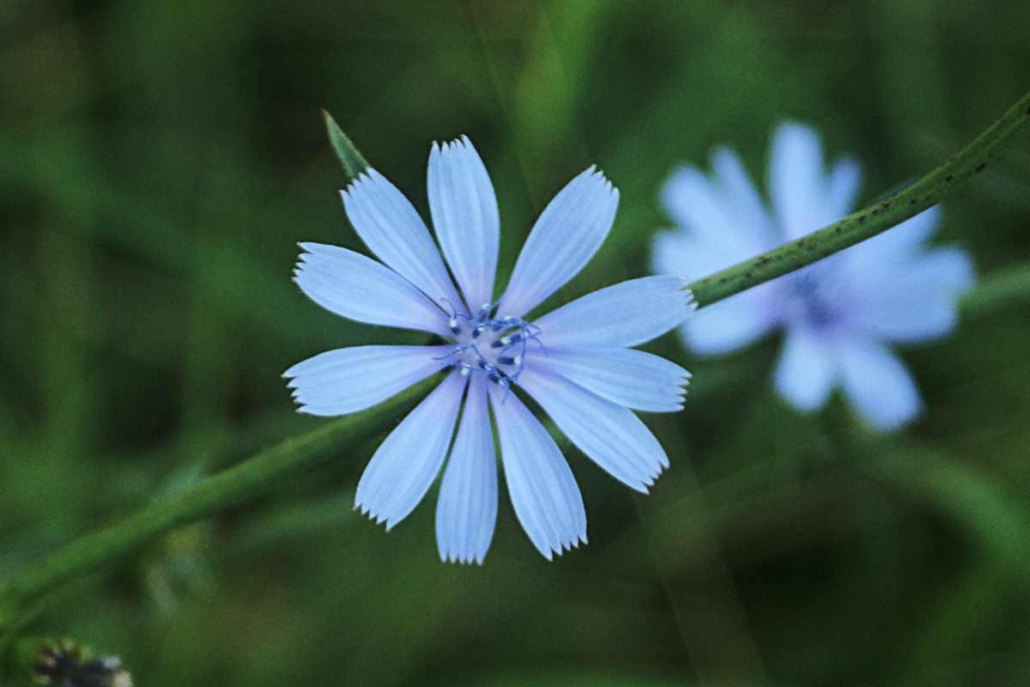
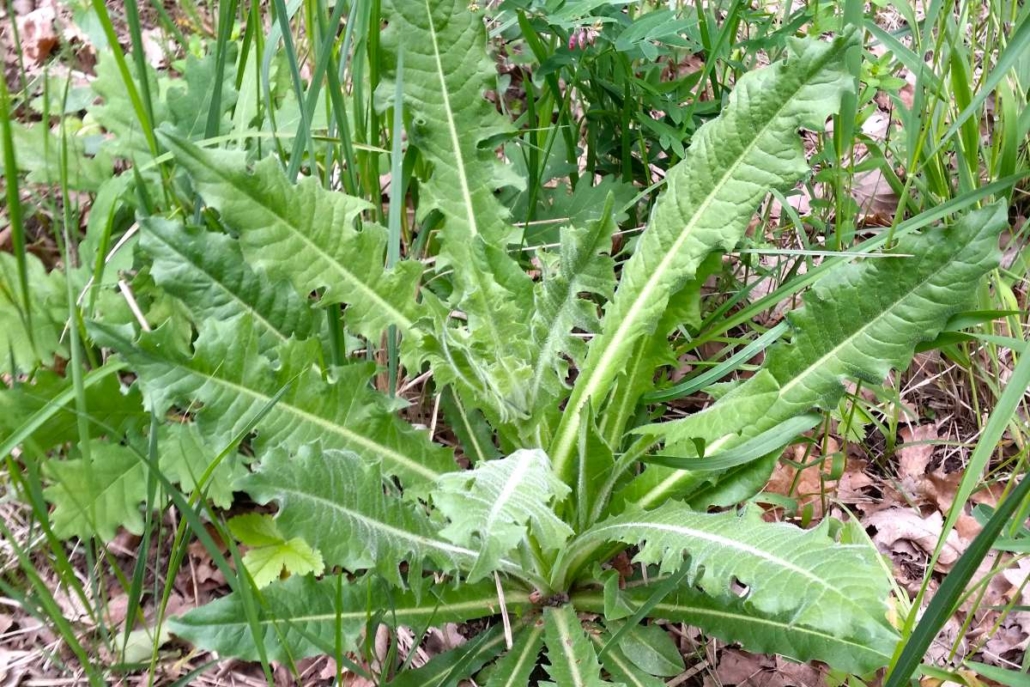
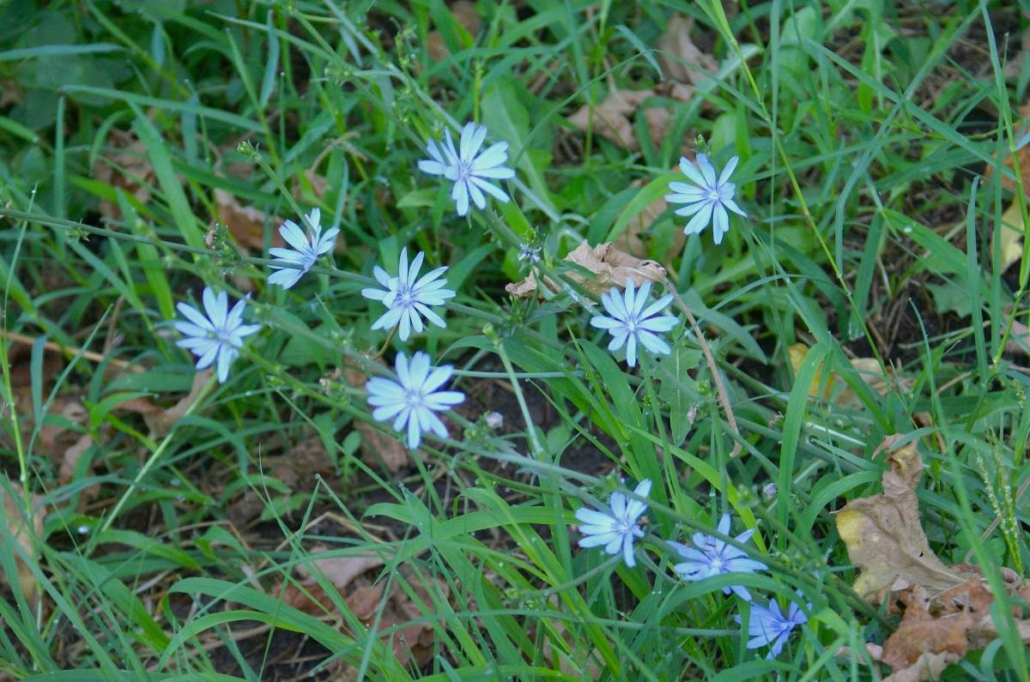
Chicory is a tap rooted (fleshy taproot of up to 75 cm in length) perennial herb that typically grows up to 120 cm tall. Basal leaves are large, in general they are variable, ranging from irregularly toothed to deeply lobed, the lobes are generally pointing away from the rosette. Some leaves are smooth while others may be roughly hairy. In its second and subsequent seasons plant produces a tough, wiry, erect, branched flower stem with either a spike-like inflorescence or an open branching panicle. Inflorescences are made up of several dozen flower heads, with 12–30 ligulate florets each. Florets are bright blue or sometimes white or pink, bisexual and have long, strap-shaped limbs with 5 apical teeth, lasting only for a day. The upper leaves growing on the flower stems are much smaller than the basal leaves and typically are without lobes and clasp the stem.
Cichorium intybus, easily grown in medium moisture, well-drained soils in full sun. Prefers neutral to alkaline soils. Best in cool summer climates. Established plants have some tolerance for drought. It is a very hardy plant, withstands -40 ºC. Plant propagates readily from seed or pieces of roots.
Chicory was grown by the ancient Egyptians as a medicinal plant, vegetable crop and was occasionally used for animal forage. Although all parts of the plant are very bitter, the whole plant is edible. The bitterness of the plant is reduced by cooking it and discarding the water. Young leaves of even the wild type can be eaten raw as a salad green with oil and vinegar. Older leaves can be cooked as a leaf herb to reduce the bitterness. The best-known use of chicory root is as a coffee substitute. Chicory does not contain caffeine and has gained popularity with people allergic to caffeine or wanting to cut down on caffeine.
Cichorium intybus root contains up to 40% inulin (polysaccharide), which has a negligible impact on blood sugar and thus is suitable for diabetics. In Turkiye, an ointment is made from the leaves for wound healing.
Use in Landscape: Although Chicory is not used commonly used in landscape, it is a good plant for Xeriscape landscape or cottage garden. It is not a demanding plant, also edible. Flowers of the Cichorium intybus produce copious pollen and are a rich source of nectar, so plant is a good choice for a reach garden coffee substitute, life to attract variety of bees and flies.